| Brief
History about Copenhagen |
|
Cultural
& History Guide - In - Around & Beyond Copenhagen! |
Copenhagen’s
History at A Glance |
|
Learn
more about the Historical & Cultural development of the Danish
Capital |
|
It
all started around 1160 and 1167 -
with a little fortress on the Isle of “Slotsholmen” |
Timelines
of Copenhagen's History - Cultural Heritage - and some of its Famous
Citizens |
| Places
- Persons - History |
|
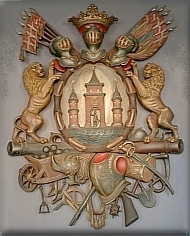
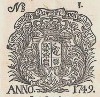
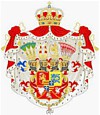
Copenhagen
Coat of Arms from 1661 - probably with Absalon's Castle from
1167 - in the middle circle of the shield. |
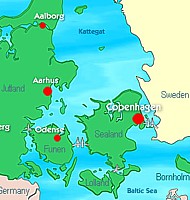
Copenhagen
is a Coastal Metropolis with a wide surrounding coastline
- plus long stretches of beach areas - situated on the East
Cost of the isle of Sealand. |
|
Copenhagen
is the capital of Denmark -
and the largest city in Scandinavia. Copenhagen
is placed on the east coast of Sealand and alongside the Sound
(Øresund). A bridge and tunnel called “Øresundsbroen”
- connects Copenhagen with Sweden
- and its metropolitan areas is named the Oresund Region.
In Latin - Copenhagen is called Hafnia -
and in Danish København. |
Native name: København (Copenhagen)
- (Hafnia)
(Largest city in Scandinavia)
Founded: 1160 - 1167.
Founder: Archbishop Absalon
Rig.
Urban Area: 1980 Km².
Population: 1,8 million. (Greater Copenhagen and
regions)
Danish Parliament: Christiansborg Palace - Copenhagen.
(Folketinget)
Government type: Parliamentary Democracy -
Constitutional Monarchy.
Head of state: King Frederik X.
Royal residence: - Amalienborg Palace - Copenhagen.
Currency: Danish Kroner.
Airport: Kastrup Lufthavn.
Cruise Ports: Langelinie - Nordhavnen.
Driving: Right side.
Time Zone: UCT+1
Summer
Time - "Daylight Saving Time":
The
Summer Time "Daylight Saving Time" season - spans
over 7 - spring - summer and autumn months in Denmark - and
is from April to October every year.
Country Code: +45
Historic Places - Cultural Landmarks & Sightseeing Venues
See: Sightseeing
Index
|
|
Bishop
Absalon & Copenhagen - (København) |
|
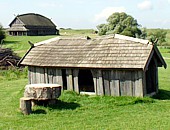
Viking
Village - 900-1000 A.C. |
A
typical Viking Settlement from 900-1000 A.C. - with
the wooden Longhouse and homes built in wood - and
surrounded by a farming environment - which were the
same site that probably met Absalon - on the east
coast of Sealand
- when he planed to
build his new town named Copenhagen. (København) |
|
Copenhagen
and Bishop Absalon
Copenhagen
was founded in the years 1160 and
1167 by Bishop Absalon
(1128-1201) - who was at that time the counsellor
for King Valdemar I (1131-1182 -
Ruled Denmark 1154–57 - as Valdemar
the Great). King Valdemar I - gave Bishop
Absalon the task to build a Town around a heavily
armed fortress and stronghold on the east coast of
Sealand to protect all trade
and inhabitants from raids
- mainly from the seaside and narrow Sound (Øresund).
Absalon chose to expand an existing Viking
Settlement that had been subject to numerous
attacks by barbarian seafarers and
plunderers invaders - and named his
new established city “København”
(The Merchant Harbour) after which he began in 1160
to construct an almost impregnable brick-build Castle
complex and Bishop Residence, which were completed
in 1167. Absalon was the archbishop
of Roskilde in 1158 - once the capital
of Denmark in the 12th century. Here
he initiated the building of Roskilde Cathedral around
1170 - which has been the royal burial
place since the 14th century of Danish
Kings and Queens. Absalon was also the archbishop
of Lund in 1178 - a province in Sweden
near Malmø. See: Absalon
|
|
| Bishop
Absalon & Twin Brother Esben Snare
Bishop Absalon died in 1201 - and is buried
in the old monastery at Sorø behind
the High Altar. He donated all of his belongings to the
monastery and property to his twin brother Esben
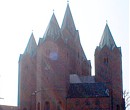
Snare - who was a crusader and royal chancellor
that built the only Church with five towers
in Denmark - named The Church of Our Lady in the city of
Kalundborg - on Northern Sealand.
King Valdemar I (King Valdemar the Great of Denmark)
was a foster brother to Bishop Absalon & Twin
Brother Esben Snare. |
The
remarkable Church with five towers built by Esben
Snare in the city of Kalundborg. |
|
|
|
Bishop Absalon
founded
Copenhagen
around
1160 - 1167
|
|
|
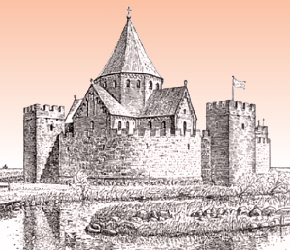
Bishop
Absalon's little Castle - 1160- 1167 |
|
1160-1167
- The little fortress on the isle of "Slotsholmen"
built by Bishop Absalon 1160-1167 - to protect the new city
Copenhagen. The ruins can be seen under the foundations of
the present Christiansborg Castle. |
|
|
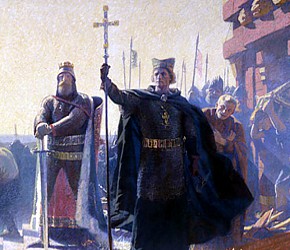
Bishop
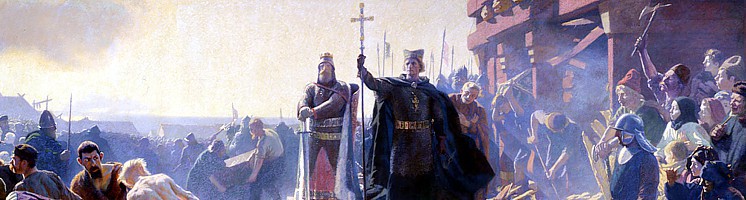
Absalon was also a great Warrior |
1168
- Bishop Absalon founded Copenhagen around 1160-1167 - but
was also a great warrior - who defeated the Wends and demolished
their temple Arkona in Rügen 1168 (North Germany) - to
introduce the Christian religion. Top image. |
|
|
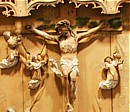
Altarpieces
from the Middle Age still exists in some Historic Churches
in Copenhagen. |
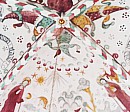
Church
frescos from the early Middle Age can still be explored in
many Medieval Churches in and around Copenhagen. |
|
|
1050-1100s
- St. Clemens Church
The oldest known church in Copenhagen was St. Clemens
Church - built during 1050-1100s
- and served the Christian Citizens of Copenhagen. Archaeological
excavations have discovered coins from St.
Clemens Church cemetery that originates from
this medieval period - and years before Bishop Absalon
became the founder of the town Hafnia - and since named Copenhagen
(København). The St. Clemens Church was built by burnt
clay bricks from Germany - and was one of
the first brick buildings in Copenhagen with a half-timbered
construction. St. Clemens Church excited as a parish church
until 1530-1536 during the Reformation period
and finally demolished around 1560.
Unknown
wooden Christian church and cemetery under Copenhagen
The
remains of an earlier unknown and unnamed wooden Christian
church and cemetery built in the very early middle
age than St. Clemens Church - were found
during an excavation in 2008 - in the inner
city of Copenhagen - and near the Town Hall Square
- which indicates that Christianity had reached Copenhagen
before year 1000 - and after King
Harald Bluetooth had “made the
Danes Christian” around year 960
A.C..
| The
Birth Certificate of Denmark - and Christianity |
|
|
1160
-1167 - The first fortress to protect the city
In the years 1160-67 - Bishop Absalon built
a little fortress on the Isle of “Slotsholmen”
to protect the new city. This was the first step to found
the Danish capital Copenhagen. The ruins
of Absalon's castle was discovered in 1907 -
during the excavation of the present Christiansborg
Palace. Today the remains of Absalon's original castle
can be seen under the foundations of Christiansborg Palace. |
|
|
From
a fishing village to a town of traders. Medieval Copenhagen
around 1190. |
|
1200
-1400 - From a fishing village to city status
Copenhagen grew rapidly in the 12th century due to its position
near the sound with good harbour facilities.
From being a little Viking fishing village during the reign of Bishop
Absalon - Copenhagen was given a charter as a city by Bishop
Jakob Erlandsen in 1254. In 1369
- Absalon's little castle was attacked and demolished down
to the ground by the German Hanseatic League.
|
The
first Copenhagen Cathedral (The Church of Our Lady) was built
in 1209. |
|
1209
- Copenhagen Cathedral
The first Copenhagen Cathedral (The Church of Our Lady) was
built in 1209 - and since the area and location
has housed several churches with cathedral proportions. The
Cathedral has been rebuilt four times - after the first church
from 1209 of limestone - placed on the highest spot in town
- burnt down and was reconstructed in 1316.
Then when the second church was razed by a great fire in 1728
together with five other churches in Copenhagen and rebuilt
in 1738 - and finally during the bombardment
of Copenhagen in 1807 - when the spire was
hit by a Congreve rocket and nearly burnt the church down
to the ground. The Church of Our Lady became
the main Cathedral of Copenhagen in 1924
- and was appointed as Denmark's National Cathedral. |
See: Copenhagen Cathedral
|
|
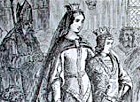
Queen
Margrethe I - with her foster son - and later king of Norway
- Sweden and Denmark Eric of Pomerania. |
|
1397
- The Kalmar Union - and the birth of Scandinavia
The Danish Queen Margrethe I (1353-1412 -
ruled Denmark - Sweden and Norway 1375-1412) took the initiative
of founding the Northern Alliance - formalised
as the Kalmar Union under one crown and kingdom
- which came to the end in 1523. This Northern
Alliance led later to the birth of five Scandinavian
Nations - consisting of a successful alliance between
Sweden - Norway - Finland
- Iceland - and Denmark
- and considered as some of the most admirable and attractive
Welfare States in the world. The Scandinavian
and Nordic regions cover most of Northern
Europe - where Copenhagen is the
largest capital.
See: Scandinavia |
|
1410
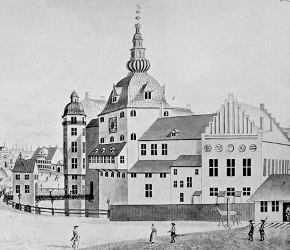
- Copenhagen Castle was built around 1410 on the ruins of
Absalon's little castle and was placed where the present Christiansborg
Palace is situated. King Christian IV modernized the Castle
and built the “Blue Tower” as an extension - that
later became a prison, with a horrifying reputation. The first
royal resident in the castle was King
Eric of Pomerania in 1417. |
|
|
The
University of Copenhagen - 1479 |
|
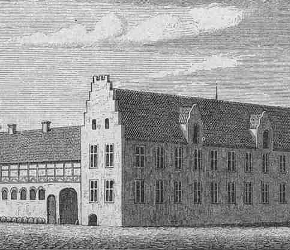
1479
- The University of Copenhagen was founded by King Christian
I in 1479 - and among the oldest Universities in Europe. The
University had faculties for theological learning - and the
study of law - medicine - and philosophy. In 1801 - most of
the buildings were destroyed under the bombardment of Copenhagen
in 1807. A new University was built in 1836.
|
|
|
Copenhagen
expands by
building the first
Royal Castle
in 1410
and the first
University in 1479
|
|
|
|
1412
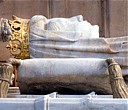
- Queen Margrethe I - buried in Roskilde Cathedral
The Danish Queen Margrethe I (1353-1412
- ruled Denmark - Norway and Sweden - 1375-1412) - is buried
in Roskilde Cathedral - behind the High
Altar - as the first Danish Royalty entombed in Roskilde
Cathedral after she was moved from her first burial plot
at the family Chapel in Sorø Klosterkirke
(Sorø Abby) - by her foster son - Eric of
Pomerania - later King Eric of Pomerania and King
of The Nordic Kalmar Union (Norway - Sweden
and Denmark) - who resided at Kronborg Castle.
Since the 15th century - all
Danish Monarch have been laid to rest in various decorated
sarcophagus in Roskilde Cathedral.
See:
Roskilde Cathedral
|
|
1416
- 1443 - The Royal city and Capital
A new castle called Copenhagen Castle was
built on the ruins of Absalon's Castle
- and the first resident was King Eric of Pomerania
(ruled Denmark 1396-1439) - who declared the rights of the
castle in 1417. In 1443
- Copenhagen replaces Roskilde - as the
Danish capital. Copenhagen's
centrally placed location in the region was central to its
succeeding growth as a trading port as well as a strong
military and political centre.
1448 - 1479 - First King Crowned of the Oldenborg Dynasty
King Christian I (1426-1481 - ruled Denmark - Sweden and
Norway) was the first King to be crowned in Copenhagen in
1449 - and was the founder of the dynasty
of the Royal House of Oldenborg - who remained
on the Danish Throne until 1863. King Christian
I was also the founder of Copenhagen University
in 1479 - the first university in Denmark.
Today there are 8 universities and higher
educational institutions in Copenhagen.
See: University of
Copenhagen |
|
|
Copenhagen
became the
Royal City
in 1417
The Protestant
Reformation
started in
Copenhagen in
1536
|
|
In
1449 King Christian I - was the first Oldenborg King to be
crowned in Copenhagen - and also the father of the Royal House
of Oldenborg and the dynasty that lasted from 1449 - 1863. |
|
Altar
painting from 1561 - after the Reformation in 1536 - showing
the three most important acts of the Danish Lutheran Church
- Baptism - Holy Communion and Sermons. |
|
|
Bakken
Amusement park - 1583 |
The
world's oldest amusement park Bakken was established in 1583
- and is still an active and very popular venue for city-weary
Copenhageners - who enjoy outdoor life. |
|
|
|
1536
- The important Reformation era
The Protestant Reformation reached Denmark and Copenhagen
in 1536. When Lutheranism
became the official religion in Denmark - and the Evangelian-Lutheran
Church was declared The State Church
of Denmark - and where a vast majority
of all ethnic Danes are members. It was
King Christian III (1503-1559 - ruled Denmark
and Norway - 1534-1559) - who was so foresighted to introduced
the Protestant movement in Denmark that
reformed the Danish Church and brought Catholicism
to the fall. |
|
|
|
|
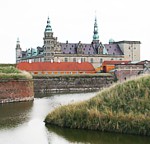
1574
- Kronborg Castle - Kronborg Slot
Kronborg Castle is situated at Helsingør
or "Elsinore" and built by King Frederik
II from 1574 to 1584
(King from 1559-1588 - ruled Denmark and Norway). After
the fire in 1629 - his son the great builder among Danish
Kings Christian IV (King from 1577-1648
- ruled Denmark and Norway 1588-1648) completed the building
of Kronborg Castle in 1638. Kronborg Castle
is built on the spit of North Sealand - and placed at the
entrance of Oresound (Øresund) -
which was the ideal position to collect Sound Duties
from ships entering the narrow Strait between Sweden and
Denmark to secure state taxes and revenues - but was also
built as a fortress to defend the Kingdom of Denmark.
|
See: Kronborg Castle
|
|
1583
- The world's oldest amusement park “Bakken”
The world's oldest amusement park “Bakken”
located north of Copenhagen in Klampenborg started humbly
- when a natural spring called “Kirsten Piils
Kilde” was discovered at the "The
Deer Park" - better known as “Dyrehaven”.
The first amusement park was completed with rides - games
and restaurants under the reign of King Christian
IV. “Bakken” still exists today as
a popular amusement park with plentiful of rides and entertaining
activities. |
|
|
The
Prominent Architect of Copenhagen |
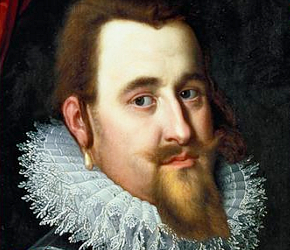
King
Christian IV - 1588-1648 |
|
|
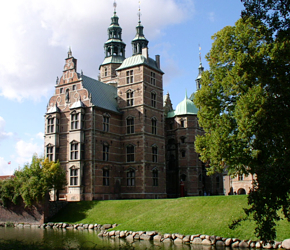
The
Royal Summer Residence - 1606 - 1634 |
Rosenborg
Castle - 1606 - 1634 |
|
|
Many remarkable
and historical
buildings were
constructed
during the
reign of
King Christian IV
1588 - 1648
|
|
1588
-1648 - King Christian IV - The prominent architect of Copenhagen
During the reign of the great builder and most
prominent architect of Copenhagen King Christian
IV (1577-1648 - ruled Denmark and Norway 1588-1648)
- many remarkable buildings and projects were constructed
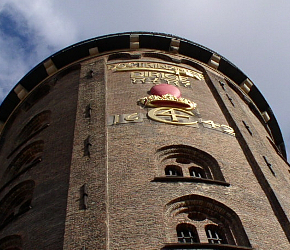
like: Rosenborg Castle - The Round
Tower- The Old Stock Exchange -
The Canals of Copenhagen - The
Old Citadel.
See: Rosenborg Castle
|
|
|
King Christian IV's
buildings are great
Tourist attractions -
and are historic monuments of a enterprising and
inventive Monarch
|
|
|
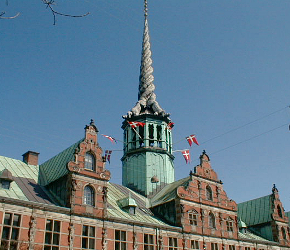
The
Old Danish Chamber of Commerce - 1624 |
|
Old
Stock Exchange - 1624 |
|
|
|
|
1617
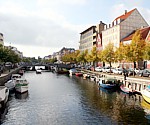
- 1622 - Christianshavn Canals
King Christian IV took the initiative to
found Christianshavn on the isle of Amager - and established
its adjoining maze of canals from 1617
to 1622. The two main reasons were partly
to protect the fleet of the Royal Danish Navy
- which was docked at the harbour entrance called
“Holmen” and to increase trading with
merchants from abroad to levy extra tolls
from their ships passing through the narrow strait between
Sealand and the Isle of Amager. |
See: Christianshavn Canals
|
|
|
1619
- Holmens Church
Holmens Church became “The Royal Naval Church”
in 1619 - when Bishop Hans Resen was able
to consecrate the Old Anchor Forge on the
Bremerholm area in Copenhagen as the Naval Church to serve
the Danish navy - and named it Holmens Church
- after King Christian IV (1577-1648 -
ruled Denmark and Norway 1588-1648) - had dedicated that
the old royal smithy located opposite the
little isle Slotsholmen was to be used as a place for worship
for the Royal Naval Personal. Holmen Church
is also the burial plot and final resting place for Naval
Danish Heroes.
See:
Holmens Church
|
|
1626
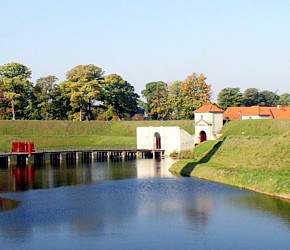
- "Kastellet" - The Old Citadel
King Christian IV started the building
of the fortification called “Kastellet”
to protect the city. The ramparts consist of five
bastions and were a part of the de fence barrier of Copenhagen
named “Citadellet Frederikshavn”. The fortress
was used in the defense of Copenhagen with
England in the Battle of Copenhagen 1807.
The old fortification areas is open to the public. |
|
|
The
Old Citadel “Kastellet” - 1626 |
1626
- King Christian IV started the building of the fortification
called “Kastellet” - The Citadel. The area is
a popular venue for Copenhageners with ramparts and five bastions
offering a panoramic view over Oresound. |
|
|
In
1648 - the Royal Library was established in an appropriate
building - just opposite Christiansborg Castle and The Danish
Parliament. The building is full functional today and is still
the National Library. |
|
|
The Old Citadel “Kastellet” - was built
in 1626 by
King Christian IV
The Royal
National Library
was founded
in Copenhagen by
King Frederik III
in 1648
|
|
|
1634
- Rosenborg Castle completed
The new summer residence of King Christian IV
(1577-1648 - ruled Denmark and Norway 1588-1648) -
Rosenborg Castle - is finally completed after undergoing
construction in stages over a period of almost 22
years - from 1602 to 1634. Rosenborg
Castle is King Christian IVs Castle - He built Rosenborg
- He lived all his life at Rosenborg - He died at his beloved
Rosenborg Castle in 1648 - at the age of
70.
|
|
|
|
1648
- The Royal Library
The Royal Danish Library was the first library founded in
Copenhagen by King Frederik III (1609-1670
- ruled Denmark and Norway 1648-1670) around 1648
- and later in 1673 - the library
was established in a suitable building - just opposite Christiansborg
Castle and The Danish Parliament. The
King acquired four private libraries and their book collections
formed the basis of the present Royal Danish Library.
|
See: The Royal
Library
|
|
1650
- The Royal Museum
The first museum for collecting genuine prehistoric relics
and artefacts of important national value was established
by King Frederik III (1609-1670
- ruled Denmark and Norway 1648-1670) – and called “Det
kongelige Kunstkammer” - (The Royal Treasuries)
- and was the foundation of the later Danish National Museum
in 1849.
|
|
|
|
1658
- The Royal Danish Guards founded
The
Royal brigade was established in 1658 in
Copenhagen by King Frederik III (1609-1670
- ruled Denmark and Norway 1648-1670) - and the main duty
was to protect the King - the royal family - and the Royal
Castles and Palaces - as well as being present during ceremonial
occasions and Royal receptions.
The Royal regiment has since 1658 - had there
head quarters and exercise grounds beside Rosenborg
Castle - and have marched every day since from
Rosenborg to the Royal residence Amalienborg
Palace for changing of the guards at noon 12:00.
The Royal Danish Guards bears a red and blue uniform to mark
various royal occasions.
|
|
|
|
1669
- Eremitage Woodlands and Deer Park
King Frederik III - founded the Deer Park
in 1669 - with the aim to establish hunting
grounds for the royal family. The park was opened to the public
in 1736 - and became a very popular outing
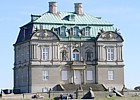
venue. The Eremitage Palace was built in
Baroque style - as a Royal Hunting Lodge in 1734
- for King Christian VI - and as a setting
for hosting Royal Banquets during the "Par Force"
hunts in the vast and fertile Deer Park - Dyrehaven
- that surrounds the Eremitage Palace.
See: Eremitage Woodlands
and Deer Park |
|
|
|
1670
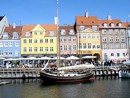
- 1674 - Nyhavn Canal & The Kings New Square - by King
Christian V
King Christian V - decided to open a gateway
from the seaside and harbour area up to the inner part of
Copenhagen - to let the merchant ships deliver their cargo
and goods closer to the central area of the city - plus provide
the daily catch of the local fishermen to be delivered freshly
to the Copenhageners.
The King arranged to dig a canal from the harbour front up
to a former public square - which later became the historic
Nyhavn area and canal - as well as being a new entrance
from the sea to a more central part of Copenhagen. The former
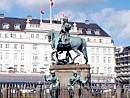
public square was re-established by King Christian
V - during the 1670's - with an
gilded equestrian statue of the King - and then turned into
the “Kings New Square” - and
better known today as “Kongens Nytorv”.
See: Nyhavn
See: The Kings New
Square (Kongens Nytorv) |
|
|
1700-1810
- Wealth - Fires - Plague and Bombardment of the City |
|
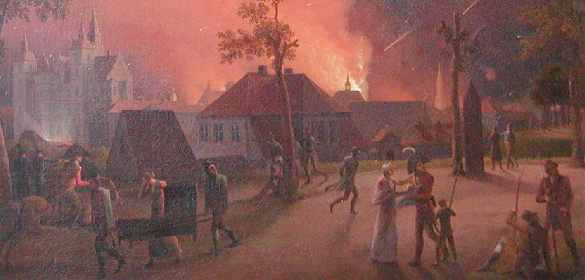
The
British Bombardment of Copenhagen in 1807 - lasted 4 days
- targeting the civilian population and major government buildings.
More than 2,000 civilians were killed during the heavy fire
plus many buildings were destroyed during the battle. The
painting illustrates the outskirts of Copenhagen during the
bombardment with Rosenborg Castle illuminated by the heavy
fires. Oil painting by C.W. Eckersberg - on display at Frederiksborg
Castle.
|
|
1700
- 1810 - Copenhagen's Economy and Trade
In the 18th century Copenhagen’s economy
benefited largely due to the intense traffic through the sound
and revenues from taxes increased heavily
- as well as trade also grew extremely during this period.
|
|
|
|
1700
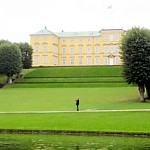
- Frederiksberg Palace & Garden
Frederiksberg Palace was built around 1700 - as a new summer
residence by King Frederik IV (1671-1730
– ruled Denmark and Norway 1699-1730) and was placed
on the top of Valby Hill - which was one of the highest spots
on the outskirts of Copenhagen.
The first Frederiksberg Palace from 1700
- was built in one plan but was later changed in 1708-1709
to a three story building. Between 1732-1738
the palace was extended with two long wings on each side of
the palace complex and painted yellow. In 1828
the palace was finally completed - when it was refurnished
and linked to the old port house.
See: Frederiksberg
Palace |
|
1711
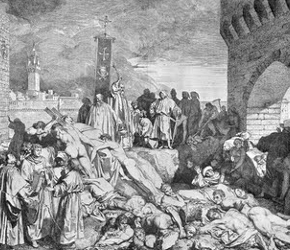
- Bubonic plague in Copenhagen
After the capital was hit by the bubonic plague in
1711 - nearly one-third of the population
had died from this highly infectious disease. |
|
1728
-
Destructive fires in Copenhagen
Several destructive fires destroyed the city in 1728
- and Copenhagen was totally damaged and ruined. Rebuilding
and reconstruction work began and the medieval part of Copenhagen
had changed permanently when the reconstruction was complete
by 1737. |
|
|
The Bubonic Plague
- 1711 |
In
1711 - Copenhagen was hit by the bubonic plague - wiping out
20,000 of its 60,000 inhabitants. The plague was brought in
by ships from Europe and Prussia - carrying infected vermin.
|
|
|
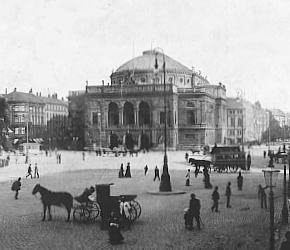
The
Royal Danish Theater
- 1892 |
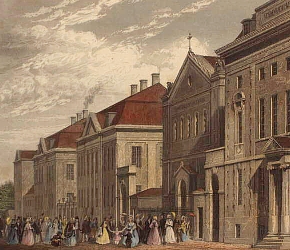
1748
- The second Royal Danish Theater in 1892 - at "Kongens
Nytorv" the Kings Square - with the first electrical
street lights in Copenhagen. The theater building was inaugurated
in 1874. |
|
|
The bubonic plague
killed over 20,000
Copenhageners
during the
widespread endemic disease in 1711 |
|
1748
- The Royal Danish Theatre
Opening of The Royal Danish Theatre with 8 actors
and 4 actresses performing French
comedies. Since the first act in 1748 - The
Royal Danish Theatre has been located on the same spot at
Kongens Nytorv in the very heart of Copenhagen.
|
|
|
|
1748
- King Frederik V - and Frederiksstaden in
Copenhagen
King Frederik V (1723-1766 – ruled Denmark
and Norway 1746-1766) is the planner and builder of Frederiksstaden
- where the Amalienborg Palaces
is the centerpiece of Frederiksstaden - a prominent district
at the waterfront that was built to house aristocrats
and noble families in Copenhagen - as well
as to commemorate the tercentenary of the Oldenburg family's
ascent to the throne of Denmark in 1448.
See: Amalienborg
Palaces
|
|
| |
1749
- First newspaper in Copenhagen
The first newspaper available in Copenhagen was “Berlingske
Tidende” - published by its founder Ernst
Henrich Berling. The newspaper is the oldest Danish
newspaper still published - and among the oldest newspapers
in the world. |
|
| The
royal Frederiks Hospital
- 1757 |
1757
- The royal Frederiks Hospital in 1805 - located on “Bredgade”
with Amalienborg Palace as their backyard neighbor - offered
free care and cure to patients and every citizen without means. |
|
| The
Flora Danica Dinner Service - 1790 |
1775
- The Royal Porcelain Factory was founded in Copenhagen -
and in 1790 - Royal Copenhagen brought out its now famous
Flora Danica dinner service - with gilded edge and Danish
flora motifs. |
|
In 1790 the Danish
Crown Prince Frederik
ordered the
Flora Danica
dinner set
as a gift for Russian Empress Catherine II
The Empress died
in 1796 and
never received it
The Dinner Set
has since been
on display at
Rosenborg Castle
|
|
1757
- The first free hospital
The first hospital in Denmark - with free treatment
was inaugurated in 1757 - by King
Frederik V (1723-1766 - ruled Denmark and Norway
1746-1766) on his birthday and named The Royal King
Frederik’s Hospital. The Hospital was located
on Bredgade (Broad Street) in inner Copenhagen
- and the rococo mansion was a part of the many fashionable
properties around King Frederik V’s prominent Frederiksstad
district from 1750 - with the Amalienborg
Palace. The former hospital building is
currently housing the Danish Museum of Decorative Art and
has been replaced by Copenhagen University Hospital.
|
|
1775
- Royal Danish Porcelain Factory
Royal Copenhagen (Den kongelige Porcelænsfabrik) was
founded in Copenhagen 1775 - by chemist Frantz
Heinrich Müller. The first dining ware produced was “Flora
Danica” for the royal family in 1790
and later Royal Copenhagen became famous for its collection
of the “Blue Fluted” (Musselmalet)
dinner service. The corporate logo and brand-mark is three
blue waves symbolizing Denmark’s three straits;
Oresund - The Great Belt and
The Little Belt. |
|
|
King Frederik V
was the planner
and builder of
the fashionable
Frederiksstad
Quarters with
the Amalienborg
Palaces to house
aristocrats and
noble families
in 1750 - 1760
|
|
| The
Amalienborg Complex
- 1748 |
1748
- The Amalienborg complex in the center of Frederiksstad -
with the Marble Church in the back. The entire Amalienborg
project was completed in 1758 - and has since 1794 - been
the prime royal residences for Danish Monarchs. |
|
| The
Liberty Memorial - 1797 |
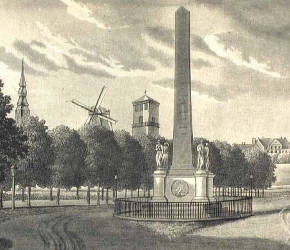
1797
- The Liberty Memorial was erected in 1797 - outside the ramparts
of Copenhagen - here shown in 1863 - on Vesterbrogade opposite
the Grand Central Station and at its original location - with
Copenhagen's Cathedral at the back. |
|
|
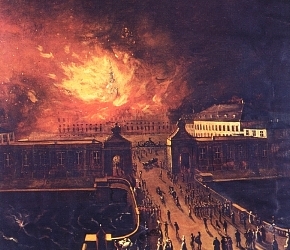
|
1794
- Christiansborg Palace burning
In 1794 - the first Christiansborg
Palace was razed by a heavy fire
that nearly damaged the entire four winged palace complex
- and the residing King Christian VII (1749-1808
- ruled Denmark and Norway 1766-1808) - and his family had
to move to Amalienborg Palace in 1794
- which later became the permanent residence for all royal
families in Copenhagen - and up to our time.
See: Christiansborg
Palace
|
|
1797
- The Liberty Memorial in Copenhagen
The Liberty Memorial was erected in 1797
- outside the ramparts of Copenhagen to commemorate the abolishment
of adscription in 1788. Prince Frederik -
later King Frederik VI (1768-1839 - King
of Denmark and Norway 1808-1839) had laid the foundation stone
in 1792. The Liberty Memorial is placed on
Vesterbrogade opposite the Grand Central Station on its original
location and is also a symbol of a germinating democratic
movement in Denmark from 1788 to 1849.
|
|
1801-1807
- The Battle of Copenhagen
The naval battle of Copenhagen against England took place
in 1801 - where the Danish fleet suffers
heavy losses and Danes lost almost 2000 casualties as well
as a similar number of men was captured. In 1807
- the British attacked Copenhagen with a
heavy bombardment of the city in connection with the Napoleonic
wars. |
 |
1808
- First Christmas tree
The first Christmas tree was lit on the eve of 24
December in 1808 - in connection
with the Christmas Season - which was the start of a new tradition
to celebrate Christmas. On the top of the Christmas tree is
a star to symbol the shining star over Bethlehem
- and the birth of Jesus Christ that was the first step to
unite the lit Christmas tree with the Danish Christian Culture. |
|
Many
devastating
fires in
Copenhagen
from 1794 to 1807
destroyed
the City and
its many buildings
|
|
|
Christiansborg
Palace
on fire - 1794 |
1794
- The first Christiansborg Palace was raised by a fire
in 1794 - and nearly burnt down to the ground. The residing
King Christian VII moved to the new Amalienborg Palaces
together with the rest of the Royal family and Court.
During the 1800s - the second Christiansborg Palace
was rebuilt again and inaugurated in 1828. In 1884 the
second Christiansborg Palace burnt down to the ground. |
|
|
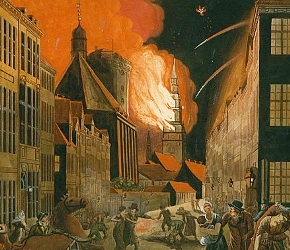
The
Naval battle in 1801-1807 - Copenhagen |
1801-1807
- The Naval battle in 1801-1807 was a disaster for Copenhagen
with many heavy bombardments of the city - where the
Danish fleet suffers heavy losses and Danes lost almost
2000 casualties as well as a similar number of men was
captured. The painting shows Copenhagen’s Cathedral
burning beside the Round Tower. |
|
|
|
Evolution
up to the 21 century |
|
1813
- Denmark bankrupt
In the beginning of 1813 - and under the
reign of King Frederik VI (1768-1839 - King
of Denmark 1808-1839 and Norway 1808-1814) - the country went
bankrupt - and Denmark had to cede Norway
to Sweden after Norway had been a part of
the Danish-Norwegian kingdom for more than 450 years!
The bankruptcy affected many Copenhageners - and ongoing businesses
in Copenhagen. |
|
First
free school in Denmark is Prince Carl’s School
from 1814. |
|
1814
- First free schools with compulsory education
A new education Act in 1814 - under the reign
of King Frederik VI (1808-1839) was the very
first birth of the Danish "Folkeskole" -
Peoples School - introducing free primary schools with compulsory
education for all pupils in the country between age
7 and 14 years. The act was named
"Almueskolevæsenet i Kjøbstæderne"
- which began the building of new schools in and around Copenhagen
- and gradually in the rest of Denmark. The first free school
in Denmark is Prins Carls Skole (Prince Carl’s
School) located in “Store Torøje” between
Faxe and Store Heddinge
on the east cost of Sealand - and is now a Prins Carls
School Museum.
|
|
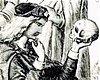
Hamlet
- performed at Kronborg Castle 1816. |
|
1816
- Kronborg Castle - Shakespeare and Hamlet
The world famous play “The Tragedy of Hamlet
- Prince of Denmark” or best known in brief
as “Hamlet” written by William
Shakespeare around 1600 - was played
for the first time in 1816 in the “Canon
Hall” at Kronborg Castle -
and “Hamlet” has ever since been performed at
Kronborg Castle on open air stage in the primeval Courtyard
of the castle.
See:
Kronborg Castle |
|
|
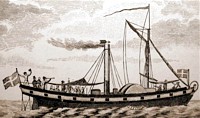
1819 - First Danish Steamship
The first Danish steamship SS Caledonia began
its route between Copenhagen and Kiel
on July 1 – 1819 - as the paddle steamer
SS Caledonia - and was acquired used in England in 1819.
The SS Caledonia was used as a mail steamer on the route between
Copenhagen and Kiel.
|
|
|
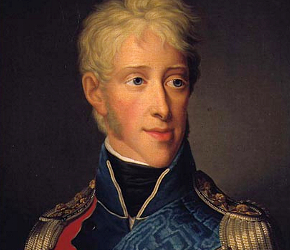
Under
the reign of King Frederik VI - 1768-1839 -
the country went bankrupt and Denmark
had to cede Norway to Sweden in 1813. |
|
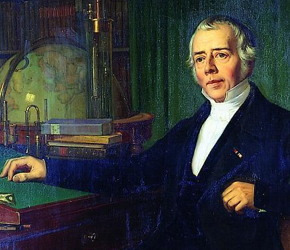
Physicist
and chemist Hans Christian Ørsted
- who
discovered electromagnetism - founded the College of Advanced
Technology in 1829. |
|
|
The Industrial
Revolution
Started Slowly
in Denmark in
the middle of
1800's - evolving
new labor laws
and a definite
transition
from a country
dominated by
Agriculture to a
country dominated
by Industry
|
|
| 1829
- College of Advanced Technology - Later DTU - Danish Technical
College |
|
|
The first Academic Engineering University and Technical
College in Denmark (Den Polytekniske Læreanstalt)
- was established in 1829 in Copenhagen. |
|
In 1829 - Hans Christian Ørsted
(1777 - 1851) - as Denmark's first polytechnic - and a prominent
Danish physicist and chemist - who discovered electromagnetism
and shaped post-Kantian philosophy - as well as advances in
science throughout the late nineteenth century - founded the
College of Advanced Technology -
(Den Polytekniske Læreanstalt) in Copenhagen
- with the first MSc programme in Engineering
at a high academic level - to make use of
scientific progress in the service of society by applying
technology. The College changed its name to Danish Technical
College in 1933 - and finally became the
Technical University of Denmark - DTU - (Danmarks
Tekniske Universitet) in 1994
- and is today ranked among Europe's leading Engineering Institutions
and Technical Universities.
See year 1933. |
|
1830
-1840 - Vesterbro - Nørrebro and Østerbro
The city slowly recovers after the bankruptcy in 1813
- and from 1830-1840 - it slowly grew beyond
the ramparts into the new working class quarters such as Vesterbro
- Nørrebro and Østerbro that
became a part of Copenhagen. |
|
|
|
1840
- King Christian VIII - Last Crowning Ceremony in Denmark
The last crowning ceremony in Denmark was at Frederiksborg
Castle Chapel with the coronation and anointing of
King Christian VIII (1786-1848 - King 1839-1848 of
Denmark and King of Norway until 1814) and Queen Caroline
Amalie of Schleswig-Holstein in 1840.
From
1671 to 1840 all Danish
Absolute Monarchs were crowned and anointed
in the Chapel at Frederiksborg Castle - except
for King Christian VII - which was held in
the Place Chapel in Copenhagen. Today Crowing
of Danish Kings and Queens is replaces by a ceremonial announcement
of the accession and proclaimed from Christiansborg
Palace.
See:
Frederiksborg Castle
|
|
|
|
1843
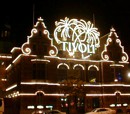
- Tivoli Gardens established in Copenhagen
Tivoli is established by Georg Carsten
and opened on August 15 - 1843. There
were 3.615 visitors on the opening
day. On the first year in 1843 - there
were over 175,000 guests visiting Tivoli.
More than 2,6 millions persons visited
Tivoli in 2010.
See: Tivoli Gardens |
|
|
| The
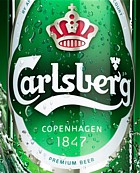
famous Carlsberg Brewery was founded in Copenhagen 1847. |
|
|
1847
- Carlsberg Brewery founded in Copenhagen
World famous Carlsberg Brewery was founded
in 1847 - outside of Copenhagen
and the first Carlsberg Beer was distributed 10 November
1847 - as a Lager beer. Carlsberg
was founded by J. C. Jacobsen (1811-1887)
- who also was a philanthropist and the founder of the Carlsberg
Foundation (Carlsbergfondet) in 1876 that owns 51% of the
entire Carlsberg Group. The foundation runs the museum at
Frederiksborg Castle and the New
Carlsberg Glyptotek as well as involvement in other
social and cultural engagements beneficial to the society.
The brewery from 1847 is open for tours - showing visitors
a modern industrial plant and beer production followed up
by tasting many of the sorts of beers Carlsberg markets around
the world. The Carlsberg Group is the 5th
largest brewery company in the world with over 30,000
employers spread around the globe. Carlsberg’s
promotional slogan "Probably the Best Beer in
the World" appeared in corporate advertising
from the 1980s and is synonymous with the brewing of high
quality ales for over two centuries.
Denmark is a Great Beer Drinking
Nation - and the Danes just
love and enjoy their many types
of beers - and are still the most satisfied beer-drinking
consumers in Scandinavia - and ever since the first
strong “Mjød” was produced
and consumed by the Danish Vikings. |
|
|
The First
Amusement Park
in Copenhagen
in 1843 -
and the first
Central Station
in the City
in 1847
|
|
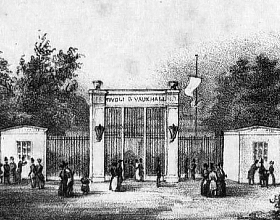
1843
- The Tivoli head entrance on inauguration day in 1843 -
and public waiting to enter the new amusement park named
“Tivoli & Vauxhall”. The opening day was
a grand success from the very first day - where 3.615 visited
the park. |
|
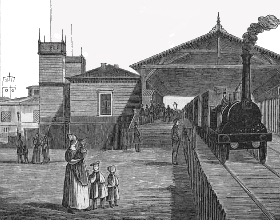
1847
- The first Central Station in Copenhagen from 1848 - was
built in 1847 to serve the very first 30 km. railway line
in Denmark from Copenhagen to Roskilde and visa versa. The
Station at Roskilde from 1849 is still operating. |
|
1847
- First Central Station in Copenhagen
The first Central Station in Copenhagen was built in 1847-1848
- to serve the very first 30 km. railway
line in Denmark from Copenhagen to Roskilde
and visa versa.
Central Station |
|
 |
1847
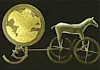
- First steam engine
The first steam engine in Copenhagen was built in England
1846 - and delivered to the railways in 1847
- to run the service between Copenhagen and Roskilde.
The steam engine was named “Odin” -
and was also the first steam engine in Denmark.
|
|
|
1849
- The National Museum of Denmark
The National Museum of Denmark (Nationalmuseet) was founded
in Copenhagen in 1849 - and today is Denmark’s
largest museum of Cultural History covering
Danish Cultural Heritage - as well as foreign
cultures and their history. The National Museum is situated
in the former Mansion and Palace of Crown Prince Frederik
(King Frederik V) - and been the base since 1853.
|
|
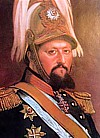
| King
Frederik VII - the last Oldenburg monarch - signed the
new Constitution on June 5. - 1849. |
|
1849
- New Constitution signed in Copenhagen
Denmark
became a constitutional monarchy on June 5
- 1849 - and the day is celebrated every
year as a Danish National and Public Holiday - all
over the Danish nation. The Constitution was signed
by King Frederik VII (1808-1863 -
King of Denmark 1848-1863) at the Danish Parliament
(Christiansborg Palace) in Copenhagen. The Danish
Parliament is also called “Demokratiets
Højborg” (The Stronghold of
the Danish Democracy) - and the Danes have been governed
by this well functional and strong
democratic Constitution ever since 1849
- which has been simplified with just a slightly few
adjustments in 1866 - 1915 - 1920
and 1953.
Quotation by King Frederik VII:
“People's
love - My strength!”
(Folkets kærlighed - min styrke!)
|
|
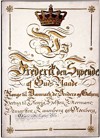
The
new and real Danish Constitution from 1849 -
is on display at the Danish Parliament. |
|
|
|
|
The
Danish Constitution from 1849 |
|
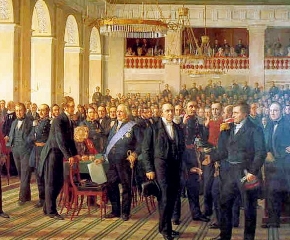
1848
- The National Constitutional Assembly - painted by Constantin
Hansen - at their first meeting in 1848. The new Danish Constitution
was signed by King Frederik VII in 1849 - that finally put
an ending to the absolute monarchy from 1660 by King Frederik
III. |
|
|
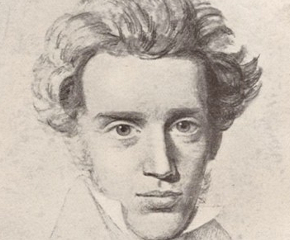
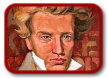
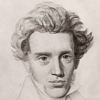
Søren
A. Kierkegaard 1813 - 1855 |
|
Søren
A. Kierkegaard (SAK) is a famous Danish philosopher and religious
thinker - who wrote literary and philosophical essays - plus
the founder of modern existentialism. SAK was born in Copenhagen
in 1813 - and died at Frederiksberg Hospital in 1855. |
|
The Danish
Constitution
is signed in
Copenhagen on
June 5th - 1849
by
King Frederik VII -
and the
Constitution Day
is a National
Public Holiday
that is celebrated
all over Denmark
|
|
1855
- Søren A. Kierkegaard
Philosopher
Søren A. Kierkegaard dies in Copenhagen - November
11 - 1855. Considered to be the founder of
existentialist philosophy.
See:
Søren
Aabye Kierkegaard
|
|
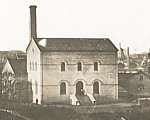
| The
First Water Treatment Plant
in Copenhagen 1859. |
|
1859
- First Water Treatment Plant
The first Water Treatment Plant was establish in 1859
in Copenhagen - providing Copenhagen Households and
Copenhageners with fresh and clean drinking water.
Copenhagen’s first Municipal Waterworks and Water
Supply Plant was in operation until 1950 -
with an effective water cleaning unit for the circulation
of renewed drinking water. The water supply leading
to the first Water Treatment Complex - was based on
surface water from the lakes around Copenhagen. |
|
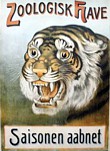
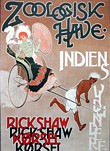
|
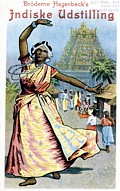
Nostalgic
posters from Copenhagen Zoo - offering Rickshaw rides
with natives from India - during a human exhibition
in 1901. |
|
|
1859
- Copenhagen Zoo
Copenhagen Zoo (Zoologisk Have) was inaugurated in 1859
- with a handful of animals. On opening day visitors
could see chickens - ducks
- owls - rabbits
and one fox. In a tub was also a little
turtle.
Around 1901 - Copenhagen Zoo had a
display - of foreign humans - which included
30 people from India - men
- women and children that lived their native lives among
huts of palm tree leafs in the center of the Zoo to
show the Copenhageners how “Brown Exotic”
people lived their lives abroad - and the human
exhibition was a great sensation at that time.
Also foreign natives from the Middle East
- Far East and Africa
- were exhibited frequently at Copenhagen Zoo. |
|
|
|
1861
- The last execution in Copenhagen
The last official execution is conducted
in Copenhagen on ”Rødovre Mark”. The person
that was beheaded was Ane Andersdatter
- and also the last female that was executed in Denmark. She
was a poor widow - who murdered three of her children - shortly
after their births.
|
|
As the
population of
Copenhagen
grew over the
ramparts
of the City
in the mid 1850's -
there
was an
increasing demand
for public transport
systems
in the new
urban areas
|
|
|
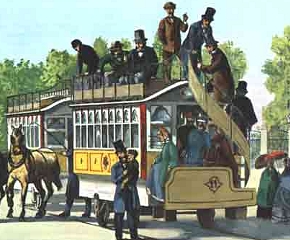
Horse driven Tram Car - 1863 |
1863
- The first horse driven Tram Car line in Denmark and Copenhagen
was established in 1863 - and called The Copenhagen Railway
Company. The Tram Car was the first of its type in Europe
with 36 sitting passengers. |
|
|
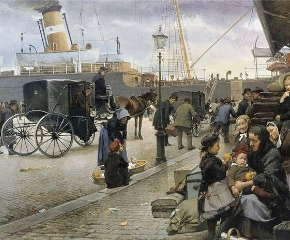
1888
- Danish emigrants at Larsen's Plads leaving for America together
with their relatives - saying goodbye. The steamship at the
pier is "SS Thingvalla" equipped with one funnel
and three masts. Painting by Edvard Petersen. |
|
1863
- First Tramcar in Copenhagen
The first Tramcar service and line no
1. is established in Copenhagen 1863.
The horse driven Tramcar is the first of its type in Europe
and the route went ”Sankt Annæ Plads” to
“Frederiksberg Runddel”. |
|
1863
- First King of the House of Glücksborg
In 1863 - the House of Glücksborg succeeded
the House of Oldenborg by King Christian IX
(1863-1906) - and the present Royal Family are the direct
descendants of the House of Glücksborg.
See: The Yellow
Palace
|
|
|
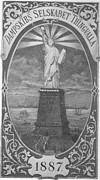
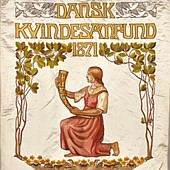
The
Danish Women’s Society Banner from 1887. |
|
1871
- The Danish Women’s Society - Founded
The
Danish Women’s Society is founded in 1871
in Copenhagen - and was particularly active in the struggle
to improve women’s educational - social
and financial position. The Danish Women’s
Society was not associated to any political movement or party
- and the aim was to give women their independent voting rights
in Danish elections - which happened in 1915
- by constitutional changes. Furthermore the goal for
The Danish Women’s Society was to obtain
equality of employment and improvements in
conditions for women and children. This led to a legislation
in 1919 - that improved salaries
for women in public service - as well as equal access for
women and men to public positions. |
|
|
Botanical
Gardens Copenhagen |
|
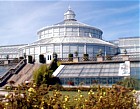
1872
- Botanical Gardens Copenhagen
The present Botanical Garden - the fourth in the succession
of university gardens - was established in 1872
- and inaugurated in 1874 on the former fortification
area of the city. The rock gardens and other higher areas
are part of the old ramparts - while the lake is a remnant
of the former city moat. The University of Copenhagen’s
first Botanical Garden was founded in the central part of
the old city in around 1600 - and the second
near Frederiks Hospital in 1752 - by the
initiative of King Frederik V (1723-1766
- ruled Denmark and Norway 1746-1766). The third Botanical
Garden was placed in 1778 at Nyhavn near
Amalienborg Palace.
See: Botanical Gardens
Copenhagen
|
|
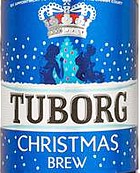
The
strong Christmas Beer by Tuborg - is a brew that yearly complies
with the Danes beer drinking traditions. |
|
1873
- The Tuborg Brewery founded in Copenhagen
The legendary Tuborg Brewing Company was founded in 1873
- on the harbour area in Hellerup - situated north of Copenhagen.
Since 1970 - Tuborg has been part of the
Carlsberg Group. The famous Tuborg
“pilsner” was brewed for the first time
in 1880 - and was a competing beer to Carlsberg
beer on the market. The prominent strong Christmas
Brew (Julebryg) was launched for the first time in
1990 - and has been a tradition for beer
lovers ever since on the first Friday in November
- and called J-day. "Christmas Brew
day" or "Julebryg dag". The Tuborg
Brewery markets and sell a variety of beers in over 32
countries including Tuborg Green - Tuborg Lemon
- Tuborg Christmas beer - Tuborg Gold - Tuborg Red - Tuborg
Twist - Tuborg Black and the alcohol strong Tuborg
Fine Festival Beer. Tuborg Gold is a
very popular strong brew throughout Denmark and Scandinavia
– as well as the re-brewed Tuborg Red -
which was the first beer the Tuborg Company brewed in 1875
- and was a celebrated hit to comply the Danes beer drinking
traditions.
Denmark
is a Great Beer Drinking Nation - and the
Danes just love and enjoy
their many types of beers - and are still the most satisfied
beer-drinking consumers in Scandinavia -
and ever since the first strong “Mjød”
was produced and consumed by the Danish Vikings.
|
|
|
|
1873
- First Woman Magazine
The first Woman Magazine available in Copenhagen was called
“Femina” - and published by Aller
Media that was founded by Carl Aller and
his wife Laura Aller in 1873.
“Femina” was also the first Woman
Magazine to be distributed in Denmark. |
|
1875
- Hans Christian Andersen
World famous fairy tale writer Hans Christian Andersen - dies
in Copenhagen August 4 - 1875
- and his funeral takes place at Copenhagen's Cathedral.
|
|
 |
1876
- First Soccer club (football) founded in Copenhagen
The first soccer club (Football) was founded in Copenhagen
in 1876 - and named KB -(Københavns
Boldklub - Copenhagen Football Club) that took the initiative
to introduce the soccer game from England. Soccer was presented
in Copenhagen for the first time 1879 - at
the Eremitage Plains north of Copenhagen
- and the first soccer (Football) match took place between
“Birkerød Bording Scool”
and KB.
|
|
|
1877
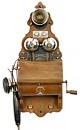
- First telephone introduced
The first telephone set was introduced in Copenhagen in 1877
- based on the invention by Alexander Graham Bell
from USA in 1876. In 1881
- there were almost 22 subscribers in Copenhagen
that was connected to a telephone network created by the Copenhagen
based company “Kjøbenhavns By- og Hustelegraf”.
In 1900 - 25,000 in Denmark
was the owner of a telephone - and a more organized network
and telephone lines was conducted by central units around
the Country. The telephone “book” in 1881
- had one page with 22 numbers - and the
addresses of the subscribers. |
|
| |
1879
- Trans-Atlantic Hub - “Larsens Plads”
A new port terminal was established in Copenhagen
in 1879 - and named “Larsens
Plads” for the Thingvalla Line -
which began operating a direct route between Scandinavian
ports and America - offering the growing
number of Scandinavian emigrant’s affordable - comfortable
and a safe voyages to USA on “SS
Thingvalla” from Copenhagen - Newcastle
- New York. The first voyage in 1879
from Copenhagen with the steamship “SS
Thingvalla” to New York via
Newcastle was mostly with Scandinavian immigrants.
There was passenger accommodation for 50-1s
- 50-2nd and 900-3rd class.
See:
Find
Danish Ancestors |
|
|
Timeline for
important
Danish Persons
and Events
in the late 1800's
|
|
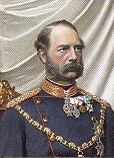
1863
- The first Glücksborg King. King Christian
IX. |
|
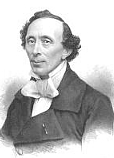
| 1875
- Writer - Hans Christian Andersen dies. |
|
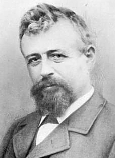
1882
- Frederik L. Smidth founded F.L. Smidth &
Co. |
|
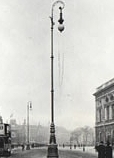
1892
- The First street lights at “Kongens Nytorv”.
|
|
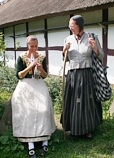
1901
- The Open - Air museum opens at Lyngby. |
|
|
|
1882
- FLSmidth & Co
The world’s leading supplier of cement production technology
FLSmidth & Co. A/S, was founded in Copenhagen
by Frederik Læssøe Smidth in
1882. Today FLSmidth & Co is an international
corporation specialising in the development - design and engineering
of complete processing lines to the cement and mineral industry
with headquarters in Copenhagen and subsidiaries all over
the world as well as 7,500 staff members.
As one of Denmark’s major exporters
- the FLSmidth & Co. group has a matchless
global market position and contributes heavily to support
the Danish economy by exporting their unique engineering
competence - high technology - processing
plants and services worldwide. |
|
1892
- First Power Plant in Copenhagen
The first Power Plant (Gothersgade Elektricitetsværk)
is established in Copenhagen and for the first time in the
city the street lights around “Kongens Nytorv”
are lit with electricity. |
|
|
|
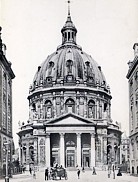
1894
- The Marble Church
The Marble Church was finally completed and inaugurated
in August 1894 - after the church complex
was left incomplete and stood as a ruin for nearly 150
years - and after nearly 20 years
of construction due to new funds and other generous contributions.
The Marble Church or “Frederik’s Church”
was built to mark the celebration the royal house of Oldenborg
in 1749 - in connection with the establishment
of the Nobel quarters of Frederiksstad
from 1750 - 1760 - plus the four Amalienborg
Palaces.
See:
The Marble Church
|
|
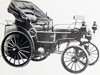 |
1896
- First motor vehicle in Copenhagen
The first motor vehicle in Denmark was a Daimler
from Germany - and presented in Copenhagen in 1896
by its owner Holger Hassel. At the same time Mercedes-Benz
also introduced its first model in Copenhagen in
1896. |
|
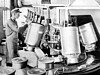 |
1897
- Enigheden - First Industrial Dairy in Copenhagen
The first industrial Dairy in Copenhagen was established
in 1897 - and was a cooperative Dairy
formed by Copenhagen dairy workers and named “Enigheden”.
|
|
|
 |
1898
- Public Payphone - Copenhagen
The first public - and automatic
payphone was installed and in use in Copenhagen for
10-øre per call. The Payphones was
later modernized gradually and expanded on selected locations
- with around 400 payphone stations
- as more Copenhageners was connected to the - at
that time primitive telephone network. |
|
|
|
1901
- First Kinder Garden established
The very first Kinder
Garden with public support in Denmark is established and inaugurated
in Copenhagen at Enghave Square on Vesterbro
and called “Folkebørnehave”
- The Peoples Kinder Garden. |
|
1901
- The Open Air Museum
On one of the world’s largest and oldest public museum
areas - the Open-Air Museum “Frilandsmuseet”
in Northern Copenhagen opened in 1901. The
Museum includes more than 100 rural buildings
from Denmark - spread out over a large scenic area covering
the period 1650 to 1950. All the houses are
fully furnished and visitors you can walk into all farmhouses
and buildings and experience daily life for each era represented.
Free admission all year round. |
|
|
|
1901
- Human Exhibitions in Tivoli Copenhagen
In 1901 - Tivoli
hosted
a Human Exhibition in Copenhagen -
and exhibited foreign races and their way of life to the
Danes - who hardly could afford to travel abroad.
The first Human Exhibition in Tivoli was in 1901
- with exotic and tropical human beings from India
showing the everyday life in India - performing
coolies with their two-wheeled rickshaws
- snake charmers - dancers
- actors - acrobats and
much more outlandish - which gathered crowds of curious
Copenhageners and Danes - who
learnt more about the foreign cultures
at these Human Exhibitions in Tivoli - and gave the spectators
an awareness of the wide world beyond Denmark.
Since human natives from the
Middle East - Far East
- Africa and The Virgin Islands
were exhibited frequently at Tivoli in
Copenhagen. |
See: Tivoli Gardens
|
|
|
1903
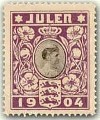
- The world's first Christmas Seal
In 1903 - the world’s first Christmas
Seal “Julemærke” was
invented in Copenhagen by post office clerk Einer Holbøll
- and published in Denmark at Christmas 1904
- portraying the Danish Queen Louise of
Denmark - and printed with the word “Julen”
- 1904. Over 4 million
Christmas stamps were sold in the first year at 2
øre per seal. (There is 100 øre to
every 1.00 kroner - DKK.)
Since 1911 - the Christmas Seal sales has
provided the financial basis for the establishment and operation
of several Christmas Seal Homes -
sanatorium’s - convalescent homes and boarding
schools for children - from all over Denmark. |
|
|
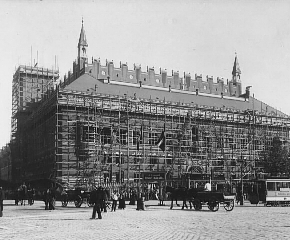
The
Town Hall of Copenhagen - 1905 |
1903
- The Town Hall of Copenhagen around 1903 - and during construction
- without the tower that is slowly rising at the back - which
will reach a height of nearly 106 meters - when it is completed.
The Town Hall was inaugurated in 1905. |
|
|
Jakob
Christian Ellehammer - 1906 |
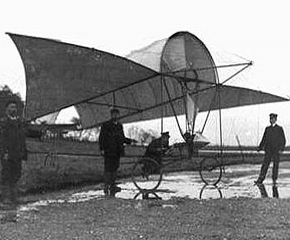
1906
- Jakob Christian Ellehammer with his aeroplane and crew in
1906 - on the tiny isle Lindholm outside of Copenhagen - where
he flew over 50 centimeters over the surface for a few minutes
- as the first aviation pioneer in Europe. |
|
|
Copenhageners
got wings
in 1906
and flew for
a few minutes
over the surface
on the Isle of
Lindholm
|
|
1905
- The Town Hall
The building of Copenhagen's Town Hall (Rådhuset) is
completed in 1905 - with a 107 meter
high tower that is open to the public.
See: Copenhagen's
Town Hall (Rådhuset)
|
|
|
1906
- Nordisk Film
Nordisk Film was established in Valby - Copenhagen in 1906
- and is the oldest movie production company in the
world. In 1992 - Nordisk Film merged
with the Egmont media group and is the largest producer and
distributor of electronic entertainment in North Europe. The
film company runs the Palads Cinema in Copenhagen with 17
screens. |
|
|
1906
- First flight in Copenhagen and Europe
Danish inventor and aviation pioneer Jacob
Christian Ellehammer (1871-1946) was
the first European to fly an airplane on the small isle of
Lindholm outside of Copenhagen in 1906.
The flight distance of 421 meters at an altitude
of over 50 centimeters was a record in Europe
and conducted 3 years after the world’s
first historical flight by the Wright Brothers in 1903
- in North Carolina - USA. |
|
|
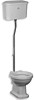
1908 - Flush toilets &
bathtubs
There are almost 50,000 (WC) flush toilets
installed in Copenhagen - and around 20,000
bathtubs with running hot tub water. The sanitary conditions
are improving in Copenhagen - but it's still the wealthy citizens
that can afford to install bathrooms with flush toilets and
bathtubs.
|
|
1909
- First driving school established in Copenhagen
The founder of the first driving school in Copenhagen was
Valdemar Darlov - who named his driving school
“V. Darlov’s Motorskole”. |
|
|
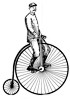
1910
- Bicycle Lanes and paths
in Copenhagen
The
first separate bicycle paths are established
in Copenhagen around the Lakes in 1910 -
as the existing bridle paths was converted
into isolated Cycle ways - tracks to secure
the heavy growth of cycles on the road at that time. At the
present there are more than 360 km of bicycle
paths in and around Copenhagen and since the first few bicycles
were introduced on the street in 1890s -
nearly every Copenhagener owns a cycle today. |
|
1912
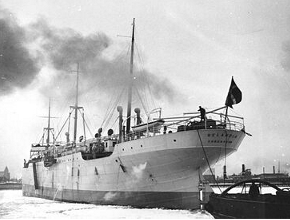
- M/S Selandia
The world's first ocean-going diesel-powered ship ever built
was M/S Selandia that started her maiden
voyage in 1912 - from Copenhagen to Bangkok
with two B&W four-stroke diesel engines. Burmeister
& Wain (B&W) was a large established Danish
shipyard and leading diesel engine producer with headquartered
in Copenhagen. M/S Selandia was owned by (ØK) - The
East Asiatic Company (EAC) - founded by Hans Niels Andersen
in Copenhagen in 1897.
In 2008 - Danmarks Nationalbank
issues a new 20-krone coin with the M/S
Selandia as its motif - which is the third coin
in a series with ships as their common motif. |
|
|
1912
- First female in Copenhagen with driving license
The first female in Copenhagen to get a driving licence
was Minna Darlov in 1912.
She was married to Valdemar Darlov - who established the
first driving school in Copenhagen in 1909
- which also was the first in Denmark. But woman were allowed
to drive cars in Copenhagen earlier - approx. when the first
motor vehicle was presented in Copenhagen in 1896.
|
|
1912
- The
world's first ocean-going diesel-powered ship M/S Selandia
- started her maiden voyage from Copenhagen to Bangkok in
1912 - and was powered with two B&W (Burmeister &
Wain) four-stroke diesel engines. M/S Selandia was owned by
(ØK) - The East Asiatic Company (EAC). |
|
|
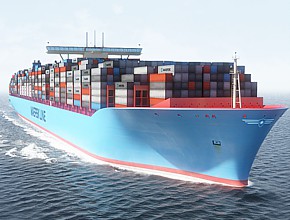
The
A.P. Møller-Maersk Group |
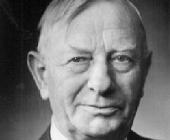
1912
- Ship Owner Arnold Peter Møller better known as A.P.
Møller established the Steamship Company of 1912 -
with headquarters in Copenhagen. Today the A.P. Møller-Maersk
Group is the world’s largest container ship operator,
with over 130 offices worldwide and 120,000 employees. |
|
|
The
world's first
diesel powered
ship - M/S Selandia
was Danish
and started her
maiden voyage
from Copenhagen
to Bangkok in 1912
The
world's
largest
Shipping Company
was founded in
Copenhagen
in 1912
|
|
1912
- A.P. Møller
The
legendary Ship Owner Arnold Peter Møller better
known as A. P. Møller - established
the Steamship Company of 1912 (Dampskibsselskabet
af 1912 - Aktieselskab) - with headquarters in Copenhagen.
The company started in 3 rented offices located at the Old
Stock Exchange “Børsen” and later moved
in 1915 - to a more exclusive address at
Kongens Nytorv 8. Today - the A. P. Møller-Maersk
Group is an international conglomerate with more
than 120,000 employees - and is the largest
container ship operator with the biggest container ships in
the world - serving customers from over 130
offices located worldwide. The Maersk Group’s activities
are concentrated over 4 main business sectors: Container
& transport - Shipping & offshore
- Energy & Oil/gas production - Retail & industrial
business - and has throughout the years had a significant
influence on Denmark's export revenues -
as well as the economic and social
development of the country.
See:
Danish Exporters |
|
1912
- A. P. Møller - legendary ship owner founded the world’s
largest shipping company - involved in energy - logistics
- retail and manufacturing. |
|
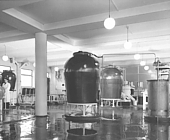
1925
- Insulin production at Novo in 1938 - at the Fasanvej processing
plant and laboratory. Today the company works in 180 countries. |
|
|
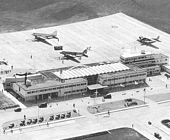
1925
- Kastrup Airport was inaugurated as the centre for Scandinavian
and international flights - and the main hub for many European
airlines. |
|
1928
- The third Christiansborg Palace was completed after 21 years
of construction - and the Danish Parliament was also inaugurated. |
|
| |
1913
- The
Little Mermaid - Copenhagen
The statue of the Little Mermaid
is unveiled at Langelinie in 1913. The statue
was commissioned in 1909 - by Carl
Jacobsen - founder of New Carlsberg Breweries. The
statue was created by sculptor Edward Eriksen
- who used his wife Eline Eriksen as the
model. |
|
|
|
1915
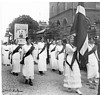
-
Danish Women right to vote
Danish women were granted the right to vote on June
5 - 1915. Female enfranchisement was part and parcel
of a major overhaul of the Danish Constitution from
1849. To mark the occasion - more than 12,000
women marched in procession to the square in front of the
Amalienborg Palace in Copenhagen - and handed
a declaration to King Christian XI - where
the word “thank” was not used
- to emphasise that parliamentary enfranchisement was a civil
right for everyone in Denmark - and not a charitable act necessitating
gratitude. |
|
|
|
1920
- Havarti Cheese
The Cream Havarti Cheese “Flødehavarti”
is introduced to the Copenhageners in 1920
- and derives from the old Havarti Cheese produced since 1852
at the Havartigaard Dairy situated a bit
north of Copenhagen. The Danish Havarti Cheese
is world famous in its round form - and far the most popular
cheese that is exported from Denmark - and among one of the
many Danish dairy product exported to international markets.
|
|
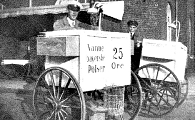
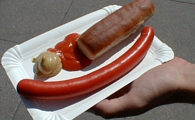
1921 - "Pølsevogn" - and the Danish
fast food culture since 1921
The first "Pølsevogn" (Sausage
stand) was established in Copenhagen around
1921 - and today more than 140
million red "Pølser" are
consumed every year at the Danish "Pølsevogn".
The out door "Hot Dog Stand"
- also called "Cafe Fodkoldt"
- "Café Cold Feet"
has been a cultural institution and fast
food tradition since 1921 - in Denmark.
The Red "Pølse" (Sausage) also
called "wienerpølser"
with
"brød" (bread) has been the Danes
favourite out-door meal and fast food
for generations - and made of tasty
pure pork. On nearly every street
corner in Copenhagen there will be a "Pølsevogn"
(Mobile Sausage stand) with a variety
of warm red pork sausages
and various tasty supplements. The Danish
"Pølsevogn" with its
red "porky" sausages - represents
the heart and soul of the Danes food culture
- and has for almost a century been a
vital part of the Danes “Finger
Food” and "Street Food"
culture.
|
Fast
food since 1921. One red "Pølse"
- 25 øre - and bread 5 øre. |
|
|
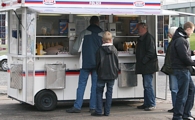
There
is a sausage stand on nearly every
street corner in Copenhagen. |
|
The
famous Danish red sausage "Wienerpølse"
with bread. |
|
|
|
|
|
|
|
1924
- Copenhagen’s Cathedral
Copenhagen’s first Cathedral “The Church
of Our Lady” (Vor Frue Kirke) was inaugurated
as a Cathedral in 1924. The Church building
was rebuilt and completed in 1836 - after
the bombardment of Copenhagen in 1807 - with
all the marvellous statues of Christ and
his 12 Disciples shaped by the Danish neoclassical
sculptor Bertel Thorvaldsen. There have been
five historical Churches situated on the same spot to serve
the Copenhageners since the first Church was built in 1209.
See: Copenhagen Cathedral
|
|
1925
- Novo Nordisk
To brothers and engineers Harald Pedersen
and Thorvald Pedersen started the production
of insulin and named their new company Novo Terapeutisk Laboratorium
(Novo) - which was based in central Copenhagen.
At that time two firms in Denmark were competing to be the
world's leading manufacturers of insulin - namely Nordisk
Insulinlaboratorium (Nordisk) founded
in Copenhagen 1923 - and Novo.
In 1989 - Novo and Nordisk
decided to join forces having competed with each
other for more than 60 years and called the
new company Novo Nordisk A/S. In 1999
- Novo Nordisk demerged into Healthcare
and Enzymes - and in 2000 Novo Nordisk
and Novozymes began operating as
two separate companies. Today Novo Nordisk
is a world leader in diabetes care and markets its products
in 180 countries - with its headquarters
in Copenhagen and 23,600 employees working
in 80 countries. The Novo Group
pumps billions of their export revenue into
the Danish economy every year and contributes to keep the
country as one of the worlds leading welfare states by financing
a part of the social security systems, health
services and educational programmes. |
|
|
|
1925
- First radio broadcast in Copenhagen
The first radio programmes were broadcasted to the Copenhageners
3 hours daily by the officially and national
(Danish Broadcasting Corporation) founded in 1925
- as a public-service organization under the name (Statsradiofonien)
later called Danmarks Radio and today DR.
In 1927 the broadcasting net was extended
to also cover the entire Danish nation so every Danish citizen
could receive and hear the radio programmes. There was almost
10,000 radio’s in 1927
to receive the national radio broadcast transmissions.
|
|
1925
- Kastrup Airport outside Copenhagen
Kastrup Airport outside of Copenhagen was inaugurated 1925
- as one of first private airports in the world with a grass
runway. In 1932 - there were over 6,000
take-offs and landings. Today Copenhagen Airport serves about
55,000 passengers per day and more than
26 million passengers passed through the present
airport facilities with almost 260,000 take-off
and landing operations every year. Copenhagen Airport Kastrup
is the largest airport is Scandinavia and functions as the
main hub for SAS (Scandinavian Airlines System) and many other
European and Nordic Airlines.
See: Copenhagen Airport |
|
| 1925
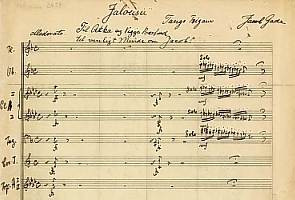
- Tango Jalousie - Jacob Gade
Tango Jalousie "tzigane"
(Jealousy Tango) was composed in Copenhagen
by the Danish composer Jacob Gade
(1879-1963) and performed for the first
time at the Palads Cinema
in Copenhagen on 14th September
1925 - as an accompaniment to a silent
film.
Every minute - around the world
Tango Jalousie (Jealousy Tango) is one of
the best known music pieces in the world
- and has the firm record to be played every
minute of the day somewhere on this
planet. |
Burial
Site
Jacob Gade died in 1963
- and is buried at Assens Cemetery
on the isle of Funen. His burial plot is
a historical site and visited by many admirers.
|
Composer
Jacob Gade composed
Tango Jalousie in 1925 - in Copenhagen. |
|
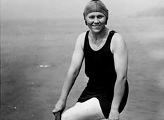
| Mille
Gade -
swam over the English Channel - as
the first Danish woman in 1926. |
|
1926
- Mille Gade
As a curiosity – Jacob Gade’s
sister - Mille Gade was
the first Danish woman - who swam over the
English Channel in 1926
(France to England) in 15-3/4 hours.
|
|
|
Tango
Jalousie - is played every minute somewhere
around
the world |
The
original manuscript of Tango Jalousie (Jealousy
Tango) by Jacob Gade is the property of
the Royal Library and safely kept here. |
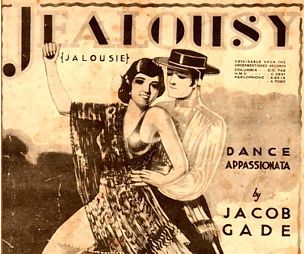
Tango
Jalousie - Nostalgic & Vintage
Poster |
|
|
|
|
|
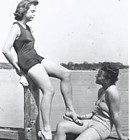
| Danish
Beauty Queen candidates from 1930s. |
|
1926
- First Miss Denmark - Beauty Contest
The first Beauty Contest in Denmark to crown a winner of the
first Miss Denmark - was held in Elsinore, on the Beach areas
in August 1926, and the first Beauty Queen
that was elected in Denmark was Edith Jørgensen from
Aarhus, situated in East Jutland.
In 1951, Grethe Karen Thygesen from Copenhagen,
was the first Beauty Queen nominated, as Miss Denmark - who
participated in the first Miss World Completion
in 1951, in London - Great Britain - and
later had a glorious film career in Hollywood. The first attempt
to find candidates for crowning a Beauty Queen in Denmark
was arranged by a group of Beauty Contest organizers around
1918-1920 in Copenhagen, but failed due to
the lack of interest.
|
|
1928
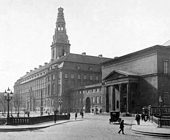
- Christiansborg Palace and the Danish Parliament
The third Christiansborg Palace in Copenhagen was inaugurated
in 1928 - with a lot of festivities and with
the presence of the Royal Family as well as member of the
Legislature Assemble. The Palace is built in Neo-Baroque style
with the highest tower in the city - which exceeded 106
meters. The present Christiansborg Palace is separated
into two main wings. The one half of the Palace houses the
Danish Parliament (Folketinget)
and offices - and the other half is reserved as residential
premises for the Royal Family.
See: Christiansborg Palace
|
|
| 1933
- Formation of the Technical University of Denmark (DTU) |
|
|
The
DTU Science Park - is one of the most powerful and
advances technology centres in the world. Denmark’s
has seven government appointed and heavily supported
Science Parks with High-Tech Research Institutes spread
all over the Danish Kingdom.
|
|
|
The Technical University of Denmark (DTU)
In
1933 - Danish Technical College is
formed after it’s foundation in 1829
- as the College of Advanced Technology (See year 1829).
In 1994 - the technical university
changed its name to the Technical University
of Denmark - DTU - (Danmarks Tekniske Universitet).
Today DTU is a leading technical university
in northern Europe and benchmarks with the best universities
in the world that provides education - research
and innovation at a high international
level. DTU offers a broad line of
MSc and BSc Programs in all
categories such as Doctoral degrees - Master’s
degree - Bachelor’s degrees - Professional degrees
etc. From 1962 to 1974
- DTU moved to its current premises
in Lundtofte near Lyngby - north of Copenhagen - with
a leading research environment and other high-technological
profile areas.
|
|
|
1940
- Grundtvig's Church
(Grundtvigskirken) was commended in 1921
- and completed in 1940. It is known as
the largest public Evangelical Lutheran
church in Scandinavia. |
The
impressive Grundtvig's Church -
with its enormous tower that is
around 50 metre high and one of
the largest architectural work of
modern time's in Scandinavia. |
|
The
church has cathedral proportions with
an inside length of 76 metre - and
is a real architectural pearl for
visitors with a heavenly nave - simple
interior - and plain altarpiece. |
|
|
| Nikolai
Frederik Severin (N. F. S.) Grundtvig
was celebrated on a Danish stamp
in 1983 - in connection with his
200 year birthday. |
|
A
National Monument on Bispebjerg
Hill - Grundtvig's
Church
The architectural concept is a divided combination
between a cathedral and old Danish country
churches.
Three generations of architects from the
same family have been involved in building
and furnishing Grundtvigskirken. The main
architect P. V. Jensen Klint - who
died in 1930 - was succeeded
by his son Kaare Klint and later
his grandson Esben Klint.
The church is a national monument over the
hymn-writer Nikolai Frederik Severin
(N. F. S.) Grundtvig (1783-1872) - who
also was a Danish pioneer of folk high schools
- philosopher and social reformer.
It took almost 20 years to finish
this huge building project at Bispebjerg
in the northern part of the city - which
is worth a visit. See: Grundtvig's Church
See:
Grundtvig's
Church
|
|
|
|
|
| 1940-1945
- World War II - Denmark & Copenhagen |
|
|
During the
Nazi Occupation
of Denmark from
1940 to 1945 -
the country was
set on standby
for five long
destructive years
Many young and brave British and American soldiers
lost
their precious lives
to liberate Europe
and Denmark
Thanks to the Greatest Generation ever!
|
|
|
Denmark
occupied by Nazi troops 1940 |
|
The
hideous Nazi occupation of Denmark began on 9 April 1940 -
and lasted until Nazi forces withdrew at the end of World
War II - following their pathetic surrender to the Allies
on 7 May 1945. The Nazi troops left Denmark disgraceful on
foot after liberation day. |
|
|
Denmark
liberated by English troops 1945 |
On
Denmark’s liberation day 5 May 1945 - all along the
roads - everywhere in Denmark - the Danes were cheering -
waving - smiling and saluting the English troops that liberated
the country - and the first glorious weeks of liberation were
celebrated with patriotic loyalty and exuberance. |
|
|
1940-1945
- Denmark Occupied
World
War II - Copenhagen was occupied by Nazi troops
along with the rest of the country from 9 April
- 1940 until 4 May 1945. The development
of Copenhagen was set on standby for five long destructive
years.
|
|
|
|
1940
- 1945 - King Christian X - Horse riding
During the Nazi occupation of Denmark - King
Christian X took a daily ride on horseback
through his city and won much admiration
and sympathy among the Danes - where
he also became a symbol for the Danish
people during some very dark and depressing years.
The royal horse riding every morning trough Copenhagen
did contribute to boost the morale
of the Copenhageners and Danes - and was
very frustrating for the Nazi
occupiers - plus a very annoying element
- which was troubling for the farcical and brutal
Nazi’s military regime in Denmark.
See: Amalienborg
|
|
|
 |
The
Danish Resistance - and the brave
British and American soldiers |
|
In
great honour and remembrance to the courageous
Danish Resistance - plus
the many young and brave British
and American soldiers - who gave
their precious lives to liberate Denmark
- and the rest of Europe
from its Nazi occupiers - as well as those
heroic women and men who fought courageously
and survived - and then left Europe
again - when peace
finally was established around the European
Continent. The editor has selected a video
with Vera Lynn performing - "We'll
Meet Again" - as a never ending
Thanks to the Greatest
Generation ever - including my
beloved Mum and Dad.
In deep respect for a great admiration!
George B. Moller
Editor-in-chief & founder
 |
Video
- "We'll Meet Again" |
|
|
|
|
|
|
1946
- Scandinavian Airlines System - SAS
Scandinavian Airlines System - SAS
is founded and formed in 1946 - between
three Scandinavian countries - Sweden -
Norway and Denmark by
merging their national carriers into one multi-national
Scandinavian Carrier to handle intercontinental traffic
to and from Scandinavia. AB Aerotransport (Sweden) - Det
Norske Luftfartselskap AS (Norway) and Det Danske Luftfartselskab
A/S (Denmark). The first intercontinental
SAS flight was Stockholm - New York. Copenhagen
Airport Kastrup is the largest airport is Scandinavia
and functions as the main hub for SAS. |
|
 |
1951
- First Television transmission in Copenhagen
The first television transmission began 2. October 1951
- to the Copenhagen region - and transmitted programs for
a few hours daily in B/W by (Danish Broadcasting Corporation)
later named DR. Gradually new TV masts were
placed around the Danish continent - and in the middle of
1950s - nearly everyone in Denmark could
receive the TV signals. In 1956 - there were
almost 16,000 TV sets in Denmark - and at
the end of the year there were more than 65,000
TV’s in Danish homes. The first color television transmission
was sent in 1967 - also by DR. |
|
1955
- First "Skyscrapers" in Copenhagen
Copenhagen’s and Denmark’s first skyscrapers
were built at “Bellahøj” ranging
between 14-16 floors. The highest residential
building in Copenhagen is “Domus Vista”
with its 30 floors and 102 metres. |
|
1955
- The first "skyscrapers" in Denmark was built at
"Bellahøj" North West of Copenhagen. The
total building complex consists of 1,300 flats. |
|
1956
- The first Danish Freeway “Hørsholmvejen”
was inaugurated in 1956 - and went up through the northern
Copenhagen area. |
|
|
The increasing
welfare and
economic prosperity
began the
development of a
health insurance policy and
better housing
facilities
in the 1950's
for the improved
living conditions
of working-class
families
|
|
1956
- First Danish Freeway in Greater Copenhagen
The
first Danish Freeway “Hørsholmvejen”
opened in the Greater Copenhagen Area from “Jærgersborg”
to “Brådebæk” north of Copenhagen.
|
|
1957
- The Museum of Danish Resistance 1940-1945
- Inaugurated
The museum tells the story of Danish resistance during
Nazi occupation 1940-1945.
|
|
 |
1962
- The worlds longest Pedestrian Street in Copenhagen
- "Strøget"
The worlds longest Pedestrian Shopping Street called "Strøget"
in central Copenhagen is inaugurated in 1962.
The Pedestrian Street has a network of shopping streets that
cover over 3-4 km of streets - and is a great
tourist attraction since it was established in 1962.
See: Pedestrian Street
Copenhagen
|
|
1964
- The Little Mermaid vandalised & headless
Copenhagen's iconic Little Mermaid statue and national symbol
was vandalised in 1964 - as her head was
cut off by vandals and thugs - and the bronze head was never
found. Since - the Little Mermaid has been
a subject too many vandalizing attempts during
the past - but has survived on her stone
situated on the shores of the Langelinie pier - where she
has been placed and a major tourist attraction since 1913.
|
|
| 1964
- The Beatles - Copenhagen
The Beatles’ first and only world tour begins
in Copenhagen in 1964 - and it was
a sensation at that time - the famous Beatles selected
Copenhagen as their first concert venue on this world
tour. The Beatles tour began in Copenhagen
and continued to the Netherlands
- Hong Kong - Australia
and New Zealand - with screaming
spectators all over. The Beatles
performed two shows in Copenhagen at the
KB Hallen with 4,500 enthusiastic
- yelling - wild - and crying fans seeing The Beatles
performing: I Saw Her Standing There - I Want
To Hold Your Hand - All My Loving - She Loves You
- Till There Was You - Roll Over Beethoven - Can't
Buy Me Love -This Boy - Twist And Shout and many
more. |
|
|
|
|
|
1967
- Princess Margrethe’s Wedding
Princess Margrethe of Denmark (the future
Queen Margrethe II of Denmark) and Count
Henri de Laborde de Monpezat (later Prince Henrik
of Denmark) - were married on June 10. 1967 - at
Holmens Church in Copenhagen.
See: Holmens Church
|
|
1967
- Copenhagen - 800 years jubilee
Copenhagen celebrated the city's 800 year jubilee
with the world’s longest coffee table that
exceeded almost 1,300 metres - and started
from the Town Hall Square. Over 800,000 cups
of coffee together with tons of Danish pastry
was served that day - plus 100,000 of the
famous Town Hall pancakes - which are traditionally
served on special occasions to official guests that visits
the Town Hall. |
|
| |
1971
- Roskilde Festival
The first Roskilde Festival took place in 1971
- in the outskirts of Copenhagen at the playgrounds of Roskilde
town about 30 km. from Copenhagen.
Today - Roskilde Festival is one of the largest music festivals
in the world - and has turned into a gigantic success that
gathers international artists - musicians - bands and audience
from all parts of the world.
See:
Event
Calendar
|
|
|
The
Royal Yacht "Dannebrog" - and King Frederik
IX’s favourite residence. |
|
1972
- King Frederik IX Dies
King Frederik IX Dies in 1972 at the age
of 72 - at the Copenhagen Municipality “Kommune”
Hospital - after his New Year speech to the Danes. King Frederik
IX was born in 1899 - and a very popular
king of Denmark from 1947 - until his death
in 1972. King Frederik IX was also called
in Danish “Sømandskongen”
- The Sailor King - and was an admired and
beloved sovereign - who modernised the Royal Danish
Monarchy and the former old-fashioned household and
institution behind it. King Frederik IX married Princess Ingrid
of Sweden - born into the House of Bernadotte - and became
later Queen Ingrid of Denmark. King Frederik
IX and Queen Ingrid of Denmark are buried in a uncovered brick
octagon outside Roskilde Cathedral.
See: Roskilde Cathedral
Changed the Line of Succession - 1953
King Frederik IX also took the initiative to change the existing
line of Succession to the Danish throne via
a democratic elected Referendum held under the Act dated the
25th March - 1953 - that permitted
female succession to the throne of
Denmark - according to male-preference primogeniture
- so his daughter - Princess Margrethe became
the Heiress Presumptive - and later the second Queen
of Denmark. |
|
|
|
1972
- Queen Margrethe II
Princes Margrethe succeeded her father 31
years old upon his death in 1972 - and she
was announced from the balcony of Christiansborg Palace
in Copenhagen as HM Queen Margrethe II of
Denmark. Queen Margrethe II became the first female monarch
of Denmark since Queen Margrethe I - ruler
of the Scandinavian kingdoms in 1375–1412.
Queen Margrethe II is also the supreme authority of the Church
of Denmark and Commander-in-Chief of
the Danish Defence. She is born into the
Royal House of Glücksborg and has a
constitutional role - which means that the Queen
cannot perform political acts independently - but she is still
the head of the Danish state. The Queen married Prince
Consort Henrik and has two sons - Crown Prince
Frederik and Prince Joachim.
See: Royal Web Sites
- The Danish Monarchy |
|
| |
1972
- The last Tramcar in Copenhagen
One
of the last Tramcars no. 2 - to run in Copenhagen
in 1972. The tramway services were taken
over by busses. The 100 tramcars called “Düsseldorf”
- were sold to the city of Alexandria in
Egypt - where all the tramcars still are
in active service. |
|
1979
- Copenhagen Jazz Festival
The first Jazz Festival in Copenhagen was arranged in 1979
-and was a great success even though only a handful of Jazz
bands performed at this new Copenhagen event. Since 1979
the event has grown to be one of Scandinavia's most attractive
playgrounds for all type of international Jazz musicians
and bands. Today - tourists from all over
the world and Copenhageners can witness and enjoy more than
800-1000 free concerts and
event around the city that starts every first Friday in July.
See: Event
Calendar
|
|
1982
- Copenhagen Carnival
Ever since 1982 - Copenhagen and other cities in Denmark has
been gifted with a Carnival that features thousands of colourful
dancers from all parts of the world.
See:
Event
Calendar
|
|
|
|
|
1992
- Christiansborg Palace Chapel burns
The
historical Christiansborg Chapel from 1738
and rebuilt again in 1824 - was hit
by an indecent firework rocket that changed direction
and stroke the roof of the Chapel during the Whitsun
Festival in Copenhagen in 1992
- and caused a devastating fire to
the Chapel building that nearly burnt down to the ground.
The Palace Chapel was rebuilt and inauguration took
place in 1997. The Chapel also was
raised by a damaging fire in 1794 -
when Christiangsborg Place entirely
burst into flames the same year. The Palace Chapel is
used by the royal family for events including weddings
- baptisms - anniversaries plus other royal related
occasions and ceremonies - and several Danish Kings
and Queens have lain in state
in the Palace Chapel - which has been used by Danish
Monarch and royalties through generations.
See:
The Palace Chapel
|
|
|
|
1999
- The Black Diamond
On September 15th 1999 - the Royal Library's
extension at Copenhagen’s water front - The Black Diamond
- was inaugurated. The construction of the Diamond had been
going on since 1996 - and fulfilled an age
long dream of an extension of the old Royal Library with this
Architectural Pearl facing the bustling harbour
area of Copenhagen.
See: The Black Diamond
See: The Royal Library
|
|
2000
- The Oresund Bridge
Official inauguration of the combined tunnel and bridge to
Sweden called The Oresund Bridge (Øresundsbroen)
with presence of the Danish Queen Margrethe II
- and her Swedish counterpart King Carl XVI Gustaf.
The total length of the connection over and under the Oresund
strait is almost 16 km. |
|
2000
- The great Oresund Bridge (Øresundsbroen). The 16
km combined tunnel and bridge to Sweden was inaugurated in
2000. |
|
2004
- The National Opera House called "Operaen" is situated
at the waterfront on the island of Holmen and inaugurated
in 2004. |
|
Denmark and
Copenhagen was connected with
Sweden and
Scandinavia in 2000
And Scandinavia
was linked to
the rest of
the European
Continent for
the first time
|
|
Harbour
Bathing Facilities in Copenhagen. |
|
2002
- Harbour Bathing Facilities - Copenhagen
Copenhagen was the first city in the world to establish
free Open Air Bathing facilities in Central Copenhagen in
its harbour and waterfront areas named "Havnebad".
And since June 2002 - Visitors and Copenhagener
can enjoy a fresh swim in crystal clean blue harbour water
- as the bathing water around the harbour area has reached
a quality equal to the bathing water at the many blue flag
beaches on the coastline of Copenhagen.
Clean water conditions
Swim in clean sparkling water - due to the historically
clean water conditions - conducted by an effective and advanced
alarm system to ensure clean water conditions - which has
contributed to create large recreational areas in and around
the harbour area of Copenhagen.
See: Harbour Bathing
- Havnebad
|
|
2002
- The Metro in Copenhagen
The first Metro line in and around Copenhagen opened in 2002
- and the speedy rail networks system is best known as The
Metro. The metro system will expand with new lines
and the entire network is scheduled to finish in 2019-2020. |
|
| 2004
- Royal Wedding - Danish Crown Prince Frederik and Australian
Mary Elizabeth Donaldson |
|
|
|
After
an amorous meeting between Crown Prince Frederik
from Denmark and Mary Elizabeth Donaldson from
Hobart Australia during the 2000 Olympics Games
in Sydney - the continuing passionate relationship led to
an even more romantic and "fairytale" Royal
Wedding in Copenhagen Cathedral on May 14 - 2004.
Crown Prince Frederik is heir to the Danish Throne and will
become the next King of Denmark as King Frederik
X of Denmark and Mary Elizabeth Donaldson
will become the next Queen Mary of Denmark.
The Royal Couple has 4 children. Prince Christian
(Heir to the Danish Throne) - Princess Isabella
and the Royal twins Prince Vincent and
Princess Josephine. Royal Photo: Kongper.dk
See:
Copenhagen Cathedral
|
See: Royal Web Sites - The Danish
Monarchy
|
2004
- The Opera in Copenhagen
The New Opera House called - Operaen - at
Copenhagen’s waterfront was inaugurated in 2004. The
Opera House was donated to the Danish state by the A.P. Møller
and Chastine Mc-Kinney Møller Foundation in August
2000. |
|
2008
- Copenhagen no. 1 in the world
Copenhagen is ranked as the best city in the world that offers
its residents - THE HIGHEST QUALITY OF LIFE -
by the British Magazine Monocle - and furthermore
the Monocle announces that Copenhagen is also the BEST
DESIGN CITY in the world amongst the world’s
top 25 cities for quality of life. The editor
of Copenhagen-Portal assures that every Copenhagener is surprisingly
proud of the title and status their city has obtained by prominent
overseas Magazines and Periodicals. |
|
|
Copenhagen has
turned into
Scandinavia’s
largest Capital
and a modern
vibrant city
with plentiful
of various
Arts & Entertainment
plus an effective
public transport
system.
|
|
The
first Metro line in and around Copenhagen opened in 2002 -
and offers a network of lines through the city and its vicinity.
|
|
Copenhagen’s
new Playhouse is beautifully situated by the waterfront and
inaugurated in 2008. It is an architectural pearl and a new
landmark. |
|
2008
- The Royal Danish Playhouse in Copenhagen
Copenhagen’s new Playhouse is beautifully situated
by the waterfront and inaugurated in 2008. The
building is considered as the new national stage
for the dramatic arts in Denmark. |
|
2010
- Copenhagen awarded as Most Liveable City
The British Magazine Monocle awarded
the Danish capital to be the best in the
world - as the "Most Liveable City".
|
|
|
|
2011
- New National Monument of remembrance
A new national monument of remembrance for the many brave
Danish soldiers - who lost their young and precious
lives in international peace keeping missions
abroad was inaugurated on September 5th - 2011 -
at the old Citadel from
1626.
See: Memorial
Events
|
|
|
|
|
2011
- Denmark's first female Prime Minister
For the first time in Danish history a woman
- Social Democrat leader Helle Thorning-Schmidt
- will take over the prime minister’s
office in Copenhagen after the September 2011
election - which was a historic breakthrough for women’s
equality in Denmark - since Danish women were granted
the right to vote on June 5 - 1915.
This is Danish History in the making. The first female
minister in a Danish government was a Danish Social
Democratic politician and historian Nina Bang
- who was appointed Minister for Education in
1924.
|
|
|
|
2013
- The Blue Planet in Copenhagen
The new National Aquarium in Denmark - called The
Blue Planet was inaugurated in March 2013
- and is formed as a whirlpool with 5 separate tank
and aquarium sections including a giant Ocean Tank for sharks
and rays.
The Blue Planet is an impressive underwater
Sea World in Copenhagen - and the largest
Aquarium Complex in North Europe. |
|
|
| Ocean
Quay Cruise Terminal. |
|
2014
- The new Ocean Quay Cruise Terminal
The new Ocean Quay Cruise Terminal at Nordhavn situated near the
Free Port Terminal - has been officially inaugurated - and Copenhagen
will be able to handle 500 - 600 Cruise Calls yearly.
There are four Cruise Terminals in Copenhagen.
Ocean Quay Cruise Terminal. The Free Port Terminal. The
Langelinie Cruise Terminal and Nordre Toldbod Cruise Terminal.
See:
Cruise Copenhagen
|
|
|
2014
- The National Dish - “Stegt Flæsk”
The Danes have voted that their National Dish and favourite recipe
is “Stegt Flæsk med Persillesovs” -
Fried Pork Belly with Parsley Sauce. “Stegt Flæsk”
is an old traditional and rural dish - that has been the Danes everyday
dish for centuries. The Danes are the most Pork eating people in
the world.
See:
Stegt Flæsk
- Fried
Pork Belly with Parsley Sauce.
|
| 2015
- Copenhagen ranked as the best Bicycle-Friendly city in the
World |
| There
are nearly 400 km of save cycle tracks in and around
bicycle-friendly Copenhagen. |
|
In
2015 - Copenhagen was awarded - as the best
and most bicycle-friendly city in the world
- and has since been ranked as the world’s greatest
biker-friendly town numerous times. Nearly every Copenhagener
owns a bicycle - as there are almost 800,000 cycles
in Copenhagen. Over 60% of all Copenhageners
cycle back and forth to work - to the nearest station or to
other public transportation services. There are nearly 400
km of save cycle tracks in and around
the city - and should the cyclist have a green wave between
traffic lights - the speed on a bicycle can easily reach 20
km per hour - and much higher for the electrical
powered bikes.
See
& read more: Danish
Cyle Culture
|
Every
participating “Royal Runner” received a
finisher’s medal to hang around their neck after
the first “Royal Run” in 2018. |
|
2018
- Historic ROYAL RUN by Crown Prince Frederik - Copenhagen
A historic event took place - when Denmark’s future
King - organized a running event - called the
“ROYAL RUN” - in connection with
his 50th milestone Birthday on 26th
May - and invited everyone in the Kingdom of
Denmark to run 10 miles with him and
his family - first in Copenhagen - and then one
mile in four of the largest Danish “Royal
Run” cities including Aarhus
- Odense - Aalborg -
and Esbjerg.
The Royal Run was a great success and crowd-pleaser
- with more than 80.000 “Royal
Runners” participating in this historic
running event to celebrate Crown Prince Frederik’s
on his round Birthday together with thousands of cheering
spectators and fans on the running routes - who were
compactly lined up alongside the streets of all the
involved Danish “Royal Run”
cities.
Since 2018 - the Royal Run event has
been a yearly running tradition - and has attracted
many more “Royal Runners”
with Crown Prince Frederik and family in front - as
the main inventor and motivator of this popular running
arrangement.
See: Event
Calendar
|
|
|
| Copenhagen
a "Cool" and "Unstoppable" No.1
City to visit in 2019 - according to Lonely Planet's
Travel Guide. |
|
2018
- Copenhagen the top No. 1 city to visit in 2019
Lonely
Planet recommends tourist to visit Copenhagen and the Danish
Capital in 2019 - and pronounced Copenhagen as being
“cool” and “unstoppable”
in Lonely Planet’s Best in Travel’ book.
Copenhagen is once again crowned as the world’s
top city to visit, as visitors can experience the diversified
and splendid architecture of this metropolis,
tasty food culture and delicious Scandinavian
menus, plus pay a swift visit to multiple attractions
and historical places, as well as amusement parks
and other fascinating outdoor activities like the ski
slope on the top of the waste management facility.
And all the attractive sights can be reached by the city’s
well-organised transport and Metro system.
See: Copenhagen-Portal
|
|
|
From Copenhagen to Champs-Élysées - Paris.
Tour de France - 2022. |
|
2022
- Tour de France 2022 - From Copenhagen to Champs-Élysées
- Paris
Tour de France 2022 - will start for the very first time in
Copenhagen - Denmark - on Friday, 1.
July - 2022 - and then the cycling
route - with all of the international riders - will pass through
several attractive Danish Cities - picturesque landscapes
and fascinating Venues as - 1. Stage: Copenhagen
(Round trip). 2. Stage: Roskilde - Lejre
- Holbæk - Vindinge Bakker (Hills) - Kalundborg - Korsør
- Slagelse - The Great Belt Bridge - Nyborg. 3. Stage:
Vejle - Kolding - Haderslev - Aabenraa and Sønderborg
- and then end at the final stage at Champs-Élysées,
Paris on Sunday, 24. July - 2022. On the
very first day of this historical cycling
event and tour competition in Copenhagen - the most powerful
tour rider and winner of the first stage
- will be honoured and receive as a trophy - the first
Yellow Jersey ever presented in Denmark - on the
109th edition of this famous cycle race.
The Tour de France cycling route through Denmark and the selected
Danish cities - will be dressed in yellow - and followed by
thousands of cycling fans and happy cheering spectators alongside
yellow cornfields spread all over the countryside.
See: Denmark
- See:
Event Calendar
|
|
| Copenhagen
- the most liveable capital in the world in 2022. |
|
2022
- Copenhagen crowned as the most liveable capital in the world
Copenhagen is once again ranked - as the most liveable
metropolis in the world - by Monocle Lifestyle Magazine
- 2022. Copenhagen hosts several world-class museums
- and strives to be the greenest capital
in the world. Pedestrians - cyclist and bicycle commuters
in Copenhagen have top priority concerning their traffic
safety - as well as offering Copenhageners - tourists
and visitors a pleasant and safe
place to live and stay - a vibrant city
with numerous cultural experiences - fresh
- clean and clear harbour bathing facilities
- at the centre of the city - reliable public transport
systems and excellent infrastructure
- plus a captivating and spotless
clean city environment. Fabulous Zürich
ended second on Monocle’s list of liveable cities in
2022, pursued closely by enchanting and comparable capital’s
like Lisbon - Helsinki
and Stockholm. And beside all the praise
- Copenhagen is also among one of the most expensive cities
in the world to live and stay in - and the Danes are world
champions in paying the highest taxes on this beautiful
planet called earth. Even
though the heavy taxation burdens, the Danes have been awarded
several times, in many international surveys and studies,
the position of being the "happiest people"
in the world - with a very high living standard - in one of
the world’s major Welfare Nations.
See: Copenhagen
Culture - See: Happy
Danes
- See: Scandinavia
|
|
| 2023
- Copenhagen - The World Capital of Architecture - 2023 |
UNESCO
has chosen Copenhagen as the World
Capital of Architecture in 2023 - with the following
statement. “The city designated as
World Capital of Architecture will become a global forum for
discussion on the pressing challenges of our world, through
the prisms of Culture, Heritage,
Urban Planning and Architecture.
Through this initiative, UNESCO and the
UIA are joining forces to develop urban solutions
for the benefit of future generations through culture”.
World Capital of Architecture is a new title
given by UNESCO to the city hosting UIA
(International Union of Architects) World Congress
of Architects. Copenhagen will use this historical
title as World Capital of Architecture, for the next three
years, to debate and celebrate the city’s architectural
past and future, highlighting innovative solutions
of resilience, liveability and sustainability.
|
|
The
Axel Towers - Copenhagen. |
|
| HM
Queen Margrethe
II of
Denmark. |
|
2023
- Abdication of HM Queen Margrethe II of Denmark
HM Queen Margrethe II - announced on live
TV, during her annual and traditional New Year's Eve speech
to the Danes on 31 December 2023, her upcoming
abdication as Queen of Denmark - after 52 years
on the throne and head of the Danish state. HRH Crown
Prince Frederik will succeed her, as King
Frederik X - on 14 January 2024, and his consort
HRH Crown Princess Mary will become the Queen
of Denmark. The popular Monarchs, will be proclaimed,
from the balcony of Christiansborg Palace
in Copenhagen, as the new King and Queen of Denmark.
See: Christiansborg Palace
|
|
| HM
King Frederik X and consort HM Queen Mary of Denmark. |
|
2024
- Proclamation of HM King Frederik X of Denmark
After HM Queen Margrethe II of Denmark and
the Danes adored Monarch officially signed her abdication,
her popular son was proclaimed on January 14th 2024
- from the Balcony of Christiansborg Palace as HM
King Frederik X of Denmark. King Frederik
X and his beloved Consort HM Queen Mary
appeared together on the balcony as Denmark’s new Monarchs,
waving to the more than 300,000 cheering crowds of Danes with
Danish flags, all experiencing this very once in a lifetime
historic Royal event on a chilly and frosty Sunday.
See:
Christiansborg Palace
|
|
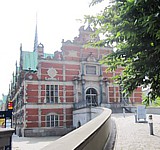
|
The
Old Stock Exchange - Burnt Down and lost for ever. |
|
2024
- Old Stock Exchange - Burnt Down
One of Copenhagen’s most historic and iconic
buildings and architectural pearls - as well as
400 years of Danish cultural heritage
- The 17th-century Old Stock Exchange
- was raged by a devastating fire on Tuesday April
16 - 2024 - and lost for ever.
Thousands
of horrified and emotional Copenhageners burst into
tears on this very sad day, when they witnessed
their national treasure and landmark was surrounded
by flames and black smoke - and then experienced
the mythical dragon spire collapsed
during a refurbishment and facelift of The Old Stock
Exchange for its 400 year jubilee later in 2024.
See: The
Old Stock Exchange
|
|
|
| Copenhagen
- 21st Century |
During
the 20th century until today - Copenhagen
has grown into a thriving modern city and
is the Capital of Denmark with more
than 1,8 million inhabitants living
in and around the greater Copenhagen area
- and located in one of the major Welfare
States in the world. |
|
The
Copenhageners just love their easy-going
lifestyle and high taxes that pays for
their well-being. |
|
Being the largest city in Scandinavia
- Copenhagen is considered as a centre
of culture and arts
with plenty of sightseeing
and entertainment activities
to offer visitors - together with multitude
of shopping facilities
and the longest pedestrian street
system in the world - plus
an explosion of historical venues - and
an overflow of interesting heritage sites
and top attractions.
But
Copenhagen has also become an international
city - with a rich commercial
and educational
environment - since Bishop Absalon planned
to build his citadel to protect the city
in the year 1167.
See: Copenhagen
Culture
See: Scandinavia
|
|
|
|
|
 |
INBOUND
TRAVEL SERVICE |
We
know our History about Copenhagen and Denmark at INBOUND TRAVEL
SERVICE - and will gladly share the exciting Historical Splendour
of this Fairy Tale Kingdom and Well Fare Nation together with
our Customers on our Tours and Excursions. |
|
|
Great
Danes and Famous Copenhageners |
|
|
Bertel
Thorvaldsen (1770 - 1844)
Danish sculptor born in Copenhagen 1770
and died 1844 in Copenhagen - created
almost 550 sculptures - reliefs and
portrait busts during his lifetime. Some of his most
famous works are the statues of Christ and the twelve
Apostles at Copenhagen Cathedral - the Lion
Monument in Lucerne - Pope Pius VII's
monument in St. Peter's Basilica - Jason
& the Golden Fleece - The Three
Graces etc.
Final resting place: The inner courtyard of Thorvaldsens
Museum - and buried in September 1848. The
Burial Site of Bertel Thorvaldsen
is open for visitors.
See: Thorvaldsens
Museum
|
|
|
N.
F. S. Grundtvig (1783 - 1872)
The Danish priest
and philosopher N.F.S. Grundtvig born 1783
and died 1872 in Copenhagen - is
a person of great magnitude and influence in newer
Danish history, who reformed Christianity within the
Danish Lutheran Church and developed The Folk
High School movement. N.F.S. Grundtvig was
a pastor at The Church of Our Saviour for four years
1822-1826 - located at Christianshavn.
See: Church
of Our Saviour
|
Quotation by N.
F. S. Grundtvig:
|
“The
church is for the sake of the people, the people do
not exist for the sake of the church!”
(Kirken er til for Folkets Skyld og ikke Folket
for Kirkens!) |
Final
resting place: Claras Kirkegaard (Claras
Church Cemetery) at Estate Gammel Kjøgegaard - 20 km
south of Copenhagen - and buried in August 1872. The Burial
Site and Crypt of N. F. S. Grundtvig - is
only open for visitors - to days every year - on May
15. to commemorate the anniversary of Clara Sophie’s
birth on May 15 - 1822 - who also was the
Estate owners wife - and died in 1852 only 30 years old -
and her - who also gave name to the little forest Cemetery
- and on September 8. on N. F. S. Grundtvig’s
birthday.
See:
Grundtvig's Church |
|
Hans
Christian Andersen (1805
- 1875)
World
famous fairy tale writer Hans
Christian Andersen - first
arrived to Copenhagen in 1819 - and
lived most of is life at various addresses in Nyhavn.
H.C. Andersen wrote numerous fairy tales and the most
famous are The Little Mermaid
- The Emperor's New Clothes
- The Ugly Duckling - The
Princess and the Pea - Thumbelina
and The Snow Queen etc. Born
1805 in Odense on the isle of Funen
and died 1875 in Copenhagen.
|
Quotation
by Hans Christian Andersen:
|
“To
travel is to live!"
(At rejse er at leve!) |
Final
resting place: Assistens Cemetery (Assistens
Kirkegård) in Copenhagen - and buried in August 1875.
The Burial Site of Hans
Christian Andersen
is open for visitors.
See:
Hans
Christian Andersen
|
|
|
Søren
Aabye Kierkegaard (1813 - 1855)
Religious philosopher and founding father of the Existentialist
Movement was born in Copenhagen 1813
and died 1855 in Copenhagen.
He was a profound and prolific writer in the Danish
"golden age". He matriculated to the University
of Copenhagen in 1830 - and passed
his theological examination 1840.
His central problematic was how to become a Christian
in Christendom.
Quotation by Søren A. Kierkegaard:
|
“Everybody
wants development - but nobody wants changes!”
(Alle vil udvikling - ingen vil forandring!) |
Final resting place: Assistens Cemetery
(Assistens Kirkegård) in Copenhagen - and
buried in November 1855. The
Burial Site of Søren
Aabye Kierkegaard
is open for visitors.
See: Søren
Aabye Kierkegaard
|
|
|
Jacob Gade (1879 - 1963)
The composer of Tango Jalousie Jacob Gade - which is
played every minute somewhere around the world. He is
Born in the Danish town Vejle in 1879
- and arrived to Copenhagen in 1888 - where he lived
and worked most of his life. In 1925 -
he composed the world famous music piece - Tango
Jalousie (Jealousy) - as an accompaniment to
a silent film. |
Final
resting place: Assens Old Cemetery (Assens
Kirkegård) in Assens Town on the west coast of the island
of Funen - and buried in February 1963. The Burial Site of
Jacob
Gade is open for visitors.
See:
Jacob
Gade
|
|
Karen
Blixen (1885 - 1962)
Legendary author and Baroness Karen Blixen with her
pen name Isak Dinesen was born north of Copenhagen
at Rungstedlund in 1885 and died
there in 1962 . For some years she
and her husband established and ran a coffee plantation
in Kenya. After returning to Denmark in 1931
- she seriously started to write - and her first book
"Seven Gothic Tales"
was publish in the US in 1934 - and
probably she is best known in English for the book
and film "Out of Africa".
|
Quotation by Karen Blixen:
|
"We
must leave our mark on life - while we have it in our
power!"
(Vi må præge livet - mens vi har magt
over det - at det ikke skal lukke sig - når vi
går ud af det - uden spor!) |
Karen
Blixen - also known by her pen name Isak Dinesen.
Final resting place: At the foot of "Ewald's Hill"
- at her birthplace Rundstedlund. Approx.
20 km north of Copenhagen. Buried in September 1962. The
Burial Site of Karen
Blixen is open for visitors.
See: Karen Blixen
|
|
Niels
Bohr (1885 - 1962)
Nobel Prize Winner in physics 1922
- born in Copenhagen in 1885 and died
there 1962 - is best known for the
investigations of atomic structure and for work on radiation
theory. Niels Bohr distinguished himself at the University
of Copenhagen winning a gold medal from the Royal Danish
Academy of Sciences. In 1911 - he received
his doctorate. |
Quotation
by Niels Bohr:
|
"Einstein
- stop telling God what to do!"
("Einstein - hold op med at fortælle
Gud - hvad han skal gøre!") |
Final
resting place: The Bohr family grave - Assistens
Cemetery (Assistens Kirkegård) in Copenhagen
- and buried in November 1962. The
Burial Site of Niels
Bohr is open for visitors.
See:
Niels
Bohr |
|
Victor
Borge (1909 - 2000)
Victor Borge is born in Copenhagen 1909
- and became one of Denmark's most popular artists
in USA. In 1940 - he travelled to
the United States with his American-born wife and
was invited to appear on the Bing Crosby radio show
1941. Since - he became a US citizen
and one of the highest paid entertainers in USA -
and kept up a busy career into his 80s.
Died 2000 in Greenwich. - Connecticut
- USA.
Quotation
by Victor Borge:
|
“A
Smile is the closest distance between two people!”
(Smilet er den korteste afstand mellem to
mennesker!) |
Final
resting places: Putnam Cemetery -
Greenwich - Connecticut - USA - beside his beloved
wife Sarabel Sanna Scraper. Buried in Copenhagen at
Western Jewish Cemetery (Mosaisk
Vestre Begravelsesplads) - August 2001 - at the side
of his loving parents. The Burial Sites of Victor
Borge is open for visitors at the Putnam
Cemetery - Connecticut - and the Western
Jewish Cemetery in Copenhagen.
|
|
The
LT logo from 1938 - and the present LT logo unchanged. |
|
Larsen
& Toubro - Founders of L&T -
Larsen & Toubro -
India
in 1938
Two Great Danes and visionary
Civil Engineers Henning Holck-Larsen
(4.7.1907 - 27.7.2003) born in Copenhagen
and died in (Bombay) Mumbai - India
- and Søren Kristian Toubro
(27.02.1906 - 4.3.1982) born and died in Copenhagen
- brought “Know-How”
- as well as High Technology to India
and founded in 1938 - the Danish
Engineering and Construction Conglomerate
Larsen & Toubro Limited (L&T) in
(Bombay) Mumbai - India - and created
a multi-billion dollar company from
scratch. Today the Larsen & Toubro Group
is a multi-industry conglomerate in India with a global
presence in over 30 countries and
more than 80,000 employees. The two
Danish pioneers and creative entrepreneurs - Henning
Holck-Larsen and Søren Kristian
Toubro created thousands of jobs
that reduced poverty - boosted the
local economic and contributed to
sustainable urban development - which
has ever since reflected on millions of citizens in
India and brought tremendous prosperity
and welfare to the country. This
business success from 1938 - is the
story of globalization in full scale
- and true effective and economic expansion to undeveloped
countries in the Third World - which was truly influenced
by two great Danes - even before the word “globalization”
was invented or practised on The Tropic line of Cancer
passing through India.
In Remembrance and honour
India owes grateful thoughts
and honourable remembrances to these
two Great Danes for creating prosperity
and thousands and thousands of precious jobs
and workplaces that benefited
the entire nation of India.
 |
Henning
Holck-Larsen commemorated on postage
stamp - 2008
The
Department of Posts in India was proud
to release a postage stamp in 2008 -
portraying and commemorating Henning
Holck-Larsen - as the founder
of Larsen & Toubro - and one of
the Pioneers of the engineering industry
in India. |
|
See: Danish Exporters
|
|
Six
Successful Royal Siblings & Famous
Copenhageners |
| The
Royal House of Glücksborg.
|
| The
Yellow Palace in Copenhagen from 1764 - became the Royal
residence for the first Glücksborg family in 1837.
|
|
The
Royal House of Glücksborg (1843-1939) -
and famous Royal Descendants
Six Successful Royal Siblings &
descendants of the Royal House of Glücksborg.
Six Royal descendants after King Christian IX
-& Queen Louise - who became Sovereigns
- Majesties - Royal Highnesses and Head of State in
overseas Kingdoms and Empires.
King Christian IX and Queen Louise
and the “Grandparents
of Europe” - were parents to six extremely
successful children - who all contributed to expand
the Glücskborg line of royalties into dynastic
relations with the most influential Royal and Princely
houses across Europe and the Imperial house of Russia.
After the birth of Prince Frederik in
1843 - Princess Louise gave birth to
five children in the following years - Princess
Alexandra in 1844 - Prince Vilhelm
in 1845 - Princess Dagmar in 1847 -
Princess Thyra in 1853 and Prince
Valdemar in 1858. All six Danish brothers and
sisters were born at The Yellow Palace
in Copenhagen - as Princes - Princesses
- Royal Highnesses and famous
Copenhageners.
Final resting places for the Six
Glücksborg Royalties: Roskilde
Cathedral & The Royal Mausoleum - Denmark.
Open for Visitors. St George's Chapel - Windsor
Castle - UK. Open for Visitors. The
Royal Mausoleum and Cemetery at
Tatoi Palace - Athens - Greece. Closed for
Visitors. Saints Peter and
Paul Cathedral - Saint Petersburg - Russia.
Open for Visitors. The Hanoverian Chapel and
family Mausoleum - Schloss Cumberland - Gmunden - Austria.
Partially open for Visitors. The Royal Mausoleum
and Burial Chapel at
Castle Akershus - Oslo - Norway. Open for Visitors.
|
|
The
final resting place for all Danish Sovereigns & Royalties
since the 15th century |
Roskilde
Cathedral - The Royal Mausoleum |
The most outstanding Royal Mausoleum in the world! |
| Roskilde
Cathedral - the Royal Mausoleum - and the
final resting place for all the Danish Royalties
since the 15th century. Here the marvellous
sarcophaguses of Queen Margrethe 1. Buried
in 1412. |
 |
In
1995 Roskilde Cathedral
was included in UNESCO's list of the world's
inalienable cultural treasures and selected
by UNESCO as a genuine and incredible World
Heritage site. |
|
| Roskilde
Cathedral - The Royal Mausoleum |
Royal History - and Danish Cultural Heritage!
Roskilde
Cathedral from the 12th
century houses the biggest and
most outstanding Mausoleum
in the world - as it is the final resting
place for all the Danish Royalties since
the 15th century - and
after the protestant reformation in 1536.
There are gorgeous sarcophaguses of Danish
Kings and Queens - as well as family
members of successive rulers and their descendants.
Learn much more about Danish Kings
and Queens
- Learn much more about Danish Kings and
Queens from the dynastic
Oldenburg
royalties - to the later Glücksborg
dynasty
by visiting Roskilde Cathedral.
Excursion
to Roskilde Cathedral and the Viking Ship
Museum.
Our Inbound Travel Service Team offers comprehensive
excursion and field trip to Roskilde
Cathedral and the Viking
Ship Museum - and
to all the magnificent and Historic
Castles - Royal Palaces and Museums
in and around North Sealand - and if preferred
together with a luncheon package - which
will be consumed at selected venues - with
delightful views over the North Sealand
Landscape or Coastline. The excursion can
be combined with a tour to other Museums
and Castles in and beyond the North Sealand
peninsular.
See:
Royal
Mausoleum - Roskilde Cathedral
Inbound Travel Service: Contact
|
|
|
|
|
| This
History Site will be updated regually! |
|