|
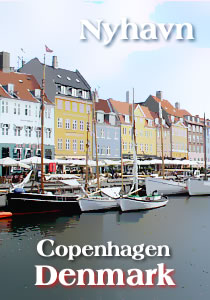
Nyhavn
Nyhavn "New Port" was established
by King Frederik V (1646-1699 - ruled Denmark
and Norway 1670–99) in 1670-73 as a
gateway from the sea to the old inner city and at that time
the canal area reached right up to the Kongens Nytorv
(Kings Square), where the ships unloaded their cargo
and the fishermen their daily catch. The trade and shipping
activities around Nyhavn provide a strong growth of Copenhagen
and the many houses surrounding the Nyhavn canal along the
two quays are more than 300 years old. |
|
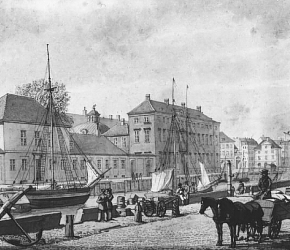
Scenery
from Nyhavn 1780, with sailing ships in the canal, and
the Charlottenborg mansion on the left, nearest Kongens
Nytorv (Kings New Square). |
|
|
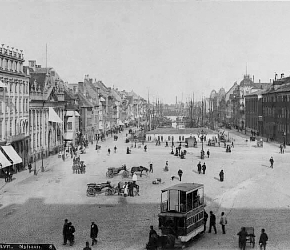
View
from Kongens Nytorv in 1970 towards Nyhavn an all the
horse carriages. The horse driven tramcar in front is
one of the first lines in Copenhagen. |
|
|
Mansions
for the wealthy
In the beginning of the 1700s and on the
shady side of Nyhavn, great mansions like
Charlottenborg and other lavish houses with flats for the
wealthy citizens were built. On the sunny
side the houses were built of wood, brick and plaster
and were the most colourful and picturesque house at Nyhavn
rented by poor and common residents.
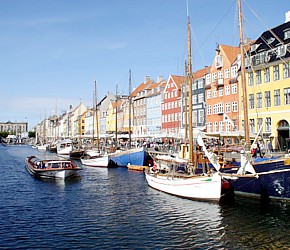
Old wooden ships
Up through the 1970s, Nyhavn has become a
fashionable place to live and the quay is turned into a pedestrian
street and the canal is packed with old wooden
ships creating an atmosphere from the past time around
1780-1810 when Nyhavn was the main centre
of all trade to sea from Copenhagen. |
|
Every
30 min. there are boat tours from Nyhavn around the
harbour area and canals to historical sights and known
places. |
|
|
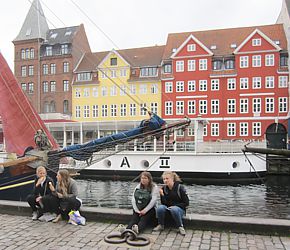
Restaurants
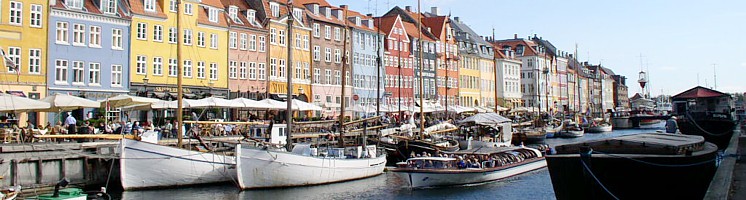
and cafés alongside the quay overlooking the
canal with its old wooden ships and special maritime
atmosphere. |
|
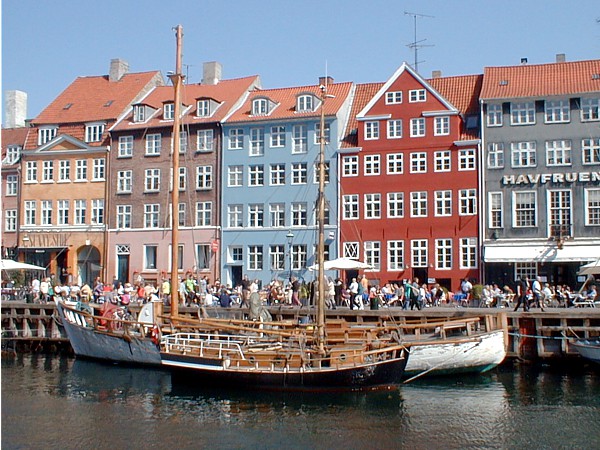
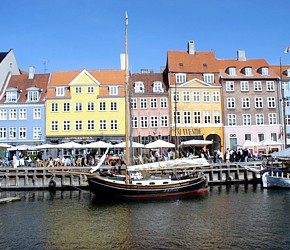
Picturesque
old houses
Nyhavn with its picturesque old houses on either side of the
canal offers a variety of restaurants, pubs, cafés
with dancing and music, 24 hours a day. Nyhavn
is also called "The longest outdoor bar in Scandinavia",
with its many restaurants and cafés overlooking the
canal.
Hans
Christian Andersen and Nyhavn
The famous fairy-tale writer Hans Christian Andersen
lived in no. 20, from 1834-38,
where he wrote is first stories. Later he also lived on the
opposite, sunny side of Nyhavn in no.
67, from 1845-64. The last years
of his life he lived in no.18.
|
|
House
no. 20 at Nyhavn on the shady side was where H. C. Andersen
lived from 1834-38. The famous fairy tale writer also
lived on the sunny side of Nyhavn in no. 67 from 1845-64. |
|
|
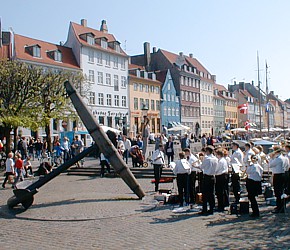
There
is always plenty of activity around Nyhavn and especially
on the square with the monument of the Memorial Anchor
from 1872 in front of the entrance to canal and harbour
area. |
|
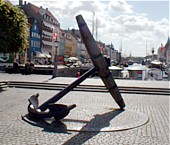
The Memorial Anchor at Nyhavn
The great Memorial Anchor (Mindeankeret) in front of Nyhavn
is a monument commemorating the more than 1,700 Danish
officers and sailors in service for the Navy - merchant fleet
or Allied forces, who offered their life's during the Second
World War. The Anchor was inaugurated in 1951
and has a plague with a monogram of King Frederik
VII on it. The Memorial Anchor is from 1872
and was used on the Frigate Fyn (Funen),
which was docked at Holmen Naval Base during the Second World
War. The Memorial Anchor replaced a momentary big wooden Cross
erected on the same spot i 1945. Every year on May
5th – Denmark’s Liberation day 1945
– an official ceremony is held to honour and commemorate
the fallen at the Memorial Anchor.
Canal boats
The canal tours by boats starts at Nyhavn
and takes you around the harbour area at all the interesting
and historical sights that can be seen from the waterfront. |
|
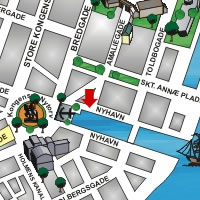
Location
Nyhavn is located near Kongens Nytorv - Royal
Theatre - Charlottenborg Mansion
- The Pedestrian Street "Strøget"
and few blocks from Amalienborg Palace and
Christiansborg Palace. |
Nyhavn
Address
Nyhavn
Copenhagen
1051 Copenhagen K
Busses: A1 - 15 - 26 - 20E and 350S
Trains - Metro Station at Kongens Nytorv
Canal boats stop several places around Copenhagen
Distance from Town Hall Square 6 km.
and expect 25-30 min. by walk.
|
|
|