Søren A. Kierkegaard

*A Part of the Danish Cultural Heritage*


Søren Aabye Kierkegaard - Final Resting Place in Copenhagen 
Return Sightseeing Return History
Return
Søren A. Kierkegaard
Final Resting Place in Copenhagen
Søren Aabye Kierkegaard
(5 May 1813 to 11 November 1855)
 
On November 18 The Danish religious philosopher Søren Kierkegaard's funeral was held at The Cathedral of Our Lady with the following burial at Assistens Cemetery.

On 2 October 1855 Søren Kierkegaard fell down in the street near his home and was taken into Frederik's Hospital.
According to the latest analysis of his hospital records, Søren Kierkegaard suffered from progressive spinal paralysis (acute ascending polyradiculitis).

On 11 November 1855 Søren Kierkegaard died in a wing of this hospital, on which a memorial plaque has been set up.
 

The family grave in the Assistens cemetery in Copenhagen.
On the lower half of the left hand stone are the words of Søren Aabye Kierkegaard. Below this, on his own instructions, is the verse of a hymn by H.A. Brorson.
 
Visiting Søren Kierkegaard's grave
It takes only 14 min. by bus 5A from the Town Hall Square to Assistens Cemetery in Copenhagen.


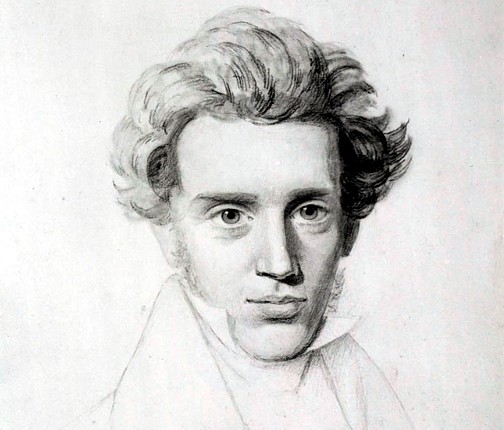
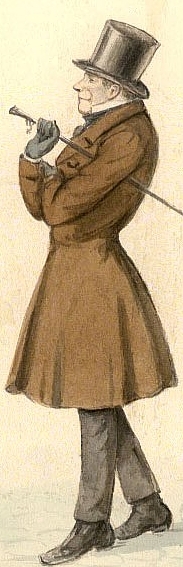
Drawing from 1845
of Søren Aabye Kierkegaard


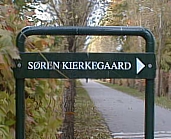
A sign at the Cemetery will guide you directly to the grave.
Brief Biography about Søren Aabye Kierkegaard

Drawing done around 1840 of Søren Kierkegaard.
Søren Kierkegaard was a Danish philosopher and religious thinker who wrote literary and philosophical essays that reacted against Hegelian philosophy (George Friedrich Hegel) and the state church in Denmark, setting the stage for modern existentialism. Kierkegaard was born in Copenhagen, the youngest of seven children.

He spent his formative years under the influence of his melancholic and devoutly religious father whose teachings stressed the suffering of Christ.

Søren Kierkegaard went to study philosophy and theology at the University of Copenhagen, where his personal despair grew, leading him to the therapeutic decision to become a cleric and marry his fiancée Regine Olsen, the daughter of a treasury official.
Shortly after completing his doctoral dissertation, The Concept of Irony (1841), he broke the engagement, partly for fear that he and his fiancée might lack common philosophic interests, but he gave the impression of acting out of a brutal and indifferent selfishness in order to make the breach definitive.
Thereafter he embarked on a life of seclusion and a writer's career that produced a constant flow of books over the next ten years with at least twelve major philosophical essays.

Søren Kierkegaard is considered to be the founder of existentialist philosophy.
 
To be continued!

Copenhagen-Portal
GBM & Co © - Digital Publishing and Internet Service - E-mail: info@copenhagenet.dk - Disclaimer