Facts
about Denmark
Denmark is placed on top of Europe and a part of Scandinavia
with its south border towards Germany.
Native name: Danmark
Area: 43.093 km². Population: 5.5 million. Coast line: 7,313 km. Highest point: 173 m. Yding Skovhøj. Biggest island: Sealand 7,031 km². Islands: 450 - 90 inhabited.
Capital:Copenhagen
- (København)
(Biggest city in Scandinavia) Currency: Danish Kroner. (DKK) Time Zone: UCT+1.
Driving: Right side
Religion: Christian Protestant Church & Evangelical Lutheran
- since 1536. Government type: Parliamentary Democracy - Constitutional
Monarchy. Head of state: Queen Margrethe II.
Largest Cities and inhabitants
1. Copenhagen- 1.810.000
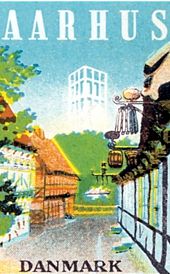
2. Århus - 290.000
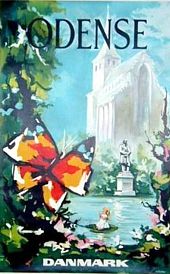
3. Odense - 190.000
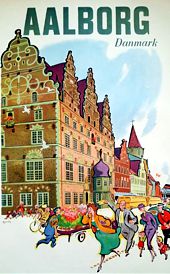
4. Aalborg - 168.000
5. Esbjerg - 88.000
The
birth certificate of the Danish kingdom
The
Kingdom of Denmark
Denmark is one of the oldest kingdoms in the world and dates
back to the first Danish monarch, King "Gormthe
Old" (910 -958 - King of Denmark 930 - 958), who established
his reign in the 10th century. He was succeeded by his son
King "Harald Bluetooth" ( 911 - 987 - King of Denmark
and Norway 958 - 985), who erected a runic stone in year 964
A.C. over his parents burial plot at Jelling
in Jutland. The stone has an inscription that praises himself
for making all Danes Christians. "The Harald who
won the whole of Denmark and Norway and turned the Danes to
Christianity."
The
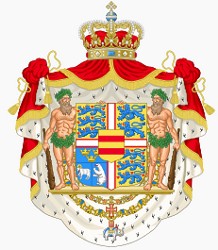
National Coat of Arms
Christianity
in Denmark The runic stones at Jelling is recognised as a national
symbol and the Danish kingdom's birth certificate
- indicating that Christianity had come to Denmark
for over 1,000 years ago. Since,
more than 3000 rural
churches have been built and spread all over the country.
The
runic stones at Jelling are considered as the birth
certificate of the Danish kingdom. It is King Gorm's
runic stone in memory of his wife Thyra on the left,
and King Harald's sepulchral monuments over his parents
King Gorm and his mother Thyra Dannebod on the right.
Jelling
church built around year 1050, where King "Gorm the
Old" and his Queen "Thyra's" mound's are placed on each
side of the church. The two royal burial mounds are
the largest in Denmark, about 8.5 meters high and 65
meters wide. Jelling is a small village located on the
Jutland peninsula.
The
Jelling Runic Stones is a World Heritage site
The
Jelling Runic Stones and surrounding royal burial mounds of
King Gorm and his wife Queen Thyra of Denmark is select by
UNESCO as a World Heritage site.
The brief description from the World Heritage list states
that - The Jelling burial mounds and one of the runic
stones are striking examples of pagan Nordic culture
- while the other runic stone and the church illustrate the
Christianization of the Danish people
towards the middle of the 10th century.
The
National Danish Church since 1536
Denmark
is a Protestant country – where 85 %
of all Danes are members of the National Evangelical
Lutheran Church of Denmark (Den Danske Folkekirke).
The Protestant Reformation was introduced
in Denmark in 1536 and fortunately the Evangelical
Lutheran Church became the national church of
Denmark.
The
Danish Capital and other major cities
Copenhagen (Sealand) is the Danish capital
and Scandinavian’s largest city.
Copenhagen was founded by the Danish bishop Absalon
in 1167 – who built a little fortress
on a small isle outside of the growing town that today is
inhabited with over 1.8 million people
and is an international metropolis with the biggest airport
in northern Europe. In Copenhagen the Danish parliament
is located together with the Royal residence Amalienborg
- as the capital became a regal city in 1443.
The other major cities in Denmark is Århus
(Jutland) with almost 300,000 inhabitants
and best recognized for its cultural engagement and university
– then Odense (Funen) – the
birth town of famous Hans Christian Andersen – with
nearly 200,000 citizens. After Odense comes
Aalborg (Jutland) – famous for producing
the Danish firewater called “Snaps” and with
a population of 170,000 – and finally
Esbjerg (Jutland) known for its off-shore
activities and large fishing industry with over 90.000
living in the city.
The
Opera House is located at the entrance of Copenhagen's harbour.
Odense
is best known as the birth place of famous H. C. Andersen.
Montly
Newsletter
Montly
Newsletter - with up to date info about Copenhagen
For our Tourists and Cruise passengers
convince - we provide a Monthly Newsletter
with all necessary and up to date info about Copenhagen with
tips on what to see – what
to do and where to go – and
some practical advise - while you visit the Danish capital.
We will describe the actually month in Copenhagen regarding
Transport – Weather – Sightseeing – Fields
Trips – Eating - Events & Special Events –
Cruise Ships – Free admission – Personal &
Practical Information – Public Holidays & Flag Days
- Recipes of the Month – City & Tour Tips - Miscellaneous
and much more. Newsletter
Viking Country
The
Vikings
Viking Country has throughout the time, obviously always been associated
with Denmark and the - Home of the Vikings
– as well as the heartland of the great Viking society during
the historical Viking age from around 800
to about 1050 AC - which is a very important
part of Denmark’s history and culture that formed the way
to build up the Danish kingdom. As a descendant of the Vikings -
ethnic Danes are commonly coupled with the terms of being a Viking
- coming from the "Barbaric North" with
adventurous blood running through their veins.
More Viking
stuff
Map
showing how the Vikings in the 9th and 10th century expanded
their territory by exploiting their seafarer and navigation
skills to find new trade routes around Europe and North America,
as far east as to Turkey and Russia and as far west as to
Iceland – Greenland and Newfoundland.
Replica
of the Sea Stallion (Havhingsten) Viking Ship that had a crew
of 60-70 persons and was used for voyages to England and Ireland.
The original ship was found at Roskilde Fjord in 1962 and
now exhibited at the Viking Ship Museum. The vessel was the
largest Viking ship ever built.
The
Royal Family and Monarchy
The Danish Royal Family and Monarchy is a very popular institution
in Denmark and is highly supported by the Danes. The Kingdom of
Denmark is a constitutional monarchy and Queen
Margrethe II of Denmark has a constitutional role - which
means that the sovereign cannot perform political acts independently
– but she is still the head of state.
From
King "Gorm" to Queen Margrethe II.
There is a straight monarchical line from old King "Gorm"
(910-958) to our currently reigning monarch Queen Margrethe II,
who has ancestral links stretching back over 1,000
years.
King
Gorm the Old and his Queen Thyra Dannebod receiving the news
of the death of his son Canute Dana Ast in England in 950s.
King Harald Bluetooth succeeded the throne after his father
King Gorm in 958. Painting by August Carl Vilhelm Thomsen.
Portrait
of Queen Margrethe II, painted by Duo Duo Zhuang in 1992.
The Queen succeeded to the throne in 1972 after her father
King Frederik IX, and became the first female Danish Sovereign
under the new Act of Succession from 1953.
70 Years of Royal service for Denmark The popular Danish Monarch and Queen
Margrethe II will turn
70 on April 16th - 2010. The
admired and artistic Queen will celebrate her jubilee
with her family and the rest of Denmark. On Friday
April 16th at 12:00 - the Queen and the royal
family will appear on the balcony at Amalienborg
Palace - where she will receive the heartfelt
cheers from all off the people gathered at the square
at Amalienborg waving the Danish flags - and at the same
time the Queen and the royal family will send greetings
to the thousand of celebrating Danes on the square. After
this royal
birthday
event – the Queen and Prince Consort
will drive in a open horse carriage to the City Hall to
be celebrated at a lunch reception. Tourists – who
are visiting Copenhagen on the Queens birthday should
experience the balcony scene at Amalienborg on this special
occasion. See
event calendar
The
Danish Queen celebrated
The Danish Queen Margrethe II was celebrated thoroughly
on her 70 year birthday by thousands
of Danes from all over the Danish Kingdom. At
12:00 the Queen and her family received many warm
and heartfelt greetings by the crowd of congratulators
at Amalienborg Palace and since
the Monarch was celebrated at various events during
the whole day that ended with dinner at
Fredensborg Palace for private friends.
HRH
Prince Henrik of Denmark is the Queen's consort and the royal
couple has two sons - Crown Prince Frederik (heir to the Danish
throne) and Prince Joachim, Prince of Denmark.
HRH
Crown Prince Frederik of Denmark (heir to the Danish throne).
HRH
Crown Princess Mary and father-in-law HRH Prince Consort Henrik
of Denmark.
The
Royal residence Amalienborg Palace from 1750-1758 - built
by King Frederik V (1723-1766).
Crown
Prince Frederik is married to Australian Mary Donaldson from Tasmania,
now Mary Elizabeth, and Crown Princess of Denmark.
Royal sites
The
Yellow Palace - and the Royal Glücksborg Dynasty Historical
venue
Roskilde
Cathedral - Danish
Kings and Queens final resting place
Roskilde
Cathedral is select by UNESCO as a World
Heritage site - as this was the first Gothic Cathedral
in Scandinavia to be built of brick in the 12th
and 13th centuries and it encouraged the spread
of this style throughout northern Europe. It has been the mausoleum
and final resting place of the Danish royal family since the 15th
century. Roskilde Cathedral is a great tourist attraction
with more than 100,000 visitors every year. Roskilde
Cathedral
Four
Danish Kings formed the new Democratic era in Denmark - 1788-1849
King
Christian VII
King - 1766-1808
King
Frederik VI
King - 1808-1839
King
Christian VIII
King - 1839-1848
King
Frederik VII
King - 1848-1863
The
Democratic Era
Four Danish Kings – King Christian VII (1749-1808
- King of Denmark and Norway 1766-1808) – King Frederik
VI (1768-1839 - King of Denmark and Norway 1808-1839) –
King Christian VIII (1786-1848 - King of Denmark
1839-1848) and King Frederik VII (1808-1863 - King
of Denmark 1848-1863) - all Kings from the Royal House of
Oldenborg, were more or less involved in the new Democratic
era starting with the year, when abolition of adscription
took place in 1788, up to the abolition of
absolutism was a reality in 1848 and until
the Democratic Constitution was finally signed
in June 1849.
The
Evangelical Lutheran Church and the Democratic era in Denmark
Religion and Democracy has played a vital role in Denmark since
the protestant reformation in 1536 - during the
reign of King Christian III (1503- 1559 - King
of Denmark and Norway 1534-1559). The reformation was accomplished
peacefully as Lutheranism spread throughout Denmark - and luckily
for the Danes - the Danish National Church was
establish with an Evangelical Lutheran upbringing
that was active and engaged in the Democratic era.
Up to the 19 century the Danish State Church (Folkekirke –
The Peoples Church) had great influence in forming the conditions
for supporting modern democratic values and
thinking as well as the impact for setting the foundation
for the present welfare state in close cooperation
with the blossoming liberal movement in the 1830s
– with demanding social and democratic reforms - that later
paved the way for the Democratic Constitution in 1849.
The
Bronze relief - on the reformation monument - with the Lutheran
monk and protestant reformer Hans Tavsen - who was the prime
protagonist of the Danish Reformation and later became bishop
of Ribe Cathedral - Jutland - until his death in 1561. The
reformation monument is placed on Bishop’s Square -
opposite of the Cathedral of Copenhagen.
Every
year and summer on June 5th - the democratic- and freedom-loving
Danes celebrate their constitution day (Grundlovsdag) -
with many political meetings and arrangements all over Denmark.
Here a group of folk dancers from Funen with the traditional
costumes from their region celebrating constitution day
- which also is a national Flag Day and public holiday.
Denmark
is an old Democracy
Danish democracy is rooted in the Democratic Constitution
from 1849,and the Danes have
been governed by this well functional democratic Constitution ever
since, signed by King Frederik VII on the 5th
of June - giving the Danes their personal liberty and democratic
rights, which mainly means freedom of speech -
freedom of the press and free elections.
The Danish Parliament (Folketinget) is the sole organ empowered
to legislate, and the supreme power is divided into three independent
systems that controls each other namely the legislative
- the executive and the judicial powers.
Every year the constitution day - Grundlovsdag-
is celebrated with many arrangements and meetings, by all of the
democratic- and freedom-loving Danes.
The
equestrian statue of King Frederik VII, who signed the Danish
constitution in 1849, is placed in front of the Danish parliament.
The King was the last monarch representing the dignified Oldenborg
line of noble royalties.
Christiansborg
Castle houses the Danish Parliament and the Royal Reception
Rooms. Christiansborg was constructed during 1907-28, as the
fifth castle on the same spot located on a little isle right
in the middle of Copenhagen.
The
National Flag
Every citizen is proud of their country and national flag –
so are the Danes – and there is a special history and myth
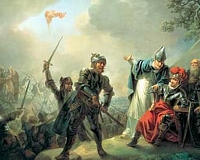
connected to the Danish flag. According to the
myth - the Danish King Valdemar II called Valdemar
the Victorious (1170-1241 – King 1202-1241), was during his
crusade to Estonia caught in a battle in June 1219 at
Lyndanise near Reval,and while combating, a revelation happened, as a red flag
with a white cross surprisingly fell down from the sky and landed
beside the King. With the red white flag in his hand - King Valdemar
II won the battle at Lydanise near Tallinn - and
after this historical event the King commanded the flag to be the
Danish national flag.
This legend of the Danish flag is very popular among the Danes and
their favorite – even though a handful of other legends about
the Danish flag exist.
The
Danish flag fell down from the sky in 1219 in Estonia and
helped King Valdemar II to win the battle at Lydanise near
Tallinn.
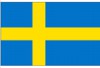
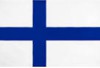
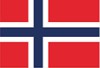
Scandinavian
flags blowing in the fresh Nordic wind from right to left
respectively - Finland - Iceland - Norway - Sweden and Denmark.
Colourful
girls with the German and Danish flag painted on their faces.
The face decoration is often used for national sports events.
Dannebrog
The Danish flag is called “Dannebrog” and
is possibly the oldest national flag in the world.
As being a part of a Christian culture and the Scandinavian
countries - the design and pattern of the Danish flag with the Christian
cross was also later adopted by the other Nordic countries like
Sweden – Norway –
Finland - Iceland and Faeroe
Islands to symbolise their Christian heritage and the foundation
of Christianity in each nation.
Passing
History and Landscape
Long
after the Viking age (800 - 1050 AC) - Denmark
was much larger than today. From 1380 to 1814,
Norway was a part of the Danish kingdom together
with southern Sweden (Skåne) up to 1659.
Schleswig and Holstein in North
Germany belonged to Denmark until 1864.
Today Denmark's size is currently 43,093 sq. km.
Greenland
and the Faroe Islands are also a part of Denmark.
Greenland
is a part of the Danish Kingdom and the biggest island in
the world - located between the Arctic and Atlantic Oceans.
The
Faeroe Islands in the North Atlantic Ocean has been an autonomous
region of the Kingdom of Denmark since 1948.
Flat
as a pancake
Denmark is flat as a pancake and one of the highest
spots rises about 147 metres over sea level and
called “Himmelbjerget” – The
Sky Mountain – situated in mid Jutland. A little bit more
than three quarters of the Danish Kingdom is 100
metres above sea level and most of Denmark’s landscape is
cultivated for producing agricultural products. Many forests
– pastures and meadows are
characteristic features of the Danish landscape together with a
very diversified coastline that is dominated by white sandy
beaches – marchland and dunes.
Pastures
- meadows and forests are characteristic features of the Danish
landscape and rural areas which was formed by the last Ice
Age more than 11,000 years ago.
Most
of Denmark’s rural landscape is cultivated for producing
agricultural products and farming plays a vital role with
demanding export markets for quality-minded consumers.
Denmark's
Regions and Scandinavia
Denmark is connected to the European continent with Germany
in the south and the kingdom is surrounded by its nearest neighbours
Sweden and Norway. Together Sweden - Norway
– Finland – Iceland
and Denmark is also called Scandinavia.
In
the Stone Age - 1,000 to 1,500 BC. - the Danes buried their
dead with a monument of stones, which still can been seen
in the landscape today.
The
Chariot of the Sun from the Bronze Age around 1350 BC. Found
in North Sealand in 1902 and one of the precious relics
at the National Museum.
Jutland
and the Islands
The Peninsular of Jutland - Jylland - is joined
to central Europe while the rest of Denmark consists of 406
islands of which 90 are inhabited. The largest
island is Sealand, - Sjælland - where
the Danish capital Copenhagen - København
- is situated. Funen - Fyn - and the
twin island Lolland - Falster together with
the rocky island of Bornholm are some of the biggest
isles in the Danish continent. Small and big bridges
Denmark
is linked by small and big bridges to main Scandinavian countries
and the rest of the European continent. Especially the gigantic
suspension bridge the Great Belt Bridge across the
20 km Great Belt between Funen and
Sealand has been the largest bridge project
of them all.
The Great Belt Bridge construction is the largest suspension
bridge of its type in the world with a height as tall as the
Eiffel Tower.
The
Great Belt bridge was opened 1998, and the construction
comprises a 6,790 m long suspension bridge with two
pylons that are 254 m above sea level, and a 6,611
m long combined rail and road bridge.
The
Coastline
Denmark's
coastline measures about 7,300 km. and stretches with
sand dunes, fjords and seascapes,
white sandy beaches, marina's
and many ancient market towns.
From any point in Denmark, there will be less than 52 km
to the sea.
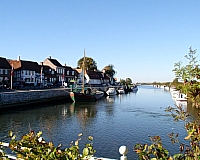
One
of many charming old towns on Denmark's coastline is
Nakskov, founded around 1260 on the island of Lolland
with beautiful old houses and buildings surrounding
the harbour area.
The
impressive sand dunes on the harsh west coast of Jutland
with 400 km of sandy beaches facing the North Sea and
a recreation area where both Danes and tourist flock by
thousands in the summertime.
Denmark
at a Glance
A
dynamic and modern society
Denmark is a dynamic and modern society with one of the most
competitive economies in the world generating
a budget surplus with nearly no government debt. Danes considered
themselves as movers – liberal
– friendly – and open-minded
along with a vast reputation of being a part of a
freedom loving nation that has a natural hard working
mentality and moral plus an easygoing
lifestyle with high-quality family ideals
that is rooted in great harmony with Danish culture
– traditions and democratic
values.
Innovative
nation
Denmark is the fourth most innovative
nation in the world, which is an important feature
and bonus, when competing on export markets
in a globalised world.
The
Danes have a reputation of being a freedom loving nation
with an easygoing lifestyle that is rooted in Danish
culture and democratic values.
Denmark
is the fourth most innovative nation in the world -
which is an important bonus, when competing on export
markets in a globalised world.
Infrastructure
and bicycles
Denmark has one of the most developed transport systems
in the world with an effective infrastructure
and public transport system that is well organized and efficient
– even though many Danes use their bicycles
for transportation.
Denmark
has one of the most developed transport systems in the
world with an effective infrastructure and public transport
system.
Even
though Denmark has an efficient transport system - the
Danes just love their bicycles and cycling is a part
of the Danish lifestyle.
Evening
school and leisure activities
The Danes are very active after working hours practising various
sports – leisure activities
– evening school classes -
social and cultural meetings –
club and association life etc. and
most of all – the Danes are online with the rest of
the world – as nearly everyone has a PC
and a Cell Phone in Denmark.
Sports
- leisure activities plus club and association life
is an active part of the traditional Danish style and
form.
Almost
everyone in Denmark has a computer or has access to
one. Pupils at school start at first grade using a PC.
Population
and names
The population of Denmark is just over 5.4
million and more than 75 % are living in
urban areas with surnames like Jensen - Nielsen
- Hansen - Pedersen and Andersen
as the most common. The five most used first given names for
girls are Anne - Kirsten
- Hanne - Mette and Anna,
and for men the five most used first given names are Jens
- Peter - Lars - Michael
and Henrik.
Danish
food culture has been cultivated and improved for many generations
and is mainly rooted in the country kitchen
and the cold weather conditions in Denmark.
Rye bread and beer has for thousands
of years been a basic part of the daily food consumption and
later potatoes and heavy gravy
was the main supplement to the fish and meat
dishes. Today Danish food culture is still very traditional
and conservative - and is based on old delicious and well
prepared recipes in spite of influence from foreign cultures.
More...
Famous
Danish "Smørrebrød"
Traditional
Danish dishes
Danish
desserts and sweeteners
The
Danish model
Education - Knowledge – Growth – Welfare
The backbone of the Danish welfare system originates
from the first school reform from 1720 under the
rule of King Frederik IV (1671-1730), who established
240 schoolhouses bearing the royal insignia and
called them Cavalry schools. A new Education Act in 1814
under the reign of King Frederik VI (1808-1839)
was the very first birth of the Danish “Folkeskole”
– Peoples School - introducing free primary schools with compulsory
education for all pupils in the country between age 7
and 14 years. In 1894 the Danish
“Folkeskole” became a part of the government-funded
primary education system to meet the requirements of the beginning
industrial society.
The
oldest existing school building in Denmark from 1791
- was established by Prince Carl at Faxe, on the east
cost of Sealand. The school included both class room
and the teacher’s living room.
The
world's first Folks High School - "Folkehøjskole"
- was founded in 1844 in south Jutland and was based
on the Danish national icon N.F.C. Grundtvig's ideas
of a school for the uneducated adults.
The
University of Århus was inaugurated in 1928 and
has by various merges with other Institutes and Faculties
more than 34,000 students spread all over Jutland and
at the Århus Campus.
The
Folks High School - "Folkehøjskole"
Throughout the 19th century the Danish education
system was especially influenced by the ideas of priest and national
legend N. F. S. Grundtvig
(1783 - 1872), who founded the popular “Folkehøjskoler”
– Folks High School in 1844.
DTU
- is one of Europe's leading technical universities in the
areas of natural sciences and technology. Every year, 8,500
students are studying for their Doctoral - Master’s
and Bachelor’s degrees.
The
new Copenhagen University built in 2002 and situated at the
“Ørestad” areas on the Isle of Amager.
Everyday more than 14,000 students are educated here and at
the new IT-University.
Vejle
Business College – situated in east Jutland - is one
of largest colleges in Denmark, where over 2000 students participate
in courses for computer science and business logistics management.
Over
9,600 different educational institutions
During the 20 century, a wide range of new educational
institutions was established, providing every Dane from
the age of 6 free public support for his or her
higher education - despite of social standing. As the educational
level in Denmark is of a very high standard in all categories and
stages of the education system - the Danes are well prepared for
confronting the challenges of globalization with
their know-how and competences.
Today there are more than 9,600 different educational
institutions spread all over Denmark.
There
is compulsory education in Denmark for all pupils in the
country between age 6 and 16 years.
There
is free public support for student’s higher education
in Denmark - despite of social standing.
300 years of educational development
The educational development in Denmark started for nearly 300
years ago by a foresighted King, who found it vital to invest in
people and their education that created knowledge
– growth and last but not least - one of
the best welfare systems in the world. The process
is called – The Danish Model.
The
Danish Export companies create welfare and a high standard of living
Innovative
export locomotives and a well educated working force
Thanks to a considerable range of innovative export companies and
corporations that create economic growth as wel
as a well educated and flexible working
force - the Danes have a high standard of living
than most other countries.
The Danish export companies are geared to compete on global markets
with high technology products and advanced
engineering solutions together with food,
beverages, tobacco supplies and
agricultural products - Danish design,
handicrafts and architecture –
medical and pharmaceutical goods
- processing plants and productions lines
- alternative energy systems - shipping
and offshore services - which make the yearly export
revenues, contribute to fund the heavy central administration
and public sector – as the private and public sectors
nearly share the labour market with equal employees.
As Denmark is lacking of raw material - the Danish
exporters are the locomotives that create the economic
growth in Denmark - each with an annual turn-over that reaches many
billions and each strongly well established and
represented on world markets.
Some
of the world's largest exporters are Danish!
Kopenhagen
Fur - is the world’s largest fur skin auction house
and the center of the international fur trade.
The
Novo Group - is the world’s largest insulin supplier
and a international leader in diabetes and healthcare.
The
A.P. Moller-Maersk Group - is the world’s largest container
ship operator, with the biggest container ships in the world.
Vestas
- is the world’s largest supplier of wind power solutions
and offers the biggest research and development unit in the
wind industry.
Danish
Crown - is the world's largest meat exporter and the biggest
meat processing company in Europe producing pork and beef.
Danfoss
is an international group and a world leader in research,
development and production of refrigeration, heating and motion
controls.
The
Lego Group is a global enterprise and one of the world’s
largest manufactures of toys that are sold in more than 130
countries.
The
Rockwool Group is the world's leading producer of stone wool
for insulation of buildings all over the globe and operates
with 23 factories in three continents.
The
Arla Group is one of the largest dairy manufactures in Europe
with subsidiaries in 23 countries world wide and develops
over 200 new products every year.
Agriculture - High Technology - Shipping - Energy - Health Care
etc.
Not only are the Danish export companies world leaders in their
line of business but also the largest exporters on a global scale
like international corporations as (in random order) TheArla Group - Danish Crown - Kopenhagen
Fur – Carlsberg Breweries - Scandinavian
TobaccoCompany - The A.P. Moller–Maersk
Group - Novo Nordisk - Danfoss
– Grundfos - Vestas Wind Systems
- Bang&Olufsen - F.L. Smith - Hempel
- The Rockwool Group - Danisco
– Lundbeck - Coloplast -
Lego - Bang & Olufsen - The
VKR Group - SAS Group (Scandinavian Airlines) - Foss - Oticon
- Jysk - Radiometer - ISS Group
- Haldor Topsøe - Brüel &
Kjær etc. - who all have been presence on the expanding
export markets for several decades and was the early pioneers of
globalization long before the term was invented
and introduced.
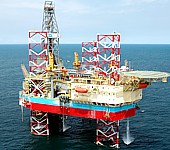
Especially in the energy sector - Denmark has since
1998 been an exporter of Fossil Energy
by the A.P. Moller-Maersk Group and the Vestas Wind
Systems has
a 25 per cent world market share in Wind
Power solutions.
The
total export revenue at the present amounts DKK
560 billions - and the Danish politicians as well as the
central administration are lucky to have motivated risk taking export
companies that are innovative locomotives and the sole benefactors
and creators of the Danish welfare system and a
high standard of living.
DKK
40 Billion - Assistance to the Third World and Devloping Countries
Assistance
and Contribution to developing countries
Even though Denmark in size is a small country – it is a heavyweight
and giant – when it comes to founding assistance to the Third
World. In 1962 the Danish Parliament
passed its first act on international cooperation for economic development
to undeveloped countries. The development supported to the developing
countries is bilateral as well as multilateral and the total founding
of projects amounted DKK16 billion in 2008
– which is roughly 10 per cent of Denmark’s
gross national product (GNP). Being among the world’s
richer nations – Denmark is one of the prime contributors
of official aid and founds to developing countries.
Denmark
is one of the prime contributors of official aid and founds
to developing countries.
Much
of the development funds from Denmark are used to establish
clean water wells in the third world.
Shelter
and homes to people from the Third World&
Middle East
Up
through the 1970s - and to date - poor immigrants
from the Third World and Middle East have flock by thousands towards
the Danish boarders - even though Denmark is one of the most expensive
countries to live in - with the highest taxes in the world. In spite
of the facts that Denmark never has had any type of colonial empires
around the world like other European nations - the total number
of immigrants and descendants in Denmark from the developing countries
has increased to around 460,000 - which is equivalent
to nearly 8.5% of the small Danish population of
5.5 million. The present integration programme
to assimilate and educate immigrants from
non western parts of the world into a deep-rooted Christian and
Protestant culture with solid democratic values and very high educational
traditions - using a well established welfare system - costs the
Danish taxpayers roughly DKK 24 billion per year
- including those poorly educated immigrants that are not yet active
and ready to enter the labour market or a modern western civilisation.
But no one is left in the lurch - as these many
billions are considered as a form for development assistance and
cooperation too – and has lifted a huge burden from the developing
countries political administration and governments in the Third
World and Middle East.
NATO
and EU Membership
Denmark has been a member of NATO
since
1948 - and became a member of EU
in 1972.
Denmark
has been a member of NATO since 1948 and has carried out many
peace keeping operations.
Denmark
was one of the first members of the EU and an active part of
European democracies.
Supporting
the Danish troops abroad
The majority of the Danes are proud of their brave troops and supports
the Danish soldiers on peace keeping missions abroad
- firmly to defend democracy and freedom
in the developing countries and to prevent and reduce the treat
of terrorism worldwide.
The
Danes
The Danes and their country - in brief The
Danes just adore their country - even though they are
the most heavily taxed people in the world. They work
hard - but happily pay for their welfare system
that gives every individual equal right to have free
access to the public health care system plus other public
services.
Most of all the Danes protect and defend their democratic
rights as freedom of speech
- freedom of the press- gender
equality - high quality of life
- financial security and social benefits
- informal working atmosphere –
clean environment - equal educational
possibilities - Christian values
and much more, which is a part of the cultural
heritage that has contributed to build up the
Danish kingdom through many generation.
The
Danes are elected as the most satisfied people
in the world - who claim they live in the happiest
place on earth.
The
educational system in Denmark offers free and
equal educational possibilities for all Danes
from the age of six.
Danish
companies have the most pleased employees in Europe
due to a fine working atmosphere and gender equality.
The
Happiest people in the world
According to several surveys - the Danes are the most
pleased people in the world - living
in the happiest place on earth. A recent
study of the working environment in Denmark also shows
that Danish companies have the most satisfied
employees in Europe.
Danish immigrants travelling to North America and Canada Many Danes left their homeland Denmark
around 1880 to seek new opportunities primarily
in USA and Canada together with
other immigrant from Scandinavia - Sweden and Norway.
At that time no social benefits or social
security were offered to the immigrants, who was compelled
to manage by their own and begin their new life with a lot of struggle
for the daily bread. Find
Ancestors
Denmark
- Photo Gallery
Glimpse
of interesting places in Denmark and some cultural traditions
(Especially
a credit to our brave Troupes and homesick Danes abroad - missing
their country and homeland)
The
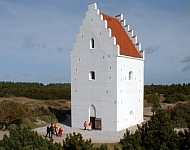
sand-covered church from 1290 at Skagen. North Jutland.
The
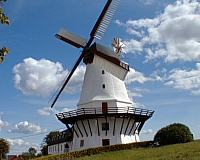
historical and national Dybbøl Mill from 1744 - South Jutland.
The
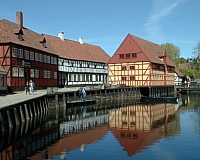
prehistoric Old Town in Århus is a 5-star experience.
East Jutland.
Fishing
boats on the beach at Vorupør - West Jutland.
The
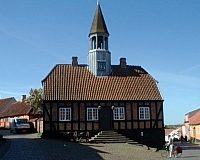
old Town Hall at Ebeltoft from 1789 - Mols East Jutland.
Koldinghus
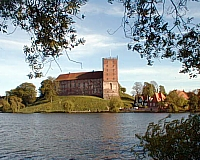
Castle and former royal residence from 1268 - East Jutland.
The
medieval town Ribe from 1150 - South-East Jutland.
The
Sky Mountain (Himmelbjerget) at Silkeborg - 148 m. - Mid
Jutland.
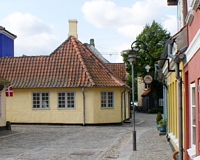
Hans
Christian Andersen's home in Odense from 1785 - Funen.
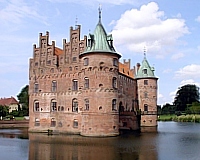
Egeskov
Castle from 1554, and Veteran Car Museum - Funen.
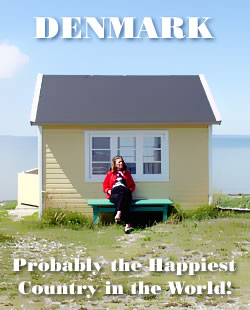
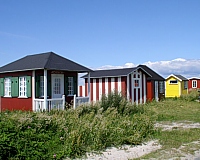
Little
beach houses (Strandhusene) - Isle of Ærø -
South Funen.
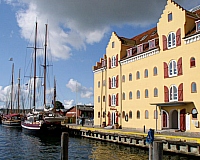
Svendborg
Harbour and acient town from 1253 - South Funen.
Legoland
and park – Built up by more than 50 million Lego bricks
- Billund - Mid Jutland.
Romantic
and charming Gudhjem town and fishing village - Isle of
Bornholm - East coast.
Statue
”People at Sea” - A new 9 metre high landmark
for Esbjerg city - West Jutland.
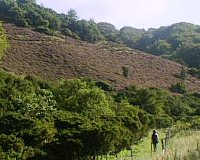
Rebild
Bakker (Rebild National Park) and its heather-covered hills
- Himmerland - Northern Jutland.
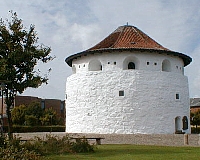
Gunpowder
Tower (Krudttårnet) 1688 - rest of the old fortification
- Frederikshavn - North Juthland.
Aalborg's
famous nightlife at the “Strip” - Jomfru Ane
Gade - Virgin Ane Street - North Juthland.
Vejlefjord
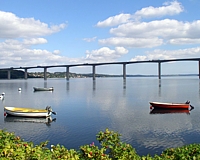
Bridge with a lovely view over Vejle Town - East Jutland.
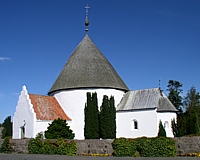
Nyker
round church from 1150 - with frescos from 1400 - Bornholm.
The
sandy isle of Rømø is ideal for driving Sea
Buggy’s - North Sea.
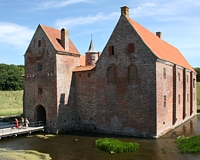
Spøttrup
Castle from 1520 - well preserved medieval castle with an
active museum - North Jutland.
Bulbjerg
Cliff is a 48 metre high limestone cliff and the only bird
cliff in Denmark - North Jutland.
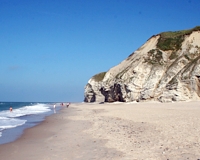
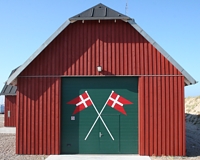
Sea
Rescue Station at Thorup Strand - The fist Rescue post was
established in 1840 - West Jutland.
Svendborgsund
is the broad Sound that divides Funen with the isle of Tåsinge
- South Funen.
Open
Air Museum with over 100 rural houses furnished from 1550-1950
- Greater Copenhagen.
Porskær
Stenhus 3300 BC - Denmark's largest stone burial chamber -
Mols - East Jutland.
Bathing
nymphs after a fresh swim at the Oresound - East Sealand.
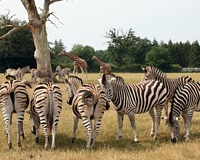
Knuthenborg
Safaripark is North Europe's largest - Lolland.
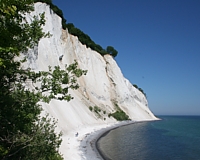
Møns
Cliff - Denmark’s highest cliffs over 6 km long - Isle
of Møn.
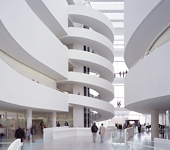
ARoS
Art Museum founded by Aarhus citizens in 1859 - in new premises
- Aarhus - East Jutland.
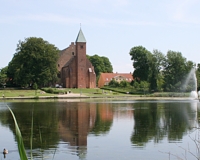
Maribo
Cathedral from 1416 and former monastery was founded by Queen
Margrete I - Mid Lolland.
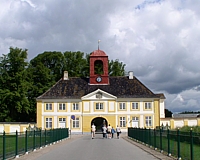
Head
entrance to Valdemar Castle built in 1644 - Isle of Tåsinge
- South Funen.
Odense
Canal from 1796 connects Odense harbour with beautiful Odense
fjord - Mid Funen.
Mols Bjerge (Mols rolling Hills) and national park located
on the small peninsula of Mols - East Jutland.
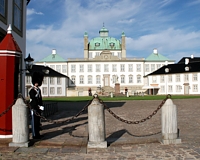
Fredensborg
Castle from 1720-1726 and the Royal summer residence - North
Sealand.
Lion
park - Givskud Zoo and Safari Park, with over 1000 animals
from 5 continents - Mid Jutland.
Fresh
smoked herring - a national dish from the isle of Bornholm
and prepared since the Middle Age.
Goose
Tower from 1364 - a part of an old fortress by King Valdemar
- Vordingborg - South Sealand.
Trelleborg
Viking ring Fortress from 980 AC - with room for some 1300
people - South Sealand.
Holckenhavn
Castle from 1579 situated in a large and charming English-style
park - Nyborg - Funen.
Fjenneslev
Church from 1130 - the birthplace of Copenhagen’s creator
Bishop Absalon - Mid Sealand.
The
Danish Flag - Dannebrog.
Roskilde
Fjord - Mid Sealand.
Ferry
over Guldborgsund - Falster.
Fishing
boats at Gilleleje harbour - North Sealand.
Bovbjerg
Lighthouse from 1877 - West Jutland.
Louisiana
Museum of Modern Art - North Sealand.
Kronborg
Castle from 1574-1577 - “Hamlets Castle” - North
Sealand.
Sand
dunes and Sea - a great recreational area - West Jutland.
Jelling
Church from 1150 and burial plot for King Gorm - East Jutland.
Mute
Swans - was elected as Denmark's national bird in 1984.
Dragør
Museum from 1682 - on the isle of southern Amager.
The
Faroe bridge from 1985 connecting Sealand with Falster.
Traditional
painted stones from the west coast of Jutland.
Kalundborg
Church from 1170, with 5 towers - West Sealand.
Sail
Boats on the Limfjord that runs from Kattegat to the North
Sea.
Ruins
of Hammershus Castle from 1255 - North Bornholm.
Windmills
- for cleaner energy - on the windy coast of Jutland.
Tranekær
Castle from 1230 - isle of Langeland - South Funen.
Randers
Regnskov - Tropical Zoo with thousand of species beside Guden
River - East Jutland.
The
Danish national dish called – "Frikadelle"
- eaten by the world's most pork consuming people.
Mønsted
Limestone Caves near the medieval town Viborg from year 1200
- Mid Jutland.
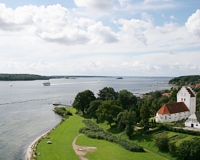
"Sjællands
Odde" - the beautiful spit of Sealand - West Sealand.
Hanklit
on the isle of Mors in the Limfjord - North Jutland.
Denmark
is a nation of cyclists, who enjoy cycling all over the country.
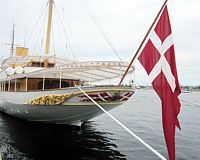
The
Danish Royal Yacht from 1931 - is the official and private
floating residence for the Royal Family.
Danish
countryside in spring with poppies - marguerites and yellow
mustard fields - Mid Sealand.
Nybjerg
watermill from 1548 grinded corn until 1935 - a genuine tourist
attraction - East Jutland.
Old
house on Funen with hollyhocks - taken right out from a song
lyric by poet and writer H. C. Andersen.
Romantic
Liselund mini-castle from 1887 and its beautiful park in English
style - Isle of Moen.
Denmark's
largest forest Rold Skov (Rold Forest) on a lazy afternoon
- Mid Jutland.
Kite
flying at Fanø Island in the North Sea, with miles
of sandy beaches stretching all around the isle - Southwestern
Denmark.
The
Common Seal is a regular guest in Danish waters, with breeding
grounds alongside southwestern Jutland.
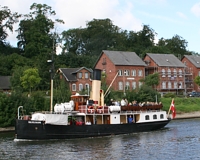
The
oldest Paddle Steamer in the world from 1861 - Hjejlen - is
still sailing on the scenic Silkeborg Lakes - Mid Jutland.
Rugbjerg
Knude has covered the lighthouse with sand and is one of the
biggest migrating dunes in Denmark - West coast Jutland.
The
North Sea Oceanarium at Vorupør is the largest aquarium
in Northern Europe, with 4.5 million litres of water - Northwest
Jutland.
Lejre
Archaeological research centre, showing 10.000 years of Danish
history brought to life in original settings - Mid Sealand.
Jærgerspris
Castle from 1590 - former Royal residence of King Frederik
VII - and Countess Danner - North Sealand.
The
Wadden Sea (Vadehavet) is famous for it fauna - flora and
thousands of breeding birds - West coast of Jutland.
Sønderborg
Castle from 1170, where King Christian II, was held prisoner
in 1532 for 17 years - Island of Als - Southern Jutland.
Sunset
at Arresø - The largest lake in Denmark that runs into
Roskilde Fjord - North Sealand.
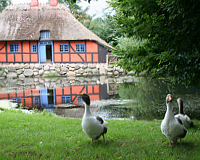
Typical
half-timbered house with thatched seaweed from 1850 - Isle
of Læsø - Kattegat Sea.
Famous
Danish Herring (Sild) with Akvavit, (Snaps) Beer (Øl)
and Rye bread (Rugbrød) - National dish.
Wellness
in a canoe on River Guden (Gudenå) - Denmark’s
longest river - near Gudenå Camping Resort - East Jutland.
The
traditional red Danish letter box (Postkasse) designed in
1870. The Danish postal service was established in 1624.
Royal
Schackenborg Slotskro (Inn) from 1687 in the tranquil village
of “Møgeltønder” near Schackenborg
Palace from 1600 - South Jutland.
Picnic
in summer cornfields with Danish open faced “sandwiches”
and cool fresh Carlsberg beer.
Typical
Danish wedding with horse carriage - the Christian wedding
ceremony take les than 45 min.
Sailing
school at Arresø where new pupils learn the fine art
of sailing the Optimist class. North Sealand.
Famous
Højerup Church from 1250 at the edge of Stevns Cliff
- where the choir collapsed in 1928 and fell into the water.
East Sealand.
Midsummer
in Denmark is every year celebrated with Bon Fires all over
the country on the 24 June and is called Sankt Hans aften.
Horseback
riding in the fresh waters of Helnæs Bay. Horseback
rides for tourists is very popular in Denmark. West Funen.
Jesperhus
Flower Park - the largest in Northern Europe presents more
than 2 million flowers spread over the amusement park and
holiday resort. North Jutland.
Harlequin
dancing with Columbine at the Pantomime Theatre from 1874
in Tivoli. The mime theatre performance gathers thousands
of tourists every year. Copenhagen.
Vintage
train from Maribo to Bandholm with the oldest Danish steam
engine from 1879. The line was inaugurated in 1869 and open
in the summer season. Lolland.
BonBon-Land
- Theme park with 60 hysterically amusement and loads of
fun. Mid Sealand.
A
part of the Danish buffet called the Great Cold Table. Normally
served at Christmas time.
The
Royal Danish Guard in red "galla" uniforms celebrating
their 350 year jubilee in 2008.
Frederiksborg
Castle from 1560 - built by King Frederik II. In 1859 the
castle was razed by a fire and rebuilt. It houses The Museum
of National History. North Sealand.
Lindholm
Høje near Aalborg is the largest Viking burial area
in Denmark with over 700 plots. It was found in 1889 and dates
back to 700-1050 AC. North Jutland.
Viborg
Cathedral from 1876 is built on the rest of a former Cathedral
from 1726 that was razes by a fire. The first medieval church
on the site was from 1130. Mid Jutland.
KUNSTEN
Museum of Modern Art Aalborg from 1972 - focuses on art
from 1900 and up to our century. North Jutland.
Carnival
in Denmark is a great yearly event in major cities in May
- where happy dancers are active in Aalborg - Århus
and Copenhagen.
The
very top of Denmark is called "Grenen" where the
Skagerrak and Kattegat Seas meet at the tip of "Grenen".
North Jutland.
Mariager
Fjord is the longest fjord in Denmark and cuts its way into
the Jutland peninsula from the Kattegat Sea to the city
of Hobro after passing the cities of Hadsund and Mariager.
Mid Jutland.
The
Danish red cattle produce each 26 litres of milk every day.
The first breeding of the cattle started in Denmark about
1950 and the milk race is a very common sight in the Danish
landscape.
Roskilde
Cathedral from the 12th century is the biggest Cathedral in
Denmark and the main burial site for Danish Kings and Queens
since the 15th century. The Cathedral is a UNESCO World Heritage
Site.