Danish Food Culture and Cooking

*A Part of the Danish Cultural Heritage*


Traditional Danish food culture
Return previous
A dilicious taste of Denmark
Glimpse of traditional Danish food culture!
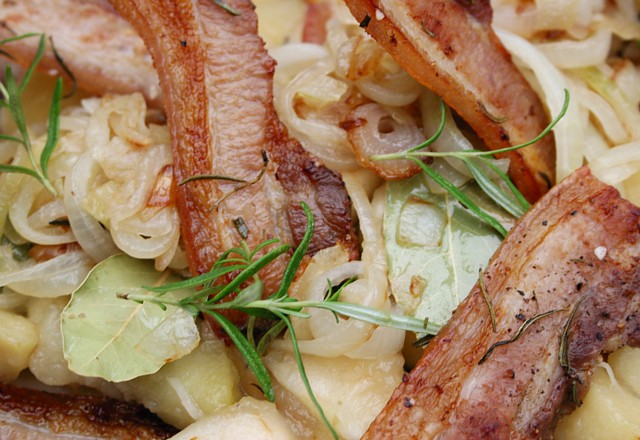
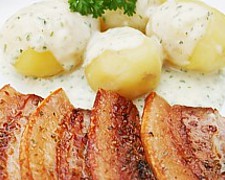
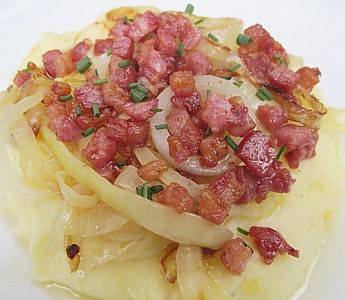
"Stegt flæsk" - Fried slices of juicy pork on the bone with potatoes and creamy parsley sauce is one of the Danes favourite everyday dishes and is mostly eaten during the cold and wet winter periods.
 

Danish food culture
Danish food culture has been cultivated and improved for many generations and is mainly rooted from the old country kitchen and the cold weather conditions in Denmark. The cold and often wet climate in Denmark demands a lot of food with high nutritional values that contains many vitamins and minerals to mobilise a great potion of energy – which is a vital source, needed for work - school – sports and other form of daily activities - when living in a dynamic and modern society like Denmark.

Danish food in olden days
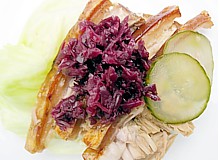
Smoked ham or pork has been preserved in Denmark since 1000 AC and is still a delicious Danish eating today with many proteins. Can be stored for almost a year.

Salami - "Spegepølse" is prepared with pork and beef and air-dried - and was a popular meal amongst Danish peasants in olden days - due to its preserved long lifetime for nearly one year.

Danish "Sylte" - Head cheese or Brawn is made of meet from the pigs head and meat jelly - which
was a popular dish for Danish peasant in the Middle Age and also a special Danish treat today.
 
Preserved Danish food
The natural content and ingredients in Danish food culture has been built up for centuries and flavoured to match the taste of the traditional eating habits of the Danish people from region to region and up to this century. To preserve food in olden days - the items of meat foodstuffs was either salted - smoked or brine-pickled and could be stored for a very long time. The modern Danish kitchen uses many old recipes from the non refrigeration period – and is still highly preferred and enjoyed at the dinner tables in Denmark.
 
Smoked herring from the Danish island Bornholm is a national meal and has been smoked since the late 1800s. It is also called “gold from the sea” and is preserved for many weeks.
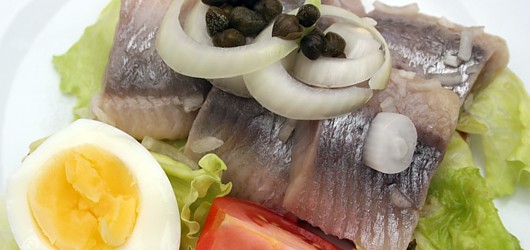
Marinated or pickled herring is a Danish national treat from the Middle Age and is a must in the Nordic cuisine. The flavored herring is normally enjoyed with Akvavit. (Snaps)
Cheese making begun in Denmark around year 1000 during the Viking period by pressing and salting of curdled milk in order to preserve it. Cheese can last for years.
 
Traditional and conservative food culture
Rye bread and beer has for thousands of years been a basic part of the daily food consumption and later potatoes and heavy gravy was the main supplement to fish and meat dishes. The present Danish food culture is still very traditional and conservative - and is nevertheless based on deep-rooted recipes in spite of influence from foreign countries and cultures.
 
Smørrebrød - open faced sandwich
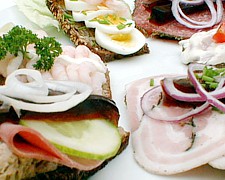
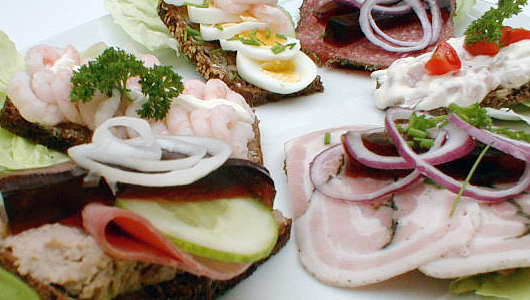
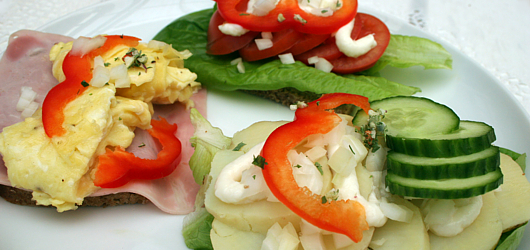
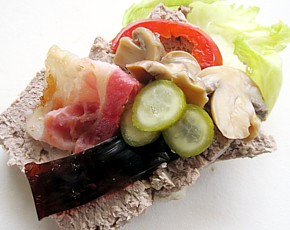
Danish "smørrebrød" also called "open faced sandwich" - Here presented in the everyday version.

Danish - Smørrebrød
Almost every Danish restaurant in Copenhagen serve the traditional "open faced sandwich" called "smørrebrød" with many different potions of food items as cold cuts, pieces of meat or fish, various paste, salad dressings and cheese on buttered rye bread and decorated with all types of toppings that gives the creation a great visual appeal - and is surely a piece of genuine art, when presented on a well laid table with cold Danish beer and snaps. “Smørrebrød” is normally served together with the famous Danish beer and snaps.
 
Smørrebrød - History in brief
During the 1840s – workers – framers - labourers and others employees had a sort of luncheon packet with different types of flat “Smørrebrød” for their lunch. Each slice consists of a piece of buttered rye bread (rugbrød) – and a thin piece of homemade cold cuts - pieces of meat or fish - cheese – spreads and liver paste as toppings. Sometimes the toppings were placed between to pieces of the rye bread – just like in a sandwich.
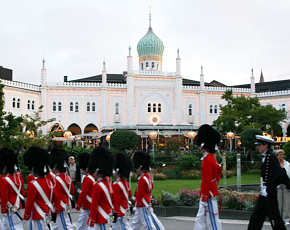
Restaurant Nimb in Tivoli was the first eating place that offered "smørrebrød" on their menu in 1883. Restaurant Nimb still serves delicious "Smørrebrød" - also called open faced sandwiches.
 
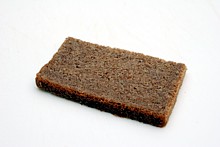
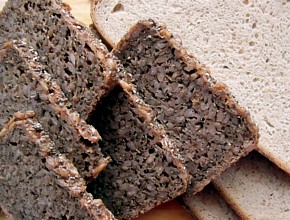
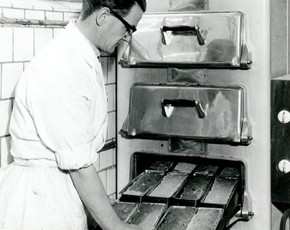
Rye bread is the most important base on which the famous Danish open sandwich "smørrebrød" is created. It takes more then 24 hours to prepare and bake the bread.
Smørrebrød on the menu
Later during the 1880s – the Danish “Smørrebrød” turned in to be a more sophisticated type of luncheon specialty and the really high topped “Smørrebrød” was invented with a variety of delicious topping stacked on top of each other. The very first restaurant offering high topped “Smørrebrød” on their menu was Restaurant Nimb at Tivoli in 1883. Restaurant Nimb still exists and serves tasty and mouth-watering “Smørrebrød”.

 
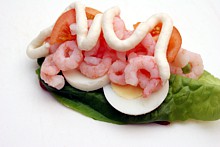
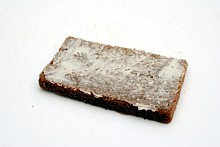
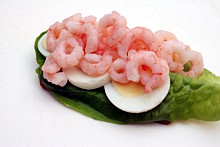
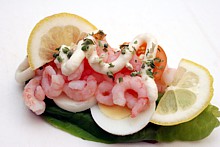
How to prepare two popular Danish open faced sandwiches - Step by step!
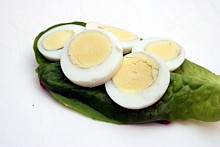
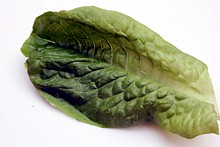
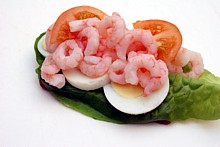
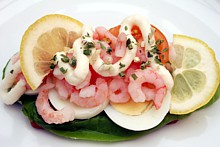
- Egg with Scrimps - on rye bread or white bread
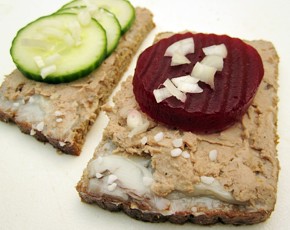
- Veterinarians night snack sandwich - with liver paste - on rye bread
 
"Smørrebrød" has many types of topping creations
The secret behind Danish “Smørrebrød” - open faced sandwiches - is the rye bread and butter that has to be totally covered with the basic entrées of vegetable - seafood or meat choices - and then the many types of tasty topping creations - which is altogether in great harmony with the rest of all the delicious food items on the sandwich.
 
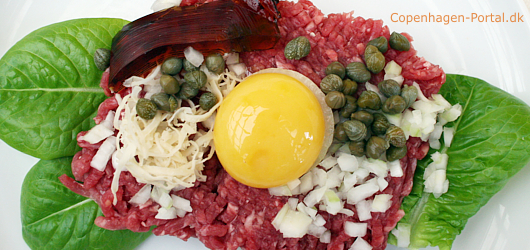
Tatar - (Beef Tatare) A classic example of a high topped Danish "Smørrebrød" - open faced sandwich - and a genuine piece of art with high-quality raw minced meat from the fillet of beef on thick rye bread and butter - lettuce - raw egg yoke - raw onions and capers - jelly gravy and horseradish - sour beetroot and cucumber. Some like the dish added with pickles.
 
A variety of common Danish open faced sandwiches - Danish Heritage Cookbook
 
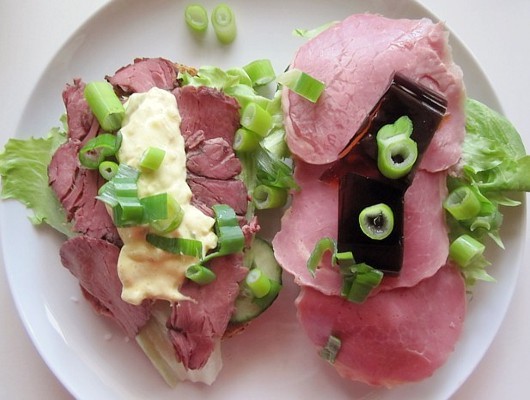
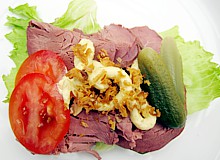
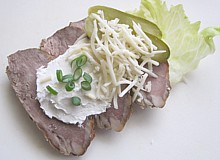
Roastbeef med remoulade
Roastbeef with “remoulade” and roasted onions + sour cucumber.
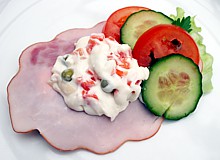
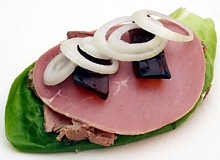
Skinke med italiensk salat
Ham with mixed Italian salad, tomatoes and fresh cucumber.
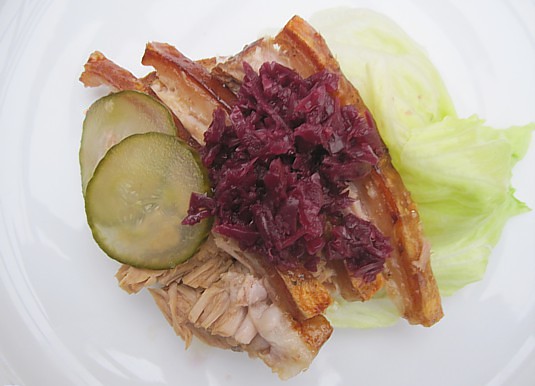
Flæskesteg med rødkål
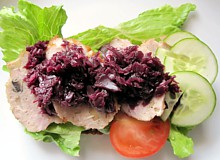
Roast pork with red cabbage - cucumber, prunes and orange.
 
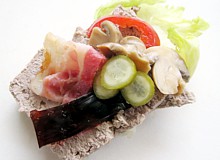
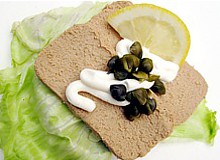
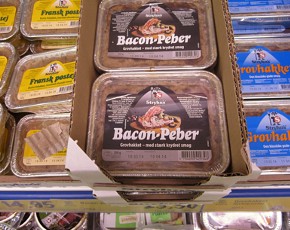
Leverpostej med sky champignon
Liver paste with mushrooms, bacon, gravy jelly - red pepper .
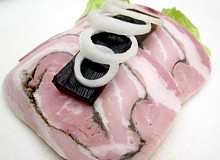
Rullepølse med sky og løg
Rolled stuffed pork - gravy jelly, onions and tomatoes.
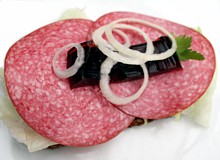
Spegepølse med sky og løg
Spicy salami with gravy jelly - onions and tomatoes.
 
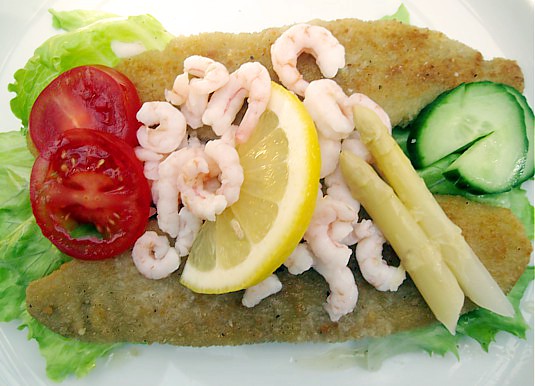
Stegt fiskefilet med remoulade
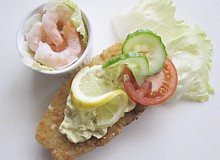
Fried filet of sole with "remolade" cucumber - tomato and lemon.
Laks med asparges og dild
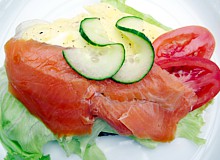
Smoked salmon with asparagus - cucumber and lemon.
Ost med rød peber
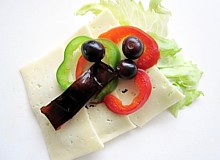
Creamy Harvarti cheese with red pepper - grapes and parsley.
 
Hakkebøf med spejlæg
Minced meat - Hamburger with fried egg and stuffed tomatoes.
Marineret sild
Marinated herring with scrimps - carry dressing and caviar.
Røget ål med røræg
Smoked eel with scrambled eggs - lettuces - parsley and lemon.
 
Store kolde bord
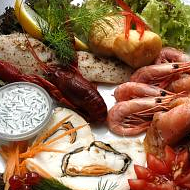
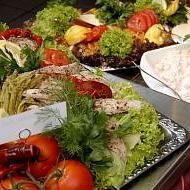
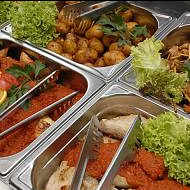
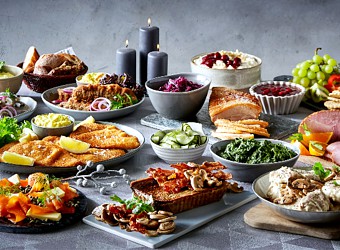
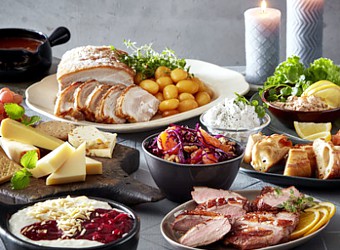
The buffet style lunch "Store kolde bord" - "The grand cold table" - offers a large selection of toppings for "smørrebrød", ranging from meet, fish, seafood, salami, liver paste, herrings, salads, cheeses etc., so guests can make their own type of decorative "open faced sandwiches" at the table. Many luncheon restaurants often located below street level in cosy surrounding offers old Danish homemade specialities.

Dishes from the "Store kolde bord" - The grand cold table - a Danish buffet style table. Here you can eat as much as you can and really get stuffed.
   

The Danes are the most pork eating people in the world

Each Dane eats almost 60 kg of tasty pork every year - and nearly 30 kg of beef - whilst each citizen in Denmark only eats 23 kg of poultry and fish meat. For the consumption of fruit and vegetables – each Dane eats about 90 kg of healthy green foodstuff per year and the most popular greens are tomato – cucumber and lettuce as well as apples - pears and banana. The Danes are also one of the world’s largest exporters of pork with an annual revenue of 32 billion.


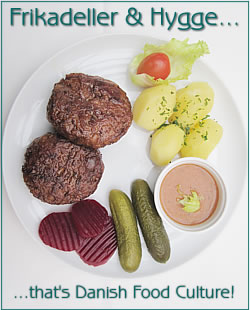
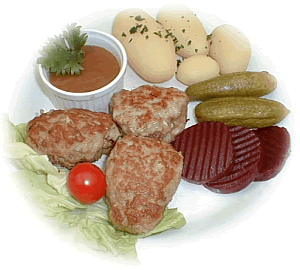
"Frikadelle" is an Old Danish national dish from 1648 and the first recipes of this delicious dish dates back to 1837. The meatballs are made of pure pork – and served with potatoes – pickled beetroot – sour preserved cucumber and thick brown sauce.


Frikadelle

The Danish "Frikadelle" (rissole) is a national dish served with potatoes, preserved sour vegetables and thick brown sauce.

The first recipes of this delicious dish is dated back to 1837, but the name "Frikadelle" (pure pork) is already recorded in the beginning of the 16th century.

In a cookbook from 1648 a similar "Frikadelle" dish is mentioned.

The Danes love their "Frikadelle" and eat the meal all year round as a main traditional dish.


Frikadelle is the Danes favourite dish of them all.

 
Traditional everyday food in Denmark and the Danes favourite dishes
As Denmark is the largest exporter of pork in the world – the traditional everyday dishes include plenty of delicious pork recipes with potatoes, vegetables and heavy brown sauce – often with sour or sweet supplements. The Danes are great lovers of pork and have been it for generations. Beef is the second choice - while poultry and fish are the last preferences - when selecting daily treats as well as heavy soups - especially at winter time - which is a substantial part of the Danish cuisine - together with desserts and pastry. The Danes have a very sweet tooth too.
 
Here are some of the Danes favourite dishes!
Flæskesteg med rødkål
“Flæskesteg” - Roast pork with crispy crackling and red cabbage with small caramelised potatoes.
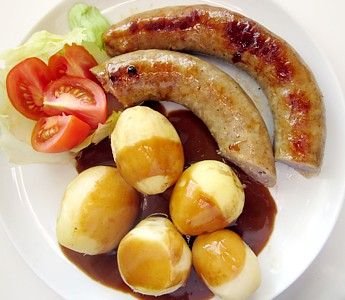
Medisterpølse
"Medisterpølse" - Spicy pork sausage with potatoes - stow cabbage and thick brown gravy
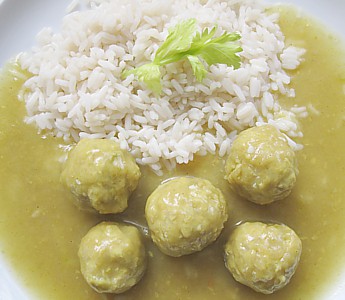
Boller i karry
"Boller i karry" - Meatballs of pork boiled in hot water - served with curry sauce and rice.
 
Kalvesteg

"Kalvesteg" - Roast veal of calf with potatoes - carrots - green beans and thin brown gravy.

Forloren hare
"Forloren hare" - Mock rabbit - spiced minced meat - with potatoes and heavy brown sauce.
Stegt flæsk med persillesovs
"Stegt flæsk" - Fried slices of pork on the bone with potatoes and creamy parsley sauce.
 
Biksemad med spejlæg
"Biksemad" - Hash mix with pork or beef cubes - potatoes - carrots - onions and fried egg.
Hamburgerryg og stuvet hvidkål
"Hamburgerryg" - Pork loin with stow cabbage in white sauce - potatoes and spread parsley.
Skipperlabskovs
"Skipperlabskovs" - Beef stew cooked with potatoes - black pepper corns and bay leaves.
 
Mørbrad
"Mørbrad" - Pork tenderloin with potatoes and heavy brown sauce - prunes and red currant jelly.
Krebinetter
"Krebinetter" - Pork patty with peas - cauliflower - carrots and white stewed cabbage.
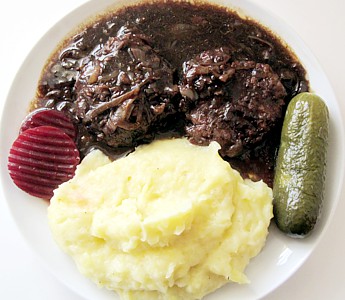
Hakkebøf med bløde løg
"Hakkebøf" - Juicy hamburger steak in heavy brown sauce with fried onions and sour cucumber.
 
Tarteletter med høns i asparges
”Tarteletter” - Patty Shells in many variations - here with creamed chicken and asparagus.
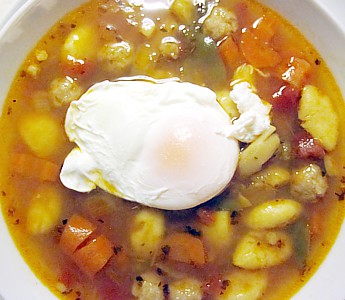
Hønsekødssuppe
"Hønsekødssuppe" - Chicken soup with dumplings - meatballs and cubed vegetables.
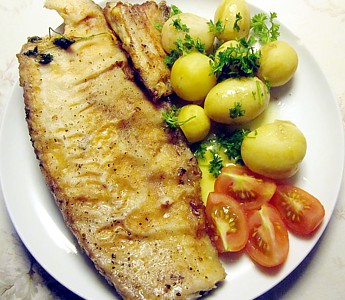
Stegt rødspætte

"Stegt rødspætte" - Pan fried plaice in butter with potatoes - parsley and asparagus.

 
Gule ærter
"Gule ærter" - Yellow Split-Pea Soup with salt pork - various vegetables and a pinch of chilli.
Wienerschnitzel
Wienerschnitzel - Pork cutlets and potato chips - pickled herrings - horseradish and capers.
Stegte Ål
"Stegte Ål" - Fried Eel with potatoes and creamy parsley sauce plus slices of lemon.
 
Everyday dishes on restaurant menus
The Danes favourite everyday dishes can be tasted in several restaurants and eating places in and around Copenhagen - as these main courses are normally listed on the menus.
 
Danish desserts
Typical and popular Danish desserts – from the old country kitchen
Øllebrød
"Øllebrød" - Rye beery dessert of rye bread - sugar - mild beer and whipped cream.
Koldskål
"Koldskål" - Fridge buttermilk with vanilla and lemon flavour. Served with fruit or biscuits.
Rabarbergrød med fløde
“Rabarbergrød” - Stewed rhubarb dessert can be served with vanilla cream - whipped cream or milk.
     
Æblekage
Apple Charlotte with mashed apples - crumble and whipped cream. A traditional dessert.
Rødgrød med fløde
Red Berry Pudding with whipping cream. A national dessert and mostly for the summertime.
Risengrød - Ris a`la mande
Rice Pudding - whipped cream and cerry sauce is a must for all Danes at Christmas time.
 
What Danes drink with their food
The Danes has a huge variety of drinks to select from as beers - snaps - milk products - winesoft drinks and juices - but most of all they drink a lot of clean fresh water directly from the tap - which is a bonus, when living in Denmark. Fresh water from the tap is called “Postevand”.
 
Øl
"Øl" - The Danes just love their different types of beers - with their meal or in good company.
Snaps
"Snaps" - Akvavit is distilled from potatoes and herbs - and is enjoyed chilled with herring.
Mælkeprodukter
"Mælkeprodukter" - Milk products are popular milky drinks for meals at the household table.
 
Vin
"Vin" - Wine - Danes drink all types of red and white wine from all parts of the world.
Sodavand
"Sodavand" - Soft drinks are very trendy and drunk to all meals and the selection is impressive.
Juice
"Juice" - Fruits and vegetables juices are a favourite drink at nearly every meal.
Pølsevogn - Danish Fast Food
Fast food has been known by the Danes for centuries and is a quick and traditional way to please their appetite. The "Rød Pølse" - red sausage - made of pure pork and the "Pølsevogn" - sausage stand (mobile) is still the Danes favourite outdoor restaurant and a must to visit - summer and winter. In Danish terms the mobile sausage stands is called “Café Fodkold” – which means - Café Cold Feet - where the menu is beside the red sausages and hot dogs – a variety of other types of pork sausages and a vide selection of sausage dressing.

135 million red sausages
The first "Pølsevogn" was established in Copenhagen around 1910 and today more than 135 million red sausages "Røde Pølser" of delicious pure pork - are consumed every year at the Danish "Pølsevogn" - mobile sausage stand. Today there are over 130 sausage stands in Copenhagen.

Airport arrival
As a must - a very important sausage stand is placed in the baggage reclaim area at the airport’s arrival hall – so the Danes quickly – after days abroad - can enjoy their indispensable and delicious porky “Rød Pølse” - while waiting for their luggage.

More history
The red sausage "Rød Pølse" is made of pure pork and is a national eating and treat. The red sausage must have a crisp sound - when bitten over.
The "Pølsevogn" - mobile sausage stand is a must for any fast food lover and more than 130 million red sausages are consumed every year in Denmark.
 
Hot Dogs prepared with the red Danish sausage "Rød pølse" and garnished with "remoulade and fried onions" or the ordinary type with various toppings plus ketchup and mustard dressings.
A new day begins for the Sausage Man and his mobile sausage stand. The very low speeded mobile stand is transported everyday trough the busy city with a large queue of vehicles behind him.

Sweets and Coffee

The traditional cup of coffee with Danish pastry.
Danish Pastry
Danish Pastry is a world famous speciality and mostly known as "Danish". The Danes call this type of pastry for "Wienerbrød" (Vienna Bread), as the first "Wienerbrød" was baked and presented in Denmark by an Austrian baker around 1840. The Danes eat about 10 kilo pastry and cakes every year, and there are many bakeries and cafés spread all over the city offering this very sweet and very tasty Danish speciality.

Coffee
Since year 1700 coffee has been the former national drink in Denmark and the Danish consumers are one of the worlds largest coffee-drinking nations. Coffee is a vital part of the Danish culture and the Danes consume more than 20 million cups of coffee every day.

Restaurant Guide
Regional Dishes from Denmark
Regional Dish from Bornholm
The Danish food culture offers a variety of different regional dishes from all parts of Denmark and this regional food tour through the country will show a rich diversity of local and provincial home made dishes and delicacies that is rooted in Danish food traditions and a part of the Danish cultural heritage.
 
The Rocky Ilse of Bornholm
Way far out east in the Baltic Sea lies this little rocky part of Denmark called Bornholm. Among the Danes this Isle is also entitled “The Sunshine Isle”. When you are visiting Bornholm it is a must to taste the smoked Herring - which is the “National Dish” of Bornholm and has been known since the Middle Age. In the little town called Gudhjem one will find the biggest location of smokehouses.
 
There are 25-30 smokehouse located at every small town around the coastline of Bornholm.
The national dish of Bornholm is called “Sun Over Gudhjem” which is a hundred year old specialty.
 
The best way to enjoy the smoked herring is directly from the hot oven and the most popular dish is named “Sun Over Gudhjem” that is an open sandwich with rye bread - smoked herring - chives and a raw egg yolk - the "sun" on top – which is a hundred year old specialty. The silvery-white herring that is transformed into a gold fish – when smoked - is also described as "the gold from the sea" – when treated in the smokehouse oven. All over Bornholm one will find smokehouses alongside the coastline of nearly each town.
 
 
To be updated - Regional Dishes from Denmark will move to a separate site.
 
Copenhagen-Portal
GBM & Co © - Digital Publishing and Internet Service - E-mail: info@copenhagenet.dk - Disclaimer