The National Museum
Denmark’s largest museum
The National Museum is the museum, where you can follow the
history of the Danes right down to the present day and is
the largest museum in Denmark of cultural history.
The
Prince's Palace
The National Museum is centrally located beside Christiansborg
Palace in a classis 18th century mansion
called The Prince's Palace, and was the residence
of Crown Prince Frederik (V) and Crown Princess
Louise as well as other members of the royal family. The first
Palace on this plot was built in 1684 and
is one of the oldest Rococo palaces in Denmark. The present
building was completed in 1743-1744 by leading
court architect Nicolai Eigtved – the master architect
of the Amalienborg Palaces and Frederiksstad. In 1892
the palace properties was taken over by the National
Museum and provides the current museum area with
a historical atmosphere and stately surroundings.
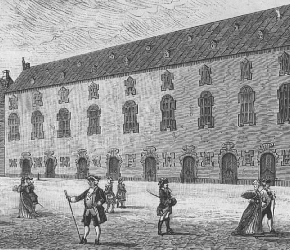
| The
Royal Danish Kunstkammer in 1748 shared the building
with the Royal Danish library. The Kunstkammer was
founded in 1650 by King Frederik III, with artefacts
from all over the world collected by the King. The
Kunstkammer museum was the early start of the National
Museum. |
|
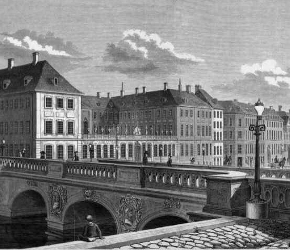
| The
Prince's Palace was the residence of Crown Prince
Frederik (V) until 1746 and the oldest
Rococo palaces in Denmark.
In 1892 the palace properties was taken over by
the National Museum. In front is the Marble Bridge
to Christiansborg Palace, designed by court architect
Nicolai Eigtved in 1739. |
|
History
The
Museum started as the Royal Danish Kunstkammer
and was established around 1650 by King
Frederik III (1609-1670 – ruled Denmark and
Norway 1648-1670). In the Kunstkammer there were valuable
artefacts from all over the world collected by the King. The
collection was broken up some 200 years later, as The Royal
Kunstkammer officially existed until 1825,
when all the royal pieces were distributed among newly created
specialist museums including The National Museum.
The
founder of The National Museum
King Frederik III was the son of King Christian IV (1577-1648
– ruled Denmark and Norway 1588-1648) and besides of
being the founder of The National
Museum he also created the Royal Library
in 1648.
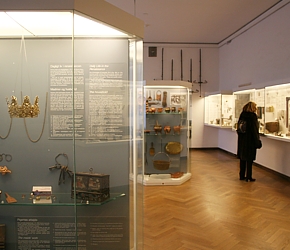
| Part
of an exhibition at the National Museum about the
daily life and household in the renaissance period
between the 16th and 17th century. |
|
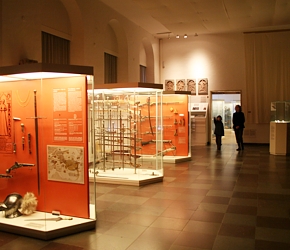
| Exhibition
under the title King - Nobilty and Farmers from
1530-1660 covering artefacts and relics from nobelmen
- warrious and landowners. |
|
14,000
years of history
The exhibitions at the National Museum contain of more than
14,000 years of history presented through different exhibitions,
with focus on each historical period from Denmark
and other countries supported by many exclusive collections
that is full of inspiring and impressive objects together
with numerous archaeological treasures.
Danish Prehistory - Middle Ages and Renaissance
Visiting the National Museum is a journey through time and
places where you can experience Denmark’s cultural history
from 14,000 years of Danish prehistory to
ethnographic treasures from the entire world like ancient
art and culture and spectacular historical findings.
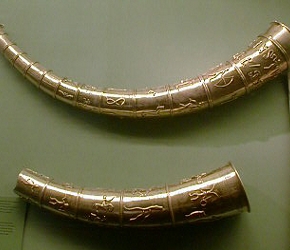
| The
Golden Horns from 400 B.C was found in Southern
Jutland in 1639 and in 1734. The exhibited horns
are replicas, as the original made of solid gold
were stolen in 1802 and destroyed to recycle the
gold. |
|
|
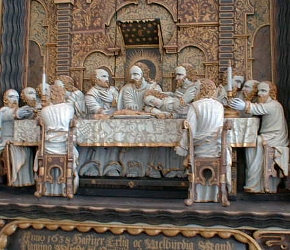
Old Altar
piece from 1638 made after the Reformation in
1536 is a part of Danish Church history. The National
Museum has a rich collection of church art and
alter pieces from 12th and 13th-century.
|
|
Special
National Treasures
The exhibition includes national historic treasures like the
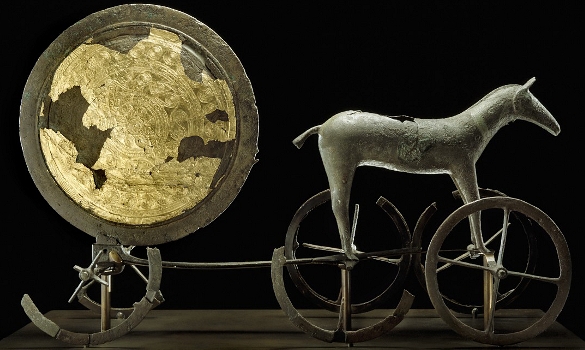
Trundholm Chariot of the Sun, the Egtved
girl’s grave, the Gundestrup Cauldron,
The Golden Horns of Gallehus, the Hoby
tomb and much more.
Middle
Age and Renaissance
From the Middle Age and Renaissance period the exhibition
presents Danish society and its daily life and international
relations from 1050-1660. Danish Church history
before as well as after the Reformationin 1536
is represented with a rich collection of church art and "golden
altars" from 12th and 13th century.
The
Ethnographical Collection
The Ethnographical Collection offers a captivating journey
around the world - starting with Native Americans and ending
with the Inuit. The exhibition also includes
an wide collection of artefacts from Africa,
India, Indonesia, New
Guinea, New Zealand, Japan,
China, Central Asia and
Siberia, as well as world music from various
cultures.
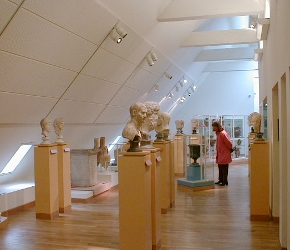
| The
National Museum has largest and most varied collection
of objects from 3000-4000 B.C. of the ancient cultures
of Greece and Italy, the Near East and Egypt. Many
of the artefacts are from the collection of King
Frederik III. |
|
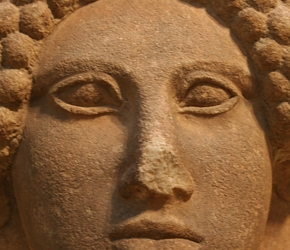
| Sarcophagus
from 450-480 B.C. found on the island of Arados
in Northern Lebanon and made of Greek marble by
a Greek sculptor. Arados was the centre of the Phoenician
kingdom in the first millennium B.C. |
|
Classical Antiquities from the Near East and Egypt.
The National Museum has also a broad collection of Near
Eastern Antiquities where visitors can see Egyptian
mummies, Grecian vases, Etruscan
jewellery and Roman artefacts etc.
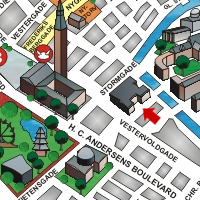
Location
The Nationa Museum is located near the Town Hall
- Christiansborg Palace - Thorvaldsens
Museum - The Palace Chapel -
Glyptotek and Tivoli.
|
The
National Museum
Free Entrance
Address
The National Museum (The Prince's Palace)
Ny Vestergade 10
1220 Copenhagen K.
Busses:
1A -2A - 15 - 26 -29 - 40
Trains – Central Station
Distance from Town Hall Square 1 km. and expect 5-10
min. by walk.
|
|
|